Polyclonal Antibodies
Anti-B7-H4 / B7S1 / B7x Rabbit Polyclonal Antibody for WB, ELISA - Q7Z7D3
Item Number : CM0022278
Price varies based on specs and customizations
- Application
- WB, ELISA
- Cross Reactivity
- Mouse
- Protein Weight
- 9kDa/18kDa/20kDa/30kDa

Shipping:
Contact us to get shipping details Enjoy On-time Dispatch Guarantee.
Why Choose Us
Easy ordering process, quality products, and dedicated support for your business success.
Core Product Specifications and Parameters
| Parameter | Value |
|---|---|
| Product Name | B7-H4 / B7S1 / B7x Rabbit pAb |
| Remarks/Alias | VTCN1; B7-H4; B7H4; B7S1; B7X; B7h.5; PRO1291; VCTN1; V-set domain-containing T-cell activation inhibitor 1; B7-H4 / B7S1 / B7x |
| Species | Human |
| GeneID (Human) | 79679 |
| Immunogen | Recombinant fusion protein containing a sequence corresponding to amino acids 25-259 of human B7-H4 / B7S1 / B7x (NP_078902.2). |
| Source | Rabbit |
| Category | Polyclonal Antibodies |
| Application | WB, ELISA |
| Cross Reactivity | Mouse |
| SWISS | Q7Z7D3 |
| Protein Weight | 9kDa/18kDa/20kDa/30kDa |
| Shipping | Ice bag |
Biological Background: B7-H4 / VTCN1 Function and Localization
- B7-H4 (V-set domain-containing T-cell activation inhibitor 1) is a member of the immunoglobulin superfamily, acting as a key negative regulator of T-cell-mediated immune responses by inhibiting T-cell activation, proliferation, cytokine production, and cytotoxicity.
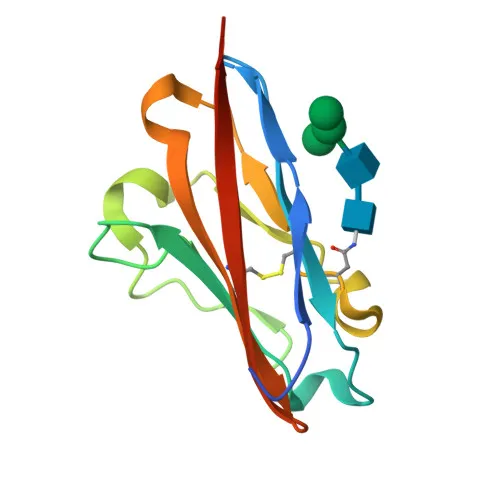
- The protein contains extracellular immunoglobulin-like domains, a transmembrane region, and a short cytoplasmic tail, consistent with its role as a cell-surface immune checkpoint molecule.
- B7-H4 is part of the B7 family of costimulatory molecules, although it functions primarily as a coinhibitory ligand, sharing structural homology with B7-H1 (PD-L1) and B7-H2.
- Subcellularly, B7-H4 is localized to the cell membrane, where it engages putative receptors on T cells to deliver inhibitory signals.
- B7-H4 is overexpressed in a variety of human cancers including breast, ovarian, endometrial, renal cell carcinoma (RCC), and non-small-cell lung cancer (NSCLC), while its protein expression is largely absent in most normal tissues.
- At the protein level, B7-H4 is found on activated T-cells, B-cells, monocytes, and dendritic cells, and plays a role in tumor immune evasion by suppressing tumor-associated antigen-specific T-cell immunity in the tumor microenvironment.
- Alternative splicing generates multiple isoforms, and the protein undergoes post-translational modifications including glycosylation and disulfide bond formation, which are essential for its structure and function.
- B7-H4 has been implicated in promoting epithelial cell transformation, linking its expression to tumorigenesis beyond immune regulation.
Experimental Guidance and Technical Tips
- The immunogen corresponds to the extracellular domain (amino acids 25–259) of human B7-H4, which is accessible on the cell surface; this design supports its use in applications requiring native epitope recognition such as Western blotting of cell lysates and ELISA.
- When performing Western blot, note that B7-H4 may appear as multiple bands due to glycosylation and alternative splicing; the reported molecular weight range is 9–30 kDa, and reducing versus non-reducing conditions may affect band patterns.
- This antibody cross-reacts with mouse B7-H4, making it suitable for studies in mouse models; however, users should validate performance in the specific sample type and experimental context.
- For ELISA applications, consider pairing this polyclonal antibody with a matched monoclonal detection antibody to achieve higher specificity and dynamic range; optimize coating and detection concentrations using a recombinant protein standard.
- In cancer tissue analysis, verify B7-H4 overexpression status in your samples (e.g., breast, ovarian, lung tumors) and include appropriate normal tissue controls, as expression is low or absent in most normal tissues.
CamelBio: Your One-Stop Sourcing Bridge
CamelBio supports diagnostic manufacturers and research institutions with a comprehensive range of IVD raw materials, including validated antibody pairs, optimized monoclonal and polyclonal antibodies, and bulk ancillary reagents. Our one-stop sourcing bridge simplifies procurement of rare-target reagents like B7-H4, ensuring continuity for cancer immunotherapy and immune checkpoint research. Whether you need customized antibody development or technical consulting, CamelBio delivers the supply-chain efficiency and expert support to accelerate your project from concept to clinic.
Product Datasheet
Anti-B7-H4 / B7S1 / B7x Rabbit Polyclonal Antibody for WB, ELISA - Q7Z7D3
REQUEST A QUOTE
Our professional team will reply to you within one business day. Please feel free to contact us!