Polyclonal Antibodies
Anti-ATP6V1D Polyclonal Antibody for WB, ELISA - Q9Y5K8
Item Number : CM0015206
Price varies based on specs and customizations
- Application
- WB, ELISA
- Cross Reactivity
- Human, Mouse, Rat
- Protein Weight
- 28kDa

Shipping:
Contact us to get shipping details Enjoy On-time Dispatch Guarantee.
Why Choose Us
Easy ordering process, quality products, and dedicated support for your business success.
Core Product Specifications and Parameters
| Parameter | Value |
|---|---|
| Product Name | ATP6V1D Rabbit pAb |
| Remarks/Alias | VATD; VMA8; ATP6M; ATP6V1D |
| Species | Human |
| Gene ID (Human) | 51382 |
| Gene ID | 51382 |
| Immunogen | Recombinant fusion protein containing a sequence corresponding to amino acids 1-247 of human ATP6V1D (NP_057078.1) |
| Source | Rabbit |
| Category | Polyclonal Antibodies |
| Application | WB, ELISA |
| Cross Reactivity | Human, Mouse, Rat |
| SWISS | Q9Y5K8 |
| Protein Weight | 28kDa |
| Shipping | Ice bag |
Biological Background: ATP6V1D Function and Localization
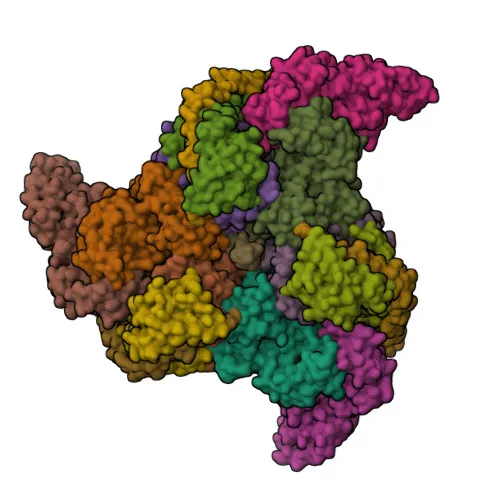
- ATP6V1D encodes the V-type proton ATPase subunit D, an essential component of the peripheral V1 complex of vacuolar H+-ATPase (V-ATPase), a multi-subunit enzyme responsible for proton translocation across membranes. Related references: PMID:33065002
- V-ATPase acidifies intracellular compartments such as lysosomes, endosomes, and clathrin-coated vesicles, and can also target the plasma membrane in specialized cell types to promote extracellular acidification.
- The lysosomal V-ATPase complex activates mTORC1 signaling by facilitating the guanine nucleotide exchange factor (GEF) activity of the Ragulator complex, which recruits mTORC1 to the lysosomal surface for nutrient sensing and growth regulation. Related references: PMID:22053050
- ATP6V1D contributes to cilium biogenesis through the regulation of protein transport and localization to the primary cilium, a cellular sensory organelle. Related references: PMID:21844891
- Subcellularly, ATP6V1D localizes to the lysosomal membrane, clathrin-coated vesicle membranes, the cytoplasm, centrosomes, and the primary cilium, reflecting its diverse cellular functions in membrane trafficking and signaling.
- Alternatively named VATD, VMA8, and ATP6M, the protein has a predicted molecular weight of approximately 28 kDa and is conserved across human, mouse, and rat, making it a useful target for cross-species studies.
Experimental Guidance and Technical Tips
- For western blotting, a band around 28 kDa is expected for endogenous ATP6V1D; using positive control lysates from human, mouse, or rat cells is recommended to confirm detection.
- Since this is a polyclonal antibody raised against the N-terminal region (aa 1-247), it may recognize multiple epitopes; validate specificity in your experimental system using appropriate knockdown or overexpression controls.
- For ELISA applications, this antibody may serve as a capture or detection reagent; titrating the working concentration in direct and sandwich ELISA formats is advised to optimize signal-to-noise ratios.
CamelBio: Your One-Stop Sourcing Bridge
CamelBio serves as a comprehensive supply partner for IVD manufacturers and researchers, offering validated antibody raw materials such as this ATP6V1D polyclonal antibody for vacuolar ATPase and membrane trafficking research. Beyond individual antibodies, we provide one-stop access to antibody pairs, bulk ancillary reagents, and rare-target sourcing solutions to support assay development from concept to clinic. Contact us to explore how our vertically integrated supply chain can accelerate your diagnostic or research projects.
REQUEST A QUOTE
Our professional team will reply to you within one business day. Please feel free to contact us!