Polyclonal Antibodies
Anti-ATP6V0D1 Rabbit Polyclonal Antibody for WB, ELISA - P61421
Item Number : CM0031029
Price varies based on specs and customizations
- Application
- WB, ELISA
- Cross Reactivity
- Human, Mouse, Rat
- Protein Weight
- 40kDa

Shipping:
Contact us to get shipping details Enjoy On-time Dispatch Guarantee.
Why Choose Us
Easy ordering process, quality products, and dedicated support for your business success.
Core Product Specifications and Parameters
| Parameter | Value |
|---|---|
| Product Name | ATP6V0D1 Rabbit pAb |
| Remarks/Alias | P39; VATX; VMA6; ATP6D; ATP6DV; VPATPD; ATP6V0D1 |
| Species | Human |
| GeneID (human) | 9114 |
| GeneID | 9114 |
| Immunogen | Recombinant fusion protein containing a sequence corresponding to amino acids 1-351 of human ATP6V0D1 (NP_004682.2). |
| Source | Rabbit |
| Category | Polyclonal Antibodies |
| Application | WB, ELISA |
| Cross Reactivity | Human, Mouse, Rat |
| SWISS | P61421 |
| Protein Weight | 40kDa |
| Shipping | Ice bag |
Biological Background: ATP6V0D1 Function and Localization
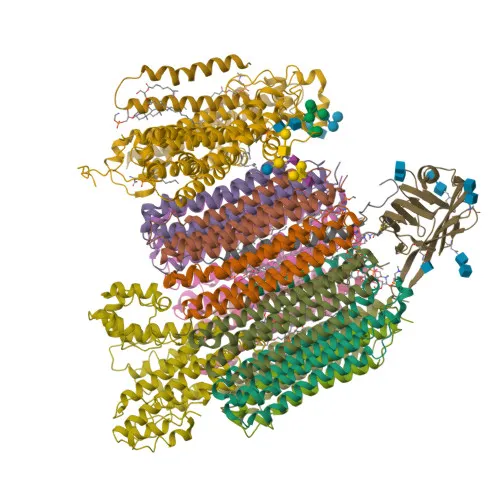
- ATP6V0D1 encodes the d1 subunit of the V0 domain of vacuolar H+-ATPase (V-ATPase), also referred to as 32 kDa accessory protein, p39, V-ATPase AC39 subunit, or vacuolar proton pump subunit d 1.
- V-ATPase is a multi-subunit enzyme responsible for acidifying intracellular compartments such as lysosomes and endosomes, and in some cell types it localizes to the plasma membrane to acidify the extracellular environment. Related references: PMID:30374053
- The V-ATPase complex acts as an activator for mTORC1 on lysosomal membranes by promoting the guanine nucleotide exchange factor (GEF) activity of the Ragulator complex, enabling mTORC1 recruitment. Related references: PMID:22053050
- Under aerobic conditions, ATP6V0D1 participates in intracellular iron homeostasis by triggering Fe(2+) prolyl hydroxylase (PHD) activity, which leads to HIF1A hydroxylation and subsequent proteasomal degradation. Related references: PMID:28296633
- The protein may also contribute to cilium biogenesis through regulation of protein transport and localization to the cilium.
- Subcellularly, ATP6V0D1 is associated with membranes, including the lysosome membrane and clathrin-coated vesicle membrane.
- It is ubiquitously expressed across tissues.
- The protein is classified as a phosphoprotein and features in proteomics identification; it is part of the reference proteome.
Experimental Guidance and Technical Tips
- The immunogen corresponds to the full-length human ATP6V0D1 (amino acids 1–351), which suggests the antibody may recognize the native protein. For Western blotting, expect a band near 40 kDa; validate in human, mouse, or rat lysates.
- For ELISA, consider using recombinant ATP6V0D1 protein or cell lysates as coating antigen and optimize the antibody dilution experimentally.
- Given the ubiquitous expression of V-ATPase, endogenous levels can serve as an internal control, but note potential variation across tissues and cell types.
- As the target contains transmembrane domains, use appropriate sample preparation methods to avoid aggregation; avoid harsh denaturing conditions if signal is weak.
CamelBio: Your One-Stop Sourcing Bridge
CamelBio provides diagnostic manufacturers and researchers a one-stop procurement solution for IVD raw materials, including validated antibodies, antigen pairs, and ancillary reagents. This anti-ATP6V0D1 polyclonal antibody supports research into lysosomal biology, pH regulation, and mTOR signaling pathways. Our team can assist with sourcing rare‑target raw materials and developing custom immunoassay components to accelerate your diagnostic development.
REQUEST A QUOTE
Our professional team will reply to you within one business day. Please feel free to contact us!