Polyclonal Antibodies
Anti-ATP6V0C Rabbit Polyclonal Antibody for WB, IF/ICC, ELISA - P27449
Item Number : CM0023098
Price varies based on specs and customizations
- Application
- WB, IF/ICC, ELISA
- Cross Reactivity
- Human, Mouse, Rat
- Protein Weight
- 16kDa

Shipping:
Contact us to get shipping details Enjoy On-time Dispatch Guarantee.
Why Choose Us
Easy ordering process, quality products, and dedicated support for your business success.
Core Product Specifications and Parameters
| Parameter | Value |
|---|---|
| Product Name | ATP6V0C Rabbit pAb |
| Remarks/Alias | ATPL; VATL; VPPC; Vma3; ATP6C; ATP6L; ATP6V0C |
| Species | Human |
| GeneID (Human) | 527 |
| GeneID | 527 |
| Immunogen | Synthetic peptide: A synthetic peptide corresponding to a sequence within amino acids 1-100 of human ATP6V0C (NP_001185498.1). |
| Source | Rabbit |
| Category | Polyclonal Antibodies |
| Application | WB, IF/ICC, ELISA |
| Cross Reactivity | Human, Mouse, Rat |
| SWISS | P27449 |
| Protein Weight | 16kDa |
| Shipping | Ice bag |
Biological Background: ATP6V0C Function and Localization
- ATP6V0C encodes the V-type proton ATPase 16 kDa proteolipid subunit c, also known as vacuolar proton pump 16 kDa proteolipid subunit c, and aliases include ATPL, VATL, VPPC, Vma3, ATP6C, and ATP6L.
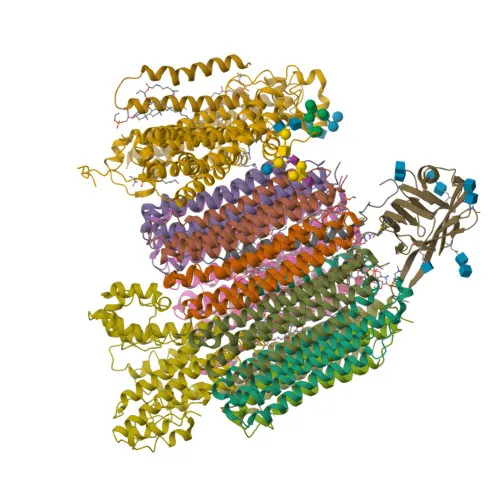
- Functions as the proton-conducting pore-forming subunit of the V0 complex of vacuolar H(+)-ATPase (V-ATPase), a multisubunit enzyme responsible for acidifying intracellular compartments.
Related references: PMID:33065002, PMID:36074901 - In some cell types, V-ATPase is targeted to the plasma membrane, where it promotes acidification of the extracellular environment (By similarity).
- The V-ATPase complex also acts as an activator for mTORC1 on lysosomal membrane by facilitating the guanine nucleotide exchange factor (GEF) of the Ragulator complex, enabling mTORC1 recruitment.
Related references: PMID:22053050 - Subcellularly, the protein localizes to membranes of clathrin-coated vesicles, secretory vesicles (e.g., synaptic vesicles), and lysosomes.
- The protein contains four transmembrane helices and is subject to ubiquitin conjugation. It is involved in host-virus interaction, and mutations in the gene are associated with epilepsy.
- The calculated molecular weight of the unprocessed precursor is approximately 15.7 kDa, consistent with the observed ~16 kDa band on Western blots.
Experimental Guidance and Technical Tips
- The antibody was raised against a synthetic peptide spanning amino acids 1-100 of human ATP6V0C. For Western blotting, a band near 16 kDa is anticipated in lysates from Human, Mouse, or Rat cells/tissues.
- In immunofluorescence/immunocytochemistry (IF/ICC), staining of cytoplasmic vesicles and lysosomes is expected. Permeabilization is required for intracellular epitope access; optimize protocol for vesicular compartments.
- For ELISA, the antibody may be used to detect the immunogen peptide or recombinant protein. Validate assay conditions in your experimental system.
- As a polyclonal antibody, lot-to-lot variability may occur. It is advisable to titrate the antibody for each new application.
CamelBio: Your One-Stop Sourcing Bridge
CamelBio is your dedicated one-stop partner for IVD raw materials, from discovery to commercialization. This anti-ATP6V0C antibody supports research into lysosomal acidification, mTOR signaling, and V-ATPase-related pathologies. Beyond this polyclonal antibody, CamelBio offers validated matched antibody pairs, recombinant monoclonal antibodies, bulk ancillary reagents, and custom sourcing for rare targets—streamlining your assay development and production scaling.
Product Datasheet
Anti-ATP6V0C Rabbit Polyclonal Antibody for WB, IF/ICC, ELISA - P27449
REQUEST A QUOTE
Our professional team will reply to you within one business day. Please feel free to contact us!