Monoclonal Antibodies
Anti-ATP6AP1 Rabbit Monoclonal Antibody for WB, IHC-P, ELISA - Q15904
Item Number : CM0006821
Price varies based on specs and customizations
- Application
- WB, IHC-P, ELISA
- Cross Reactivity
- Human, Mouse
- Protein Weight
- 52kDa

Shipping:
Contact us to get shipping details Enjoy On-time Dispatch Guarantee.
Why Choose Us
Easy ordering process, quality products, and dedicated support for your business success.
Core Product Specifications and Parameters
| Parameter | Value |
|---|---|
| Product Name | ATP6AP1 Rabbit mAb |
| Remarks/Alias | 16A; CF2; Ac45; XAP3; XAP-3; ATP6S1; VATPS1; ATP6IP1; ATP6AP1 |
| Species | Human |
| GeneID (Human) | 537 |
| GeneID | 537 |
| Immunogen | Synthetic Peptide |
| Source | Rabbit |
| Category | Monoclonal Antibodies |
| Application | WB, IHC-P, ELISA |
| Cross Reactivity | Human, Mouse |
| SWISS | Q15904 |
| Protein Weight | 52kDa |
| Shipping | Ice bag |
Biological Background: ATP6AP1 Function and Localization
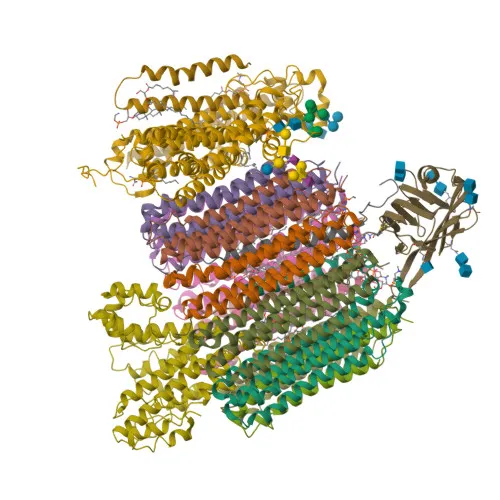
- ATP6AP1 (V-type proton ATPase subunit S1), also known as Ac45, XAP-3, or ATP6S1, is an accessory subunit of the V0 complex of vacuolar H+-ATPase (V-ATPase). This multisubunit enzyme couples ATP hydrolysis by the V1 complex to proton translocation by the V0 complex, driving the acidification of intracellular compartments. Related references: PMID:28296633 PMID:33065002
- Beyond acidification, the V-ATPase complex acts as a lysosomal activator of mTORC1 by promoting the guanine nucleotide exchange factor (GEF) activity of the Ragulator complex, thereby facilitating mTORC1 recruitment. Related references: PMID:22053050
- ATP6AP1 guides the V-ATPase into specialized subcellular compartments, such as neuroendocrine secretory vesicles and the ruffled border of osteoclasts, regulating its activity. It also participates in membrane trafficking and Ca2+-dependent membrane fusion. Related references: PMID:27231034
- Under aerobic conditions, ATP6AP1 contributes to intracellular iron homeostasis, which triggers the activity of Fe2+ prolyl hydroxylase (PHD) enzymes, leading to HIF1A hydroxylation and subsequent proteasomal degradation. Related references: PMID:28296633
- The protein localizes to the endoplasmic reticulum membrane, ER-Golgi intermediate compartment, and various cytoplasmic vesicles including secretory, synaptic, and clathrin-coated vesicles.
- Widely expressed, with highest levels in brain and lowest in liver and duodenum, consistent with its roles in regulated secretion and intracellular trafficking.
- Mutations in ATP6AP1 are associated with congenital disorders of glycosylation (CDG), underscoring its importance in glycoprotein processing.
Experimental Guidance and Technical Tips
- The immunogen (N-terminal peptide, aa 1–100) targets a region conserved in human and mouse, supporting cross-reactivity. Validate in relevant sample systems using positive controls (e.g., brain tissue lysate) where expression is high.
- For Western blot (WB), expect a band at approximately 52 kDa. Start with standard IgG dilutions and optimize empirically. A negative control (e.g., siRNA knockdown or knockout lysate) is recommended to confirm specificity.
- For immunohistochemistry (IHC-P), consider antigen retrieval steps and test on formalin-fixed paraffin-embedded sections of tissues known to express ATP6AP1, such as brain or pancreas.
- In ELISA, the antibody can be used as a capture or detection reagent; however, pairing with another clone may improve sensitivity. Titrate antibody concentrations to establish the optimal dynamic range.
CamelBio: Your One-Stop Sourcing Bridge
CamelBio supports diagnostic manufacturers and research laboratories in accelerating their IVD development programs by offering one-stop access to premium raw materials, including validated monoclonal/polyclonal antibody pairs and bulk auxiliary reagents. For targets like ATP6AP1—central to V-ATPase biology, lysosomal function, and membrane trafficking—we can coordinate custom antibody production, rare-target reagent sourcing, and technical consultation. Whether you need an optimized antibody for a specific application or assistance with assay design, CamelBio bridges the gap from concept to clinic.
Product Datasheet
Anti-ATP6AP1 Rabbit Monoclonal Antibody for WB, IHC-P, ELISA - Q15904
REQUEST A QUOTE
Our professional team will reply to you within one business day. Please feel free to contact us!