Polyclonal Antibodies
Anti-ATP6AP1 Polyclonal Antibody for WB, ELISA - Q15904
Item Number : CM0017529
Price varies based on specs and customizations
- Application
- WB, ELISA
- Cross Reactivity
- Human, Mouse, Rat
- Protein Weight
- 52kDa

Shipping:
Contact us to get shipping details Enjoy On-time Dispatch Guarantee.
Why Choose Us
Easy ordering process, quality products, and dedicated support for your business success.
Core Product Specifications and Parameters
| Parameter | Value |
|---|---|
| Product Name | ATP6AP1 Rabbit pAb |
| Remarks/Alias | 16A; CF2; Ac45; XAP3; XAP-3; ATP6S1; VATPS1; ATP6IP1; ATP6AP1 |
| Species | Human |
| GeneID (Human) | 537 |
| GeneID | 537 |
| Immunogen | Recombinant fusion protein containing a sequence corresponding to amino acids 90-390 of human ATP6AP1 (NP_001174.2) |
| Source | Rabbit |
| Category | Polyclonal Antibodies |
| Application | WB, ELISA |
| Cross Reactivity | Human, Mouse, Rat |
| SWISS | Q15904 |
| Protein Weight | 52kDa |
| Shipping | Ice bag |
Biological Background: ATP6AP1 Function and Localization
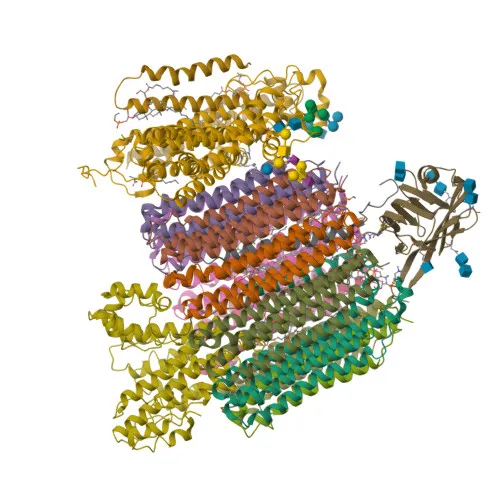
- ATP6AP1 (also known as Ac45, XAP-3) is an accessory subunit of the V0 complex of vacuolar H+-ATPase (V-ATPase), a multisubunit enzyme that acidifies intracellular compartments and, in some cells, the extracellular environment. Related references: PMID:28296633, PMID:33065002
- The V-ATPase complex promotes mTORC1 activation on lysosomal membranes by facilitating the guanine nucleotide exchange factor activity of the Ragulator complex. Related references: PMID:22053050
- This subunit guides V-ATPase into specialized compartments such as neuroendocrine secretory vesicles or the osteoclast ruffled border, and is involved in membrane trafficking and Ca2+-dependent membrane fusion. Related references: PMID:27231034
- Under aerobic conditions, ATP6AP1 participates in intracellular iron homeostasis, triggering the activity of Fe2+ prolyl hydroxylase enzymes, leading to HIF1A hydroxylation and degradation. Related references: PMID:28296633
- ATP6AP1 is widely expressed with highest levels in brain and lowest in liver and duodenum.
- The protein localizes to the endoplasmic reticulum membrane, ER-Golgi intermediate compartment, synaptic vesicles, and clathrin-coated vesicles.
- Post-translational modifications include disulfide bond formation, glycosylation, and phosphorylation; it contains a signal peptide and transmembrane helix.
Experimental Guidance and Technical Tips
- The immunogen corresponds to residues 90–390 of human ATP6AP1, targeting a large cytoplasmic/lumenal region that may provide good accessibility in total cell lysates.
- For western blot (WB), consider using reducing conditions and validate the detected band against the predicted molecular weight of ~52 kDa in human, mouse, and rat samples.
- ELISA applications may benefit from checking cross-reactivity with recombinant protein fragments or cell-based assays relevant to V-ATPase biology.
- Given the protein’s involvement in vesicular acidification and membrane trafficking, experimental models studying lysosomal function, osteoclast activity, or neuroendocrine secretion could be informative.
CamelBio: Your One-Stop Sourcing Bridge
CamelBio supports diagnostic manufacturers and research laboratories with comprehensive access to IVD raw materials like the ATP6AP1 antibody, ideal for investigations into proton pump regulation and iron metabolism. From validated polyclonal antibodies and antibody pairs to bulk ancillary reagents, we streamline procurement for projects targeting V-ATPase components. Our sourcing capabilities extend to rare targets, helping you bridge the gap from concept to clinic with reliable, production-grade materials.
REQUEST A QUOTE
Our professional team will reply to you within one business day. Please feel free to contact us!