Polyclonal Antibodies
Anti-ATP5J2 Polyclonal Antibody for WB and ELISA - P56134
Item Number : CM0019905
Price varies based on specs and customizations
- Application
- WB, ELISA
- Cross Reactivity
- Mouse, Rat
- Protein Weight
- 11kDa

Shipping:
Contact us to get shipping details Enjoy On-time Dispatch Guarantee.
Why Choose Us
Easy ordering process, quality products, and dedicated support for your business success.
Core Product Specifications and Parameters
| Parameter | Value |
|---|---|
| Product Name | ATP5J2 Rabbit Polyclonal Antibody |
| Remarks/Alias | ATP5J2, ATP5JL |
| Species | Human |
| Gene ID | 9551 |
| Immunogen | Synthetic peptide corresponding to a sequence within amino acids 1-94 of human ATP5J2 (NP_004880.1) |
| Source | Rabbit |
| Category | Polyclonal Antibodies |
| Application | WB, ELISA |
| Cross Reactivity | Mouse, Rat |
| SWISS | P56134 |
| Protein Weight | 11kDa |
| Shipping | Ice bag |
Biological Background: ATP5J2 Function and Localization
-
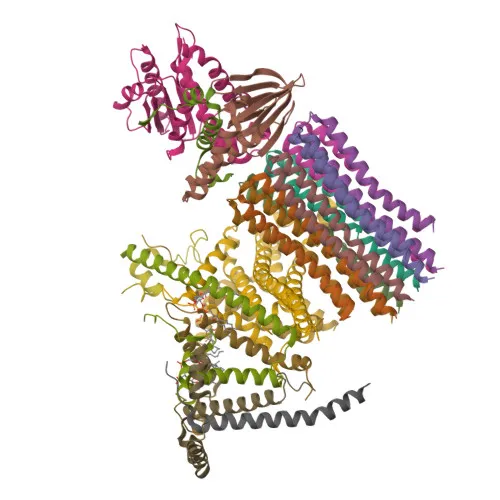
ATP5J2 (ATP synthase membrane subunit f, encoded by ATP5MF) is a subunit of the mitochondrial F(1)F(0) ATP synthase complex (Complex V), which produces ATP from ADP using the proton gradient across the inner mitochondrial membrane [PubMed:37244256]. Related references: PMID:37244256
-
The ATP synthase complex consists of a catalytic F(1) domain and a membrane-embedded F(0) proton channel. ATP5J2 is a component of the F(0) domain, contributing to proton translocation.
-
ATP synthesis is coupled to proton transport via a rotary mechanism involving central stalk subunits and a stationary peripheral stalk.
-
ATP5J2 localizes to the mitochondrial inner membrane.
-
Post-translational modifications of ATP5J2 include acetylation and phosphorylation, as identified by proteomics approaches.
-
Alternative splicing of the ATP5MF gene may generate multiple protein isoforms.
Experimental Guidance and Technical Tips
-
The immunogen was designed using a synthetic peptide representing amino acids 1–94 of human ATP5J2. This N-terminal region is expected to be conserved in mouse and rat, supporting the reported cross-reactivity.
-
For Western blot analysis, consider using mitochondrial-enriched fractions or whole cell lysates under reducing conditions. The predicted molecular weight is approximately 11 kDa; validate band specificity with appropriate controls.
-
In ELISA applications, optimize the antibody dilution for optimal performance. The antibody may function as a capture or detection reagent after in-house testing.
-
Although cross-reactivity with mouse and rat has been observed, always confirm reactivity in your specific sample system and application.
CamelBio: Your One-Stop Sourcing Bridge
CamelBio serves as a one-stop sourcing partner for IVD raw materials, providing validated antibody pairs, optimized polyclonal and monoclonal antibodies, and bulk ancillary reagents. For researchers studying mitochondrial energy metabolism and ATP synthase complexes, we offer comprehensive procurement support from concept to clinic, including rare target antibody sourcing and technical consulting.
REQUEST A QUOTE
Our professional team will reply to you within one business day. Please feel free to contact us!