Polyclonal Antibodies
Anti-ATP5F1 Polyclonal Antibody for WB, IF/ICC, ELISA - P24539
Item Number : CM0025804
Price varies based on specs and customizations
- Application
- WB, IF/ICC, ELISA
- Cross Reactivity
- Human, Mouse
- Protein Weight
- 29kDa

Shipping:
Contact us to get shipping details Enjoy On-time Dispatch Guarantee.
Why Choose Us
Easy ordering process, quality products, and dedicated support for your business success.
Core Product Specifications and Parameters
| Parameter | Value |
|---|---|
| Product Name | ATP5F1 Rabbit pAb |
| Remarks/Alias | PIG47; ATP5F1 |
| Species | Human |
| GeneID (Human) | 515 |
| GeneID | 515 |
| Immunogen | Recombinant fusion protein containing a sequence corresponding to amino acids 1-245 of human ATP5F1 (NP_001679.2). |
| Source | Rabbit |
| Category | Polyclonal Antibodies |
| Application | WB, IF/ICC, ELISA |
| Cross Reactivity | Human, Mouse |
| SWISS | P24539 |
| Protein Weight | 29kDa |
| Shipping | Ice bag |
Biological Background: ATP5F1 Function and Localization
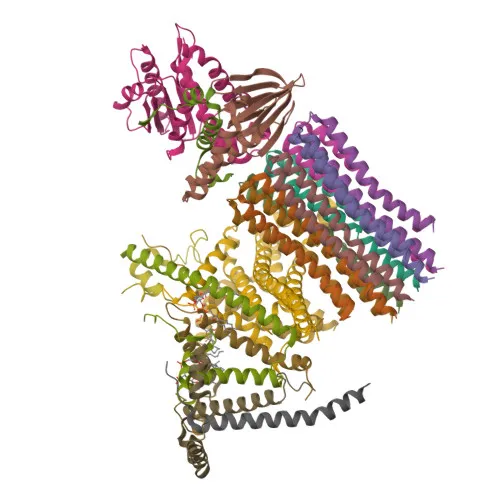
- ATP5F1 encodes the peripheral stalk subunit b of the mitochondrial F1F0 ATP synthase (Complex V), a key enzyme in oxidative phosphorylation that synthesizes ATP using the proton gradient across the inner mitochondrial membrane. Related references: PMID:37244256
- Also known as ATP synthase F(0) complex subunit B1 or PIG47, this protein is an essential component of the stationary peripheral stalk, which acts as a stator to hold the catalytic α3β3 subcomplex and subunit a/ATP6 static relative to the rotary elements during catalysis.
- The ATP synthase complex consists of a soluble F1 head domain (catalytic core) and a membrane-embedded F0 domain (proton channel), linked by a central rotary stalk and the peripheral stalk that includes ATP5F1.
- Subcellular localization studies and proteomics data confirm that ATP5F1 resides in the mitochondrion inner membrane, consistent with its role in energy transduction.
- Post-translational modifications such as acetylation have been identified on ATP5F1, which may regulate assembly or activity of the ATP synthase complex.
- The protein is classified under keywords including CF(0), hydrogen ion transport, ion transport, and mitochondrial inner membrane, highlighting its direct involvement in proton translocation and ATP synthesis.
Experimental Guidance and Technical Tips
- The immunogen used (residues 1–245) covers a large portion of the mature protein, which may yield antibodies recognizing both native and denatured ATP5F1; consider validating detection in mitochondrial-enriched fractions or whole-cell lysates.
- For WB applications, a band near 29 kDa is expected; optimize primary antibody dilution and exposure times to achieve clear signal with low background.
- In IF/ICC experiments, verify mitochondrial localization by co-staining with a mitochondrial marker (e.g., MitoTracker or a known mitochondrial protein antibody) to confirm specificity.
- As a polyclonal antibody, lot-to-lot variability may occur; we recommend pilot testing each new lot in your assay system before large-scale experiments.
- For ELISA applications, use appropriate coating conditions and include a positive control (e.g., recombinant ATP5F1 protein) to validate plate performance.
CamelBio: Your One-Stop Sourcing Bridge
CamelBio provides diagnostic manufacturers, labs, and research institutes with one-stop access to IVD raw materials, technical services, and consulting—covering every stage from concept to clinic. This anti-ATP5F1 polyclonal antibody supports research into mitochondrial bioenergetics and related disorders, and CamelBio can facilitate procurement of validated antibody pairs, optimized monoclonal/polyclonal antibodies, and bulk ancillary reagents. Our supply network also offers rare-target raw-material sourcing, enabling seamless integration into your diagnostic or research workflows.
REQUEST A QUOTE
Our professional team will reply to you within one business day. Please feel free to contact us!