Polyclonal Antibodies
Anti-ATP1B1 Rabbit Polyclonal Antibody for WB, IHC-P, IF/ICC, ELISA - P05026
Item Number : CM0025935
Price varies based on specs and customizations
- Application
- WB, IHC-P, IF/ICC, ELISA
- Cross Reactivity
- Human, Mouse, Rat
- Protein Weight
- 35kDa

Shipping:
Contact us to get shipping details Enjoy On-time Dispatch Guarantee.
Why Choose Us
Easy ordering process, quality products, and dedicated support for your business success.
Core Product Specifications and Parameters
| Parameter | Specification |
|---|---|
| Product Name | ATP1B1 Rabbit pAb |
| Remarks/Alias | ATP1B; ATP1B1 |
| Species | Human |
| GeneID (Human) | 481 |
| GeneID | 481 |
| Immunogen | Recombinant fusion protein containing a sequence corresponding to amino acids 63-303 of human ATP1B1 (NP_001668.1) |
| Source | Rabbit |
| Category | Polyclonal Antibodies |
| Application | WB, IHC-P, IF/ICC, ELISA |
| Cross Reactivity | Human, Mouse, Rat |
| SWISS | P05026 |
| Protein Weight | 35kDa |
| Shipping | Ice bag |
Biological Background: ATP1B1 Function and Localization
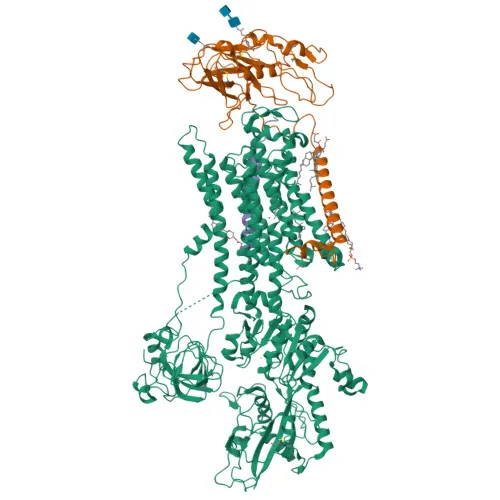
- ATP1B1 (ATP1B) encodes the beta-1 subunit of the Na+/K+-ATPase, a heterodimeric enzyme responsible for maintaining electrochemical gradients by catalyzing ATP-dependent exchange of Na+ and K+ across the plasma membrane.
- The beta subunit is non-catalytic but essential for modulating the number of functional sodium pumps delivered to the cell surface through alpha/beta heterodimer assembly. Related references: PMID:19694409
- Beyond ion transport, ATP1B1 functions in cell adhesion and contributes to the establishment and maintenance of epithelial cell polarity.
- It also plays a role in innate immunity by enhancing virus-triggered induction of interferons and interferon-stimulated genes (ISGs), mechanistically linked to TRAF3/6 ubiquitination and TAK1/TBK1 phosphorylation. Related references: PMID:34011520
- The protein is localized predominantly at the plasma membrane, including apical membranes and the sarcolemma in muscle cells.
- ATP1B1 is widely expressed across most tissues, reflecting its fundamental housekeeping function.
- Post-translational modifications include N-linked glycosylation, disulfide bond formation, and glutathionylation; the protein is also subject to alternative splicing.
- It belongs to the sodium/potassium-transporting ATPase beta chain family and contains a single transmembrane domain with a signal-anchor sequence.
Experimental Guidance and Technical Tips
- This rabbit polyclonal antibody was raised against a recombinant fragment covering amino acids 63–303 of human ATP1B1 (NP_001668.1), a region that includes extracellular domains. Users can expect detection of the full-length protein at approximately 35 kDa.
- For Western blotting (WB), verify specificity by using control lysates and consider a blocking agent appropriate for polyclonal antibodies.
- In immunohistochemistry (IHC-P) and immunofluorescence (IF/ICC), antigen retrieval may improve epitope accessibility; optimize fixation and permeabilization conditions.
- The antibody cross-reacts with human, mouse, and rat samples based on supplier data; validate in the relevant sample system for your experiment.
- For ELISA, use as capture or detection reagent after establishing optimal coating concentrations.
CamelBio: Your One-Stop Sourcing Bridge
CamelBio offers a streamlined sourcing experience for diagnostic manufacturers and researchers, providing access to a wide range of IVD raw materials including validated antibodies like this ATP1B1 polyclonal antibody. Our portfolio covers ion transport, cell adhesion, and innate immunity targets, supported by bulk ancillary reagents and sourcing solutions for rare or custom targets. Partner with CamelBio to bridge your concept-to-clinic workflow with reliable, high-quality raw materials.
Product Datasheet
Anti-ATP1B1 Rabbit Polyclonal Antibody for WB, IHC-P, IF/ICC, ELISA - P05026
REQUEST A QUOTE
Our professional team will reply to you within one business day. Please feel free to contact us!