Polyclonal Antibodies
Anti-ATM Rabbit Polyclonal Antibody for WB, ELISA - Q13315
Item Number : CM0028845
Price varies based on specs and customizations
- Application
- WB, ELISA
- Cross Reactivity
- Human
- Protein Weight
- 351kDa

Shipping:
Contact us to get shipping details Enjoy On-time Dispatch Guarantee.
Why Choose Us
Easy ordering process, quality products, and dedicated support for your business success.
Core Product Specifications and Parameters
| Parameter | Value |
|---|---|
| Product Name | ATM Rabbit pAb |
| Remarks/Alias | AT1, ATA, ATC, ATD, ATE, ATDC, TEL1, TELO1, ATM |
| Species | Human |
| GeneID (Human) | 472 |
| GeneID | 472 |
| Immunogen | A synthetic peptide corresponding to a sequence within amino acids 1900-2000 of human ATM (NP_000042.3). |
| Source | Rabbit |
| Category | Polyclonal Antibodies |
| Application | WB, ELISA |
| Cross Reactivity | Human |
| SWISS | Q13315 |
| Protein Weight | 351kDa |
| Shipping | Ice bag |
Biological Background: ATM Function and Localization
-
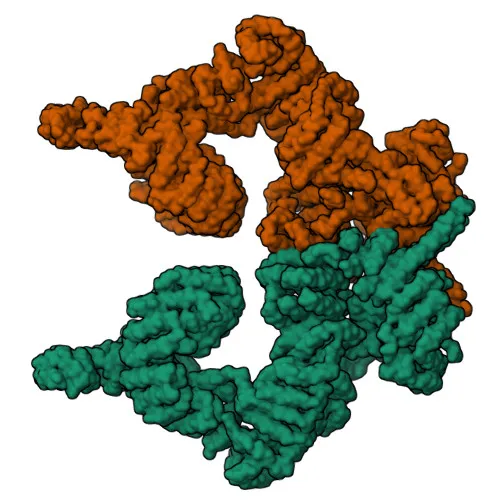
Serine/threonine protein kinase that activates checkpoint signaling upon DNA double-strand breaks (DSBs), apoptosis and genotoxic stresses, acting as a critical DNA damage sensor. Related references: PMID:10550055, PMID:10839545, PMID:10910365
-
Recognizes the substrate consensus sequence [ST]-Q and phosphorylates key DNA damage response proteins including CHEK2, p53/TP53, BRCA1, and nibrin (NBN). Related references: PMID:10550055, PMID:10839545, PMID:10910365, PMID:10766245, PMID:10802669
-
Phosphorylates histone variant H2AX at Ser-139 at double-strand breaks, thereby regulating the DNA damage response mechanism (By similarity).
-
Phosphorylates diverse substrates including DYRK2, ATF2, ERCC6, TTC5/STRAP, and PEX5 to coordinate DNA repair, apoptosis, and cellular homeostasis. Related references: PMID:19965871, PMID:15916964, PMID:29203878, PMID:15448695, PMID:26344566
-
Found in the nucleus, cytoplasmic vesicles, centrosomes, and peroxisome matrix, consistent with its roles in DNA damage signaling, transport, and pexophagy.
-
Ubiquitously expressed, with highest levels in pancreas, kidney, skeletal muscle, liver, lung, placenta, brain, heart, spleen, thymus, testis, ovary, small intestine, colon and leukocytes.
Experimental Guidance and Technical Tips
- For western blot analysis, expect a band around 351 kDa. Due to the large protein size, consider using low‑percentage gradient gels, extended wet transfer times, and verify transfer efficiency with a pre‑stained high‑molecular‑weight marker.
- The immunogen is a synthetic peptide from the C‑terminal region (aa 1900–2000). Epitope accessibility may be influenced by protein conformation; denaturing and reducing conditions are recommended.
- As a polyclonal antibody, it may exhibit lot‑to‑lot variability. Validate each new lot on a known positive control (e.g., human cell lysate expressing ATM) before use.
- For ELISA, optimize coating antigen concentration and detection conditions. The antibody is predicted to recognize human ATM; cross‑reactivity with other species has not been tested.
- To confirm specificity, consider using ATM‑depleted samples (e.g., siRNA knockdown) or a competing peptide in your assay system.
CamelBio: Your One-Stop Sourcing Bridge
CamelBio serves as your one‑stop sourcing partner, offering diagnostic manufacturers and research laboratories seamless access to premium IVD raw materials—from validated antibody pairs to bulk ancillary reagents and rare target sourcing. This ATM antibody supports oncology and DNA damage response research, and our team can help you accelerate development from concept to clinic.
REQUEST A QUOTE
Our professional team will reply to you within one business day. Please feel free to contact us!