Polyclonal Antibodies
Anti-ATF2 Rabbit Polyclonal Antibody for WB, IHC-P - P15336
Item Number : CM0015577
Price varies based on specs and customizations
- Application
- WB, IHC-P, ELISA
- Cross Reactivity
- Human, Mouse, Rat
- Protein Weight
- 55kDa

Shipping:
Contact us to get shipping details Enjoy On-time Dispatch Guarantee.
Why Choose Us
Easy ordering process, quality products, and dedicated support for your business success.
Core Product Specifications and Parameters
| Parameter | Value |
|---|---|
| Product Name | ATF2 Rabbit pAb |
| Remarks/Alias | HB16; CREB2; TREB7; CREB-2; CRE-BP1; ATF2 |
| Species | Human |
| GeneID (Human) | 1386 |
| GeneID | 1386 |
| Immunogen | Recombinant protein|Recombinant fusion protein containing a sequence corresponding to amino acids 1-190 of human ATF2 (NP_001871.2). |
| Source | Rabbit |
| Category | Polyclonal Antibodies |
| Application | WB, IHC-P, ELISA |
| Cross Reactivity | Human, Mouse, Rat |
| SWISS | P15336 |
| Protein Weight | 55kDa |
| Shipping | Ice bag |
Biological Background: ATF2 Function and Localization
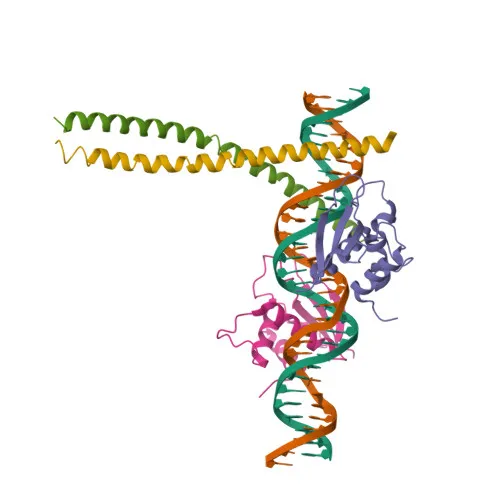
- ATF2 (Activating transcription factor 2, also known as CREB2, CRE-BP1) is a member of the ATF/CREB transcription factor family and functions as a transcriptional activator.
- It binds to CRE (5'-TGACGTCA-3') and AP-1 (5'-TGACTCA-3') consensus sequences, regulating genes involved in apoptosis, cell proliferation, and the DNA damage response.
- ATF2 localizes to the nucleus, cytoplasm, and mitochondrial outer membrane. In the cytoplasm, it interacts with HK1 and VDAC1 to impair mitochondrial function and promote cell death.
- It plays a role in the DNA damage response, including the ionizing radiation-induced S phase checkpoint and recruitment of the MRN complex to damage foci.
- ATF2 exhibits histone acetyltransferase (HAT) activity, specifically acetylating histones H2B and H4 in vitro. Related references: PMID:10821277
- Post-translational modifications include phosphorylation by ATM in response to DNA damage, and acetylation.
- Ubiquitously expressed with higher abundance in the brain, ATF2 can function as either an oncogene or tumor suppressor depending on cell type.
Experimental Guidance and Technical Tips
- The immunogen (amino acids 1-190) covers the N-terminal region of human ATF2, which may detect total ATF2 protein. For western blot (WB), the expected band is around 55kDa, but consider potential isoforms or post-translational modifications.
- For immunohistochemistry (IHC-P), validate with positive control tissues known to express ATF2 (e.g., brain) and optimize antigen retrieval conditions.
- In ELISA, this polyclonal antibody can be used for detection or capture; titration is recommended for optimal signal-to-noise ratio.
- Cross-reactivity with mouse and rat ATF2 is reported; confirm sequence homology in the immunogen region for your specific sample.
CamelBio: Your One-Stop Sourcing Bridge
CamelBio offers a comprehensive portfolio of IVD raw materials, including validated antibody pairs, optimized monoclonal/polyclonal antibodies, and bulk ancillary reagents. This anti-ATF2 rabbit polyclonal antibody is an excellent tool for research in transcription regulation, apoptosis, and DNA damage pathways. For rare or custom targets, CamelBio’s sourcing network efficiently connects diagnostic manufacturers and labs with hard-to-find raw materials, supporting your development from concept to clinic.
REQUEST A QUOTE
Our professional team will reply to you within one business day. Please feel free to contact us!