Methylated Antibodies
Anti-Asymmetric DiMethyl-Histone H3-R17 Rabbit Polyclonal Antibody (Q16695/P68431) for WB, IF/ICC, ELISA
Item Number : CM0000282
Price varies based on specs and customizations
- Application
- WB, IF/ICC, ELISA
- Cross Reactivity
- Human, Mouse, Rat, Other (Wide Range Predicted)
- Protein Weight
- 15kDa

Shipping:
Contact us to get shipping details Enjoy On-time Dispatch Guarantee.
Why Choose Us
Easy ordering process, quality products, and dedicated support for your business success.
Core Product Specifications and Parameters
| Parameter | Description |
|---|---|
| Product Name | Asymmetric DiMethyl-Histone H3-R17 Rabbit pAb |
| Remarks/Alias | H3/j; H3C1; H3C2; H3C3; H3C4; H3C6; H3C7; H3C8; H3FJ; H3C10; H3C11; HIST1H3J; Asymmetric DiMethyl-Histone H3-R17 |
| Species | Human |
| GeneID (human) | H3 |
| GeneID | 8290/8350 |
| Immunogen | Synthetic peptide corresponding to a sequence within amino acids 1-100 of human histone H3 (NP_003520.1) |
| Source | Rabbit |
| Category | Methylated Antibodies |
| Application | WB, IF/ICC, ELISA |
| Cross Reactivity | Human, Mouse, Rat, Other (Wide Range Predicted) |
| SWISS | Q16695/P68431 |
| Protein Weight | 15kDa |
| Shipping | Ice bag |
Biological Background: Asymmetric DiMethyl-Histone H3-R17 Function and Localization
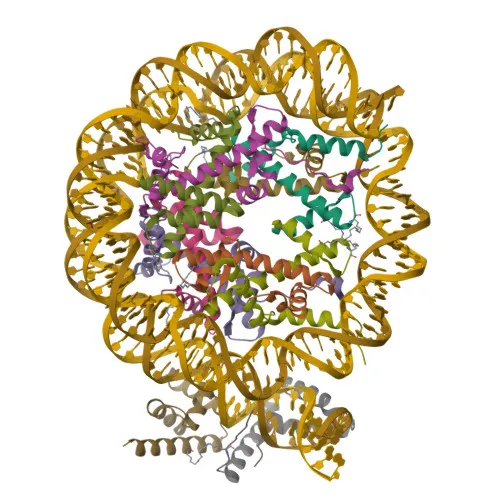
- Histone H3 is a core component of the nucleosome, wrapping DNA into chromatin and playing a central role in transcription regulation, DNA repair, DNA replication, and chromosomal stability. Post-translational modifications (PTMs) of histones, collectively known as the histone code, govern chromatin accessibility and function.
- Asymmetric dimethylation of histone H3 at arginine 17 (H3R17me2a; corresponding to position 18 in the UniProt canonical sequence) is catalyzed by the protein arginine methyltransferase CARM1 (coactivator-associated arginine methyltransferase 1). This modification is associated with transcriptional activation and recruitment of coactivator complexes.
- Both canonical histone H3.1 (encoded by multiple genes such as H3C1, H3C2, etc.; UniProt P68431) and the testis-specific variant H3.1t (H3-4; UniProt Q16695) carry this modification. H3.1t is expressed in testicular cells, while H3.1 is ubiquitously expressed in somatic cells.
- Histone H3 localizes to the nucleus and is predominantly found in nucleosomes along the chromosomes. The N-terminal tail, where R17 is located, protrudes from the nucleosome core and is a hotspot for numerous PTMs that regulate gene expression.
- The synthetic peptide immunogen corresponds to the first 100 amino acids of human histone H3, a region highly conserved among eukaryotes, which explains the predicted wide cross-reactivity of this antibody. Related references:
- PMID:15345777
- PMID:15471871
- PMID:16497732
- UniProt Q16695
- UniProt P68431
Experimental Guidance and Technical Tips
- For Western blotting (WB), acid-extracted histones or whole-cell lysates from relevant cell lines are recommended. The expected molecular weight of histone H3 is approximately 15 kDa. Consider using peptide competition assays or CARM1-knockout samples to confirm detection specificity for the asymmetric dimethyl-R17 modification.
- In immunofluorescence/immunocytochemistry (IF/ICC), fixation and permeabilization conditions significantly influence epitope accessibility. Methanol fixation often enhances nuclear signal; optimize the antibody dilution and blocking steps to minimize background.
- For ELISA, the antibody may be used with synthetic peptides to distinguish asymmetric dimethyl-R17 from symmetric dimethyl- or unmodified H3 peptides. Include appropriate controls to ensure specificity.
- Due to the predicted wide cross-reactivity, validate the antibody in your specific species and tissue model before applying to critical experiments.
- This antibody is a member of the Methylated Antibodies category and is suitable for epigenetic research. While not validated here for chromatin immunoprecipitation (ChIP) or multiplexed analysis, it can be integrated with other histone modification-specific reagents for such applications with appropriate optimization.
CamelBio: Your One-Stop Sourcing Bridge
CamelBio provides diagnostic manufacturers, research laboratories, and institutes with a one-stop platform for IVD raw material sourcing, offering validated antibody pairs, optimized monoclonal/polyclonal antibodies, and bulk ancillary reagents. This asymmetric dimethyl-histone H3-R17 antibody represents our commitment to supplying high-quality epigenetic tools that support biomarker discovery, assay development, and chromatin research. Reach out to us for custom sourcing of rare modification-specific antibodies, technical consultation, and seamless integration of raw materials into your diagnostic pipeline.
REQUEST A QUOTE
Our professional team will reply to you within one business day. Please feel free to contact us!