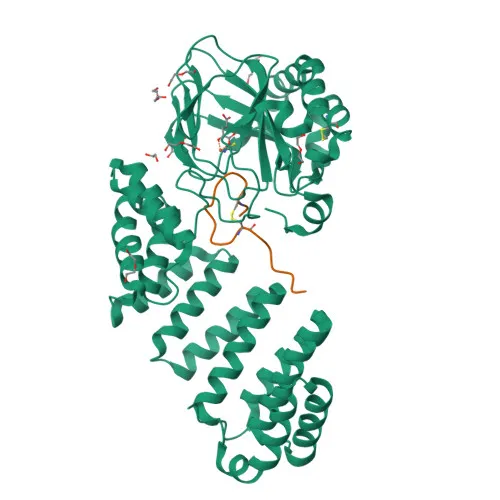
Polyclonal Antibodies
Anti-ASPH Polyclonal Antibody for IF/ICC, ELISA - Q12797
Item Number : CM0030970
Price varies based on specs and customizations
- Application
- IF/ICC, ELISA
- Cross Reactivity
- Human
- Protein Weight
- 86kDa

Shipping:
Contact us to get shipping details Enjoy On-time Dispatch Guarantee.
Why Choose Us
Easy ordering process, quality products, and dedicated support for your business success.
Core Product Specifications and Parameters
| Parameter | Value |
|---|---|
| Product Name | ASPH Rabbit pAb |
| Remarks/Alias | AAH; BAH; HAAH; JCTN; FDLAB; junctin; CASQ2BP1; ASPH |
| Species | Human |
| GeneID (Human) | 444 |
| GeneID | 444 |
| Immunogen | Recombinant protein|Recombinant fusion protein containing a sequence corresponding to amino acids 81-270 of human ASPH (NP_001158227.1). |
| Source | Rabbit |
| Category | Polyclonal Antibodies |
| Application | IF/ICC, ELISA |
| Cross Reactivity | Human |
| SWISS | Q12797 |
| Protein Weight | 86kDa |
| Shipping | Ice bag |
Biological Background: ASPH Function and Localization
- ASPH encodes aspartyl/asparaginyl beta-hydroxylase, which specifically hydroxylates Asp or Asn residues in certain epidermal growth factor (EGF)-like domains of target proteins.
- The protein also functions as a membrane-bound Ca(2+)-sensing protein and is a structural component of endoplasmic reticulum-plasma membrane junctions. Isoform 8 regulates calcium release-activated calcium (CRAC) channels in T-cells.
- Alternative splicing generates multiple isoforms; isoform 1 is broadly expressed, while isoform 8 is mainly expressed in pancreas, heart, brain, kidney, and liver.
- ASPH localizes to the endoplasmic reticulum membrane and sarcoplasmic reticulum membrane, consistent with its roles in protein modification and calcium signaling.
- The protein belongs to the iron/2-oxoglutarate-dependent dioxygenase family, requiring iron as a cofactor, and contains TPR repeat domains.
- Keywords such as glycoprotein, phosphoprotein, disulfide bond, and transmembrane helix indicate post-translational modifications and membrane integration.
- A disease variant association suggests potential roles in pathology, but specific functional implications require further investigation.
Experimental Guidance and Technical Tips
- The immunogen corresponds to amino acids 81-270 of human ASPH, covering part of the catalytic domain; this region is expected to generate antibodies recognizing full-length and potentially isoforms containing this sequence.
- For IF/ICC, consider optimizing fixation and permeabilization conditions due to the membrane localization of ASPH.
- For ELISA, the antibody may be used for antigen detection or capture; validate with appropriate positive and negative controls.
- Since ASPH is expressed in multiple tissues, include tissue-specific lysates or cell lines to confirm specificity.
CamelBio: Your One-Stop Sourcing Bridge
CamelBio supports diagnostic developers and researchers with reliable access to IVD raw materials, including validated antibody pairs and optimized polyclonal antibodies like this anti-ASPH product. Whether you require bulk ancillary reagents or sourcing for rare targets in post-translational modification and calcium signaling research, our one-stop platform streamlines procurement from concept to clinic.
REQUEST A QUOTE
Our professional team will reply to you within one business day. Please feel free to contact us!