Polyclonal Antibodies
Anti-ASNS Rabbit Polyclonal Antibody for WB, IHC-P, ELISA - P08243
Item Number : CM0016742
Price varies based on specs and customizations
- Application
- WB, IHC-P, ELISA
- Cross Reactivity
- Human, Mouse, Rat
- Protein Weight
- 64kDa

Shipping:
Contact us to get shipping details Enjoy On-time Dispatch Guarantee.
Why Choose Us
Easy ordering process, quality products, and dedicated support for your business success.
Core Product Specifications and Parameters
| Parameter | Value |
|---|---|
| Product Name | ASNS Rabbit pAb |
| Remarks/Alias | TS11, ASNSD, ASNS |
| Species | Human |
| GeneID (human) | 440 |
| GeneID | 440 |
| Immunogen | Recombinant fusion protein containing a sequence corresponding to amino acids 262-561 of human ASNS (NP_001664.3) |
| Source | Rabbit |
| Category | Polyclonal Antibodies |
| Application | WB, IHC-P, ELISA |
| Cross Reactivity | Human, Mouse, Rat |
| SWISS | P08243 |
| Protein Weight | 64kDa |
| Shipping | Ice bag |
Biological Background: ASNS Function and Localization
- ASNS encodes asparagine synthetase [glutamine-hydrolyzing], also known as TS11 or glutamine-dependent asparagine synthetase, which catalyzes the ATP-dependent conversion of aspartate and glutamine to asparagine and glutamate (amino-acid biosynthesis).
- It is involved in asparagine biosynthesis, a key process for protein synthesis and cell proliferation; the gene is also known as cell cycle control protein TS11, linking it to cell cycle regulation.
- The protein is classified as a ligase and glutamine amidotransferase, utilizing an N-terminal glutaminase domain to hydrolyze glutamine and a C-terminal synthetase domain for asparagine formation.
- Post-translational modifications include acetylation and phosphorylation, indicating regulatory control of its enzymatic activity (keywords: Acetylation, Phosphoprotein).
- Disease-associated variants have been implicated in intellectual disability (keyword: Disease variant, Intellectual disability), underscoring its clinical significance.
- Alternative splicing yields multiple isoforms (keyword: Alternative splicing), potentially altering tissue-specific functions.
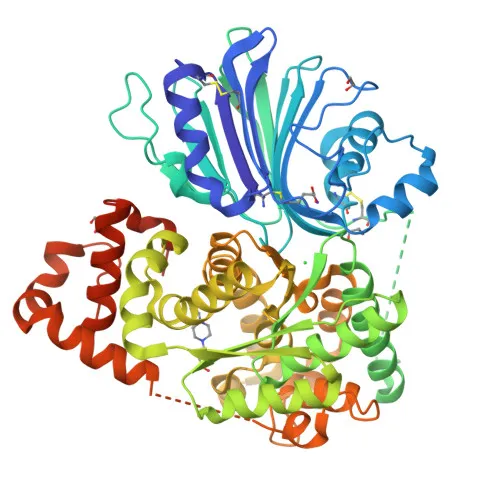
- The protein has been identified in proteomics studies (keyword: Proteomics identification) and its 3D structure has been resolved (3D-structure).
- Molecular weight is approximately 64 kDa, consistent with the 64370 Da from UniProt.
Experimental Guidance and Technical Tips
- For western blotting, expect a dominant band near 64 kDa; use appropriate positive controls (e.g., HeLa or HEK293 cell lysates) and consider knockout validation to confirm specificity.
- In immunohistochemistry on paraffin sections, antigen retrieval may be required; optimize primary antibody dilution and detection conditions for your sample type.
- The immunogen spans the C-terminal region (aa 262–561), ensuring recognition of full-length ASNS; cross-reactivity with mouse and rat is expected based on sequence homology.
- For ELISA applications, pairing with a suitable detection antibody may enhance assay performance; validate in the relevant matrix.
CamelBio: Your One-Stop Sourcing Bridge
CamelBio provides diagnostic manufacturers, labs, and research institutes with one-stop access to IVD raw materials, technical services, and consulting, supporting your entire journey from concept to clinic. Our anti-ASNS polyclonal antibody is part of a comprehensive portfolio for amino acid metabolism and cancer research targets. Beyond this product, we offer validated antibody pairs, optimized monoclonal and polyclonal antibodies, bulk ancillary reagents, and rare target sourcing to streamline your diagnostic development.
REQUEST A QUOTE
Our professional team will reply to you within one business day. Please feel free to contact us!