Monoclonal Antibodies
Anti-ARPC5 (p16-ARC) Rabbit Monoclonal Antibody for WB and ELISA - O15511
Item Number : CM0012716
Price varies based on specs and customizations
- Application
- WB, ELISA
- Cross Reactivity
- Human, Mouse, Rat
- Protein Weight
- 16kDa

Shipping:
Contact us to get shipping details Enjoy On-time Dispatch Guarantee.
Why Choose Us
Easy ordering process, quality products, and dedicated support for your business success.
Core Product Specifications and Parameters
| Parameter | Value |
|---|---|
| Product Name | p16-ARC/ARC16/ARPC5 Rabbit mAb |
| Remarks/Alias | ARC16; p16-Arc; dJ127C7.3; p16-ARC/ARC16/ARPC5 |
| Species | Human |
| GeneID (Human) | 10092 |
| GeneID | 10092 |
| Immunogen | Synthetic Peptide: A synthetic peptide corresponding to a sequence within amino acids 1-100 of human p16-ARC/ARC16/ARPC5 (O15511) |
| Source | Rabbit |
| Category | Monoclonal Antibodies |
| Application | WB, ELISA |
| Cross Reactivity | Human, Mouse, Rat |
| SWISS | O15511 |
| Protein Weight | 16kDa |
| Shipping | Ice bag |
Biological Background: p16-ARC/ARPC5 Function and Localization
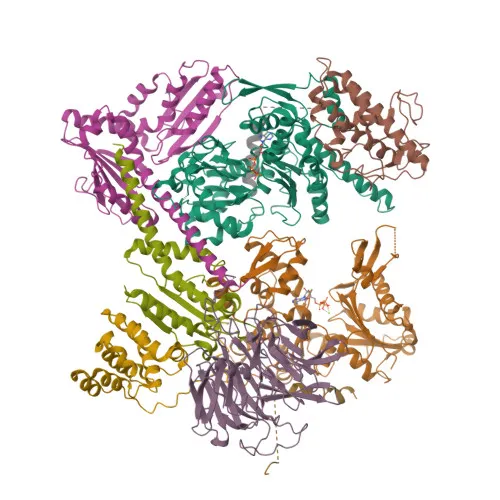
- ARPC5, also known as p16-ARC, is the 16 kDa subunit of the Arp2/3 complex, a key regulator of actin nucleation and branching. Related references: PMID:9230079
- The Arp2/3 complex responds to nucleation-promoting factors (NPFs) to generate branched actin networks, which provide the mechanical force for cell motility and cytoplasmic organization. Related references: PMID:9230079
- Beyond the cytoplasm, nuclear Arp2/3-driven actin polymerization supports gene transcription and facilitates homologous recombination repair of DNA double-strand breaks. Related references: PMID:29925947
- ARPC5 is found in multiple subcellular compartments: cytoplasm, cytoskeleton, cell projections, and the nucleus, consistent with its dual cytoplasmic and nuclear functions.
- Post-translational modifications including acetylation and ubiquitin-like conjugation, together with alternative splicing, contribute to the structural and functional versatility of ARPC5.
Experimental Guidance and Technical Tips
- The immunogen is a synthetic peptide spanning amino acids 1–100 of human ARPC5; thus, the antibody likely targets the N-terminal domain. Confirm that your experimental system expresses ARPC5 isoforms containing this region.
- For Western blot (WB), ARPC5 migrates at approximately 16 kDa. Use a 12–15% SDS-PAGE gel and include low-molecular-weight markers. Validate detection with positive control lysates from human, mouse, or rat samples.
- In ELISA applications, optimize coating conditions and antibody dilution using purified antigen or target-containing samples. The antibody is suitable for both direct and sandwich ELISA formats.
- Because ARPC5 is conserved among human, mouse, and rat, this antibody can be utilized for cross-species studies. However, it is advisable to perform a species-specific validation in the user’s model system.
- For nuclear functional assays, consider subcellular fractionation to enrich the nuclear pool of ARPC5, as the protein shuttles between cytoplasmic and nuclear compartments.
CamelBio: Your One-Stop Sourcing Bridge
CamelBio serves as a comprehensive sourcing partner for diagnostic manufacturers and research laboratories, offering a wide range of IVD raw materials including validated antibody pairs, monoclonal antibodies, and ancillary reagents. For researchers investigating cytoskeleton dynamics, DNA damage repair, or cell motility, CamelBio facilitates access to ARPC5/p16-ARC antibodies and related tools, streamlining the transition from discovery to assay development. Our integrated supply chain and technical consultation ensure reliable procurement and project support for rare and routine targets alike.
Product Datasheet
Anti-ARPC5 (p16-ARC) Rabbit Monoclonal Antibody for WB and ELISA - O15511
REQUEST A QUOTE
Our professional team will reply to you within one business day. Please feel free to contact us!