Polyclonal Antibodies
Anti-ARPC2 Polyclonal Antibody for WB, IHC-P, ELISA - O15144
Item Number : CM0014659
Price varies based on specs and customizations
- Application
- WB, IHC-P, ELISA
- Cross Reactivity
- Human, Mouse, Rat
- Protein Weight
- 34kDa

Shipping:
Contact us to get shipping details Enjoy On-time Dispatch Guarantee.
Why Choose Us
Easy ordering process, quality products, and dedicated support for your business success.
Core Product Specifications and Parameters
| Core Parameter | Specification |
|---|---|
| Product Name | ARPC2 Rabbit pAb |
| Remarks/Alias | ARC34; PRO2446; p34-Arc; PNAS-139; ARPC2 |
| Species | Human |
| Gene ID (Human) | 10109 |
| Gene ID | 10109 |
| Immunogen | Recombinant fusion protein containing a sequence corresponding to amino acids 1-300 of human ARPC2 (NP_690601.1) |
| Source | Rabbit |
| Category | Polyclonal Antibodies |
| Application | WB, IHC-P, ELISA |
| Cross Reactivity | Human, Mouse, Rat |
| SWISS | O15144 |
| Protein Weight | 34kDa |
| Shipping | Ice bag |
Biological Background: ARPC2 Function and Localization
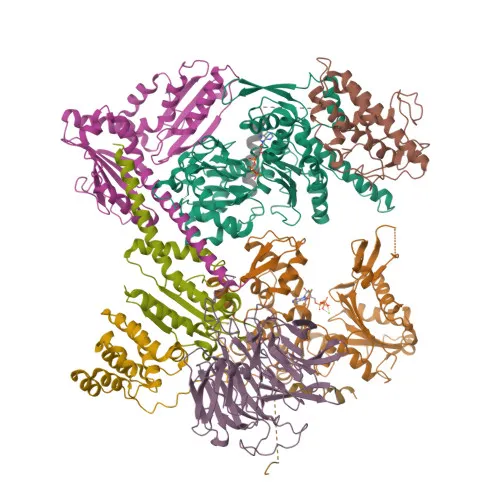
- ARPC2 (Actin-related protein 2/3 complex subunit 2), also known as p34-Arc or ARC34, is an actin-binding component of the Arp2/3 complex, a multiprotein assembly that nucleates actin polymerization upon stimulation by nucleation-promoting factors. Related references: PMID:9230079
- The Arp2/3 complex mediates the formation of branched actin networks in the cytoplasm, providing the mechanical force for cell motility. Related references: PMID:9230079
- Within the complex, ARPC2 is thought to contact the mother actin filament. Related references: PMID:9230079
- In the nucleus, ARPC2 contributes to Arp2/3-mediated actin polymerization, which regulates gene transcription and promotes homologous recombination repair of DNA double-strand breaks. Related references: PMID:29925947
- ARPC2 localizes to the cytoplasm, cytoskeleton, cell projections, synaptic compartments, and the nucleus.
- Post-translational modifications include acetylation, and the protein is classified under keywords: Actin-binding, Cytoskeleton, Nucleus, among others.
Experimental Guidance and Technical Tips
- Given the immunogen corresponds to the N-terminal region (amino acids 1–300), the antibody may recognize full-length ARPC2; verify specificity with appropriate controls.
- For western blot (WB), the predicted molecular weight is ~34 kDa; consider using a suitable protein ladder and optimize blocking and detection conditions.
- In immunohistochemistry (IHC-P), antigen retrieval methods may influence staining; validate in relevant tissue sections expressing ARPC2.
- ELISA performance depends on coating antigen and detection format; perform checkerboard titrations to establish optimal working concentrations.
- Note cross-reactivity has been reported for human, mouse, and rat; if using in other species, conduct in-house validation.
CamelBio: Your One-Stop Sourcing Bridge
CamelBio provides diagnostic manufacturers, labs, and research institutes with streamlined access to IVD raw materials, including validated antibody pairs, optimized polyclonal and monoclonal antibodies, and bulk ancillary reagents. For researchers studying the Arp2/3 actin nucleation complex, we offer one-stop procurement support for ARPC2-targeting tools and related rare-target raw materials. Our technical consulting and supply solutions help bridge the gap from early-stage discovery to clinical application, ensuring reliable sourcing for your immunoassay development needs.
REQUEST A QUOTE
Our professional team will reply to you within one business day. Please feel free to contact us!