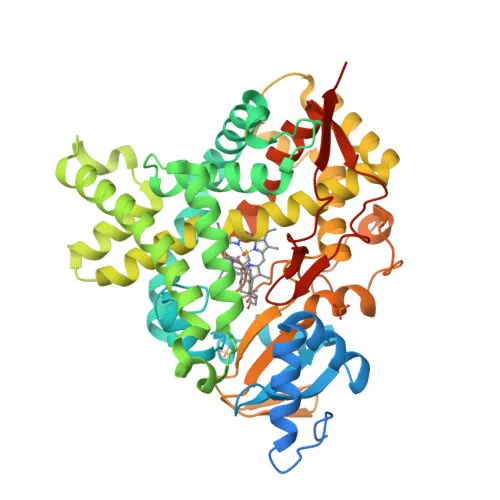
Polyclonal Antibodies
Anti-Aromatase (CYP19A1) Polyclonal Antibody for WB - P11511
Item Number : CM0024066
Price varies based on specs and customizations
- Application
- WB, IHC-P, ELISA
- Cross Reactivity
- Human, Mouse, Rat
- Protein Weight
- 58kDa

Shipping:
Contact us to get shipping details Enjoy On-time Dispatch Guarantee.
Why Choose Us
Easy ordering process, quality products, and dedicated support for your business success.
Core Product Specifications and Parameters
| Parameter | Value |
|---|---|
| Product Name | Aromatase (CYP19A1) Rabbit pAb |
| Remarks/Alias | ARO; ARO1; CPV1; CYAR; CYP19; CYPXIX; P-450AROM; Aromatase (CYP19A1) |
| Species | Human |
| Gene ID (Human) | 1588 |
| Gene ID | 1588 |
| Immunogen | Recombinant fusion protein containing a sequence corresponding to amino acids 234-503 of human Aromatase (CYP19A1) (NP_000094.2) |
| Source | Rabbit |
| Category | Polyclonal Antibodies |
| Application | WB, IHC-P, ELISA |
| Cross Reactivity | Human, Mouse, Rat |
| SWISS | P11511 |
| Protein Weight | 58kDa |
| Shipping | Ice bag |
Biological Background: Aromatase Function and Localization
- Aromatase (CYP19A1) catalyzes the conversion of androstenedione and testosterone to estrone and estradiol, respectively, serving as a key enzyme in estrogen biosynthesis. (PubMed:27702664, PubMed:2848247) Related references: PMID:27702664 PMID:2848247
- The enzyme performs three successive oxidations: two conventional oxidations at C19, followed by an aromatization step involving C1-beta hydrogen abstraction and C10-C19 bond cleavage, yielding a phenolic A ring and formic acid. (PubMed:20385561) Related references: PMID:20385561
- Additionally, aromatase converts dihydrotestosterone to delta1,10-dehydro 19-nordihydrotestosterone and exhibits 2-hydroxylase activity toward estrone, suggesting a role in androgen homeostasis. (PubMed:22773874) Related references: PMID:22773874
- Subcellularly, aromatase is anchored in the endoplasmic reticulum membrane and microsomal membrane, where it functions as a monooxygenase relying on NADPH-cytochrome P450 reductase for electron transfer.
- The protein is widely expressed across multiple tissues, including adult and fetal brain, placenta, skin fibroblasts, adipose tissue, and gonads.
- Aromatase contains a heme iron cofactor and exists in alternatively spliced isoforms; mutations in the CYP19A1 gene are associated with pseudohermaphroditism.
Experimental Guidance and Technical Tips
- The immunogen corresponds to amino acids 234-503 of human Aromatase; verify that this epitope region is accessible in your experimental system, especially if using native protein extracts.
- For western blot, expect a band at approximately 58 kDa; use pre-stained markers and suitable loading controls. Consider using a reducing SDS-PAGE gel for consistent resolution.
- When performing immunohistochemistry, note the membrane localization; antigen retrieval may be required for formalin-fixed paraffin-embedded sections.
- The antibody cross-reacts with mouse and rat; validate specificity in relevant tissue lysates before quantitative assays.
CamelBio: Your One-Stop Sourcing Bridge
CamelBio empowers diagnostic manufacturers and research laboratories by providing reliable, one-stop access to high-quality IVD raw materials and technical support. This anti-Aromatase polyclonal antibody supports estrogen biosynthesis and hormone-related studies; we also offer validated antibody pairs, optimized monoclonal and polyclonal antibodies, bulk ancillary reagents, and custom sourcing for rare targets. Whether you need scalable supply or tailored solutions, CamelBio bridges your project from concept to clinic.
REQUEST A QUOTE
Our professional team will reply to you within one business day. Please feel free to contact us!