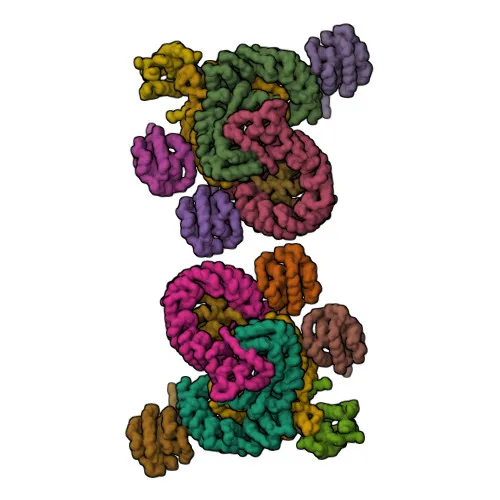
Polyclonal Antibodies
Anti-ARF1 Rabbit Polyclonal Antibody for WB, ELISA - P84077
Item Number : CM0024098
Price varies based on specs and customizations
- Application
- WB, ELISA
- Cross Reactivity
- Human, Mouse, Rat
- Protein Weight
- 21kDa

Shipping:
Contact us to get shipping details Enjoy On-time Dispatch Guarantee.
Why Choose Us
Easy ordering process, quality products, and dedicated support for your business success.
Core Product Specifications and Parameters
| Parameter | Value |
|---|---|
| Product Name | ARF1 Rabbit pAb |
| Remarks/Alias | PVNH8; ARF1 |
| Species | Human |
| GeneID (Human) | 375 |
| GeneID | 375 |
| Immunogen | Recombinant fusion protein containing a sequence corresponding to amino acids 1-181 of human ARF1 (NP_001649.1). |
| Source | Rabbit |
| Category | Polyclonal Antibodies |
| Application | WB, ELISA |
| Cross Reactivity | Human, Mouse, Rat |
| SWISS | P84077 |
| Protein Weight | 21kDa |
| Shipping | Ice bag |
Biological Background: ARF1 Function and Localization
- ARF1 (ADP-ribosylation factor 1) is a small GTPase of the ARF family, encoded by the ARF1 gene in humans.
- It regulates protein trafficking by modulating vesicle budding and uncoating within the Golgi complex. Related references: PMID:8253837
- In the GTP-bound state, ARF1 recruits coatomer proteins to Golgi membranes; GTP hydrolysis by ARFGAPs triggers coat dissociation, a step essential for transport vesicle formation. Related references: PMID:8253837
- ARF1 interacts with PICK1 to limit inhibition of the Arp2/3 complex, thereby modulating AMPA receptor trafficking and spine shrinkage during long-term depression.
- It maintains intestinal homeostasis by regulating stem cells and gut microbiota, and promotes mast cell expansion through mTORC1 activation.
- During microbial infection, ARF1 acts as an allosteric activator of cholera toxin’s catalytic subunit.
- ARF1 is predominantly localized at the Golgi apparatus membrane, and also found at synapses, synaptosomes, and postsynaptic densities.
- Post-translational modifications include N-myristoylation and acetylation; it features GTP-binding and hydrolase activities.
Experimental Guidance and Technical Tips
- The immunogen covers full-length ARF1 (aa 1‑181), which may recognize both GTP- and GDP-bound conformations; consider using nucleotide-specific conditions for functional studies.
- For Western blot, expect a band at approximately 21 kDa. Validate in the relevant sample system and include proper controls to confirm specificity.
- Cross-reactivity with mouse and rat supports rodent model experiments; however, tissue-specific expression levels should be verified.
- In ELISA applications, use recombinant ARF1 as a standard and optimize coating conditions for reproducible results.
CamelBio: Your One-Stop Sourcing Bridge
CamelBio is your one-stop sourcing partner for IVD raw materials, providing validated antibody pairs, optimized monoclonal/polyclonal antibodies, bulk ancillary reagents, and rare target sourcing—covering every stage from concept to clinic. This anti-ARF1 polyclonal antibody supports research in intracellular trafficking, synaptic plasticity, and host‑pathogen interactions. Contact CamelBio for reliable supply and technical assistance to accelerate your diagnostic assay development.
REQUEST A QUOTE
Our professional team will reply to you within one business day. Please feel free to contact us!