Polyclonal Antibodies
Anti-Apolipoprotein C3 Polyclonal Antibody for WB, IF, IHC, ELISA - P02656
Item Number : CM0017647
Price varies based on specs and customizations
- Application
- WB, IF/ICC, IF-P, IHC-P, ELISA
- Cross Reactivity
- Human, Mouse, Rat
- Protein Weight
- 11kDa

Shipping:
Contact us to get shipping details Enjoy On-time Dispatch Guarantee.
Why Choose Us
Easy ordering process, quality products, and dedicated support for your business success.
Core Product Specifications and Parameters
| Parameter | Value |
|---|---|
| Product Name | Apolipoprotein C3 Rabbit pAb |
| Remarks/Alias | Apo-C3; ApoC-3; APOCIII; Apolipoprotein C3 |
| Species | Human |
| Gene ID (Human) | 345 |
| Gene ID | 345 |
| Immunogen | Synthetic peptide corresponding to a sequence within amino acids 1-99 of human Apolipoprotein C3 (NP_000031.1) |
| Source | Rabbit |
| Category | Polyclonal Antibodies |
| Application | WB, IF/ICC, IF-P, IHC-P, ELISA |
| Cross Reactivity | Human, Mouse, Rat |
| SWISS | P02656 |
| Protein Weight | 11kDa |
| Shipping | Ice bag |
Biological Background: Apolipoprotein C3 Function and Localization
-
Apolipoprotein C-III (APOC3) is a component of very low density lipoproteins (VLDL) and high density lipoproteins (HDL) in plasma, playing a multifaceted role in triglyceride homeostasis by promoting hepatic VLDL assembly/secretion and attenuating clearance of triglyceride-rich lipoproteins (TRLs). Related references: PMID:18201179, PMID:22510806
-
It inhibits lipoprotein lipase activity, thereby impairing the lipolysis of TRLs and their hepatic uptake via remnant receptors. Related references: PMID:18201179, PMID:22510806
-
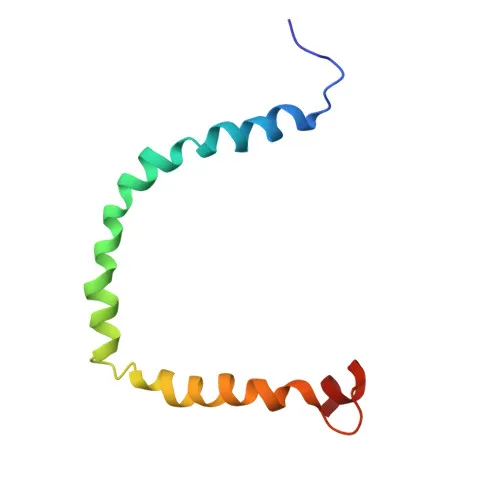
The protein is formed of several curved helices connected by semiflexible hinges, enabling it to wrap tightly around curved micelle surfaces and adapt to different diameters of its natural binding partners. Related references: PMID:18408013
-
APOC3 is primarily synthesized in the liver and secreted into the bloodstream.
-
It is a glycoprotein that contains sialic acid residues, classified under keywords such as lipid transport, lipid degradation, chylomicron, and VLDL.
-
Genetic variants of APOC3 are associated with altered triglyceride levels and are linked to hypertriglyceridemia.
Experimental Guidance and Technical Tips
- The immunogen used is a synthetic peptide spanning the N-terminal region (amino acids 1-99) of human APOC3. This polyclonal antibody may recognize full-length native and denatured APOC3.
- For western blotting, a band of approximately 11 kDa is expected under reducing conditions; validate using liver or plasma-derived samples.
- In immunohistochemistry (IHC-P) and immunofluorescence (IF/ICC, IF-P), consider using liver tissue sections where APOC3 is abundantly expressed. Optimization of fixation and antigen retrieval conditions is recommended.
- Given the reported cross-reactivity with mouse and rat, verify specificity in the relevant experimental model systems.
- For ELISA applications, pairing with a suitable detection antibody may be necessary; confirm linearity and sensitivity using recombinant or native protein standards.
CamelBio: Your One-Stop Sourcing Bridge
CamelBio provides diagnostic manufacturers and research laboratories with comprehensive access to IVD raw materials, supporting every stage from concept to clinic. This Apolipoprotein C3 polyclonal antibody is a valuable tool for lipid metabolism and cardiovascular disease research. In addition to validated antibodies, we offer optimized antibody pairs, bulk ancillary reagents, and rare target sourcing to streamline your assay development.
REQUEST A QUOTE
Our professional team will reply to you within one business day. Please feel free to contact us!