Polyclonal Antibodies
Anti-APOBEC3C Polyclonal Antibody for WB - Q9NRW3
Item Number : CM0015399
Price varies based on specs and customizations
- Application
- WB, IF/ICC, IP, ELISA
- Cross Reactivity
- Human
- Protein Weight
- 23kDa

Shipping:
Contact us to get shipping details Enjoy On-time Dispatch Guarantee.
Why Choose Us
Easy ordering process, quality products, and dedicated support for your business success.
Core Product Specifications and Parameters
| Parameter | Value |
|---|---|
| Product Name | APOBEC3C Rabbit pAb |
| Remarks/Alias | A3C; PBI; ARP5; ARDC2; ARDC4; APOBEC1L; bK150C2.3; APOBEC3C |
| Species | Human |
| Gene ID (Human) | 27350 |
| Immunogen | Recombinant fusion protein containing a sequence corresponding to amino acids 1-190 of human APOBEC3C (NP_055323.2) |
| Source | Rabbit |
| Category | Polyclonal Antibodies |
| Application | WB, IF/ICC, IP, ELISA |
| Cross Reactivity | Human |
| SWISS | Q9NRW3 |
| Protein Weight | 23kDa |
| Shipping | Ice bag |
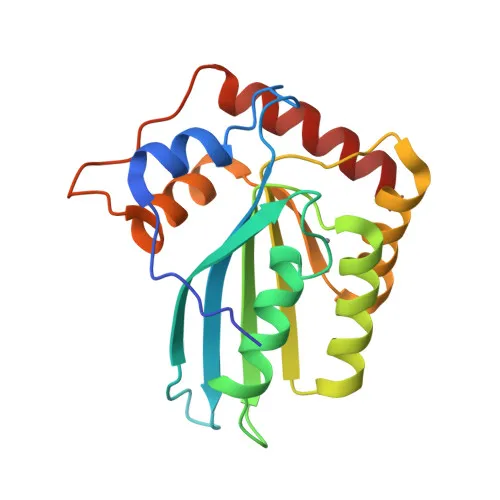
Biological Background: APOBEC3C Function and Localization
- APOBEC3C is a DNA cytidine deaminase that catalyzes the conversion of cytosine to uracil in single-stranded DNA, acting as a restriction factor against retroviruses and retrotransposons.
- Functions via both deamination-dependent and -independent mechanisms to inhibit retroviral replication, inducing G-to-A hypermutations in viral DNA and blocking proviral integration.
- Exhibits antiviral activity against a broad range of viruses including SIV, HBV, HHV-1, and EBV, and may suppress LTR and non-LTR retrotransposon mobility.
- Localizes to both the nucleus and cytoplasm, consistent with its role in genome surveillance and host defense.
- Expressed in immune-related and reproductive tissues such as spleen, peripheral blood lymphocytes, thymus, testes, prostate, and ovary.
- Belongs to the APOBEC3 family of cytidine deaminases, characterized by a zinc-binding deaminase domain essential for catalytic activity.
- Implicated in epigenetic regulation through active DNA demethylation, potentially influencing gene expression.
- Keywords include antiviral defense, innate immunity, host-virus interaction, and metal-binding.
Experimental Guidance and Technical Tips
- The immunogen corresponds to the full-length human APOBEC3C sequence (amino acids 1-190), which should generate antibodies recognizing multiple epitopes across the native protein.
- For Western blot (WB), expect a specific band near 23 kDa. Titrate antibody concentration and use appropriate positive control lysates (e.g., spleen, testis, or lymphocyte-derived cell lines).
- In immunofluorescence (IF/ICC), the protein localizes to both the nucleus and cytoplasm; optimize fixation and permeabilization conditions to preserve antigenicity.
- For immunoprecipitation (IP), the polyclonal nature of the antibody may enhance capture efficiency; confirm co-precipitation of binding partners under native conditions.
- In ELISA, validate the antibody pair with a suitable capture/detection system, considering the antibody's recognition of multiple epitopes.
CamelBio: Your One-Stop Sourcing Bridge
CamelBio streamlines your IVD development by providing high-quality raw materials like this anti-APOBEC3C polyclonal antibody, validated for key applications in antiviral research and diagnostics. Our portfolio includes optimized antibody pairs, monoclonal/polyclonal antibodies, and ancillary reagents to support your assay development from concept to clinic. Leverage our expertise to source rare target reagents and accelerate your diagnostic pipeline.
REQUEST A QUOTE
Our professional team will reply to you within one business day. Please feel free to contact us!