Polyclonal Antibodies
Anti-APLF Rabbit Polyclonal Antibody for WB, ELISA - Q8IW19
Item Number : CM0020106
Price varies based on specs and customizations
- Application
- WB, ELISA
- Cross Reactivity
- Rat
- Protein Weight
- 57kDa

Shipping:
Contact us to get shipping details Enjoy On-time Dispatch Guarantee.
Why Choose Us
Easy ordering process, quality products, and dedicated support for your business success.
Core Product Specifications and Parameters
| Parameter | Value |
|---|---|
| Product Name | APLF Rabbit pAb |
| Remarks/Alias | APFL; PALF; Xip1; ZCCHH1; C2orf13; APLF |
| Species | Human |
| GeneID (Human) | 200558 |
| GeneID | 200558 |
| Immunogen | Recombinant fusion protein containing a sequence corresponding to amino acids 200-380 of human APLF (NP_775816.1) |
| Source | Rabbit |
| Category | Polyclonal Antibodies |
| Application | WB, ELISA |
| Cross Reactivity | Rat |
| SWISS | Q8IW19 |
| Protein Weight | 57kDa |
| Shipping | Ice bag |
Biological Background: APLF Function and Localization
- APLF acts as a histone chaperone essential for single-strand and double-strand DNA break repair.
Related references: PMID:17353262, PMID:17396150, PMID:21211721 - It is recruited to DNA damage sites by binding branched poly-ADP-ribose chains, where it promotes histone eviction and recruitment of the histone variant MACROH2A1.
Related references: PMID:21211722, PMID:29905837, PMID:30104678 - APLF possesses apurinic-apyrimidinic (AP) endonuclease and 3'-5' exonuclease activities and can introduce nicks at hydroxyuracil and other pyrimidine base damage in vitro.
Related references: PMID:17353262, PMID:17396150 - In the non-homologous end joining (NHEJ) pathway, APLF collaborates with PARP3 to retain the LIG4-XRCC4 complex on chromatin, accelerating DNA ligation.
Related references: PMID:21211721, PMID:23689425 - APLF negatively regulates cell pluripotency by promoting histone exchange and is required for embryo implantation during the epithelial-to-mesenchymal transition in females.
- Subcellularly, APLF localizes to the nucleus, chromosomes, and cytoplasm/cytosol, consistent with its DNA repair and chromatin regulatory functions.
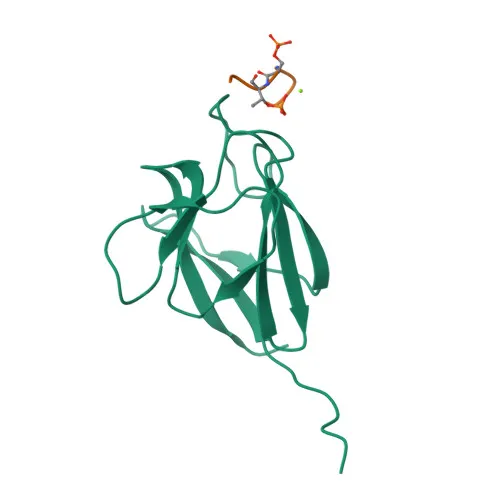
- Structural motifs include an FHA domain, zinc-finger repeats, and sites for phosphorylation and ADP-ribosylation, highlighting its role in signal-dependent DNA damage responses.
Experimental Guidance and Technical Tips
- For Western blot, expect a band near 57 kDa in human-derived samples; include a positive control such as the recombinant immunogen (aa 200-380) to confirm detection.
- As cross-reactivity with rat has been observed, validate the antibody in rat cell or tissue lysates if your research involves rodent models.
- For ELISA applications, coating with the recombinant APLF fragment may improve signal specificity; assay conditions should be optimized empirically.
- Given APLF's nuclear and cytoplasmic localization, consider subcellular fractionation to enrich the target for more sensitive detection in WB.
- Since APLF is involved in DNA damage, treatment with DNA-damaging agents may increase protein recruitment to chromatin; time-course experiments may reveal dynamic localization changes.
CamelBio: Your One-Stop Sourcing Bridge
This APLF polyclonal antibody is part of CamelBio’s comprehensive portfolio for DNA repair and genomic stability research. As a dedicated IVD raw-material partner, CamelBio offers validated antibody pairs, optimized monoclonal and polyclonal antibodies, ancillary reagents, and customized sourcing for rare targets—streamlining your path from discovery to clinical application.
REQUEST A QUOTE
Our professional team will reply to you within one business day. Please feel free to contact us!