Polyclonal Antibodies
Anti-APH1A Rabbit Polyclonal Antibody for WB, IF/ICC, ELISA - Q96BI3
Item Number : CM0018321
Price varies based on specs and customizations
- Application
- WB, IF/ICC, ELISA
- Cross Reactivity
- Human, Mouse
- Protein Weight
- 29kDa

Shipping:
Contact us to get shipping details Enjoy On-time Dispatch Guarantee.
Why Choose Us
Easy ordering process, quality products, and dedicated support for your business success.
Core Product Specifications and Parameters
| Parameter | Value |
|---|---|
| Product Name | APH1A Rabbit pAb |
| Remarks/Alias | APH-1; APH-1A; CGI-78; 6530402N02Rik; APH1A |
| Species | Human |
| GeneID (Human) | 51107 |
| GeneID | 51107 |
| Immunogen | Synthetic Peptide|A synthetic peptide corresponding to a sequence within amino acids 200 to the C-terminus of human APH1A (NP_001071096.1). |
| Source | Rabbit |
| Category | Polyclonal Antibodies |
| Application | WB, IF/ICC, ELISA |
| Cross Reactivity | Human, Mouse |
| SWISS | Q96BI3 |
| Protein Weight | 29kDa |
| Shipping | Ice bag |
Biological Background: APH1A Function and Localization
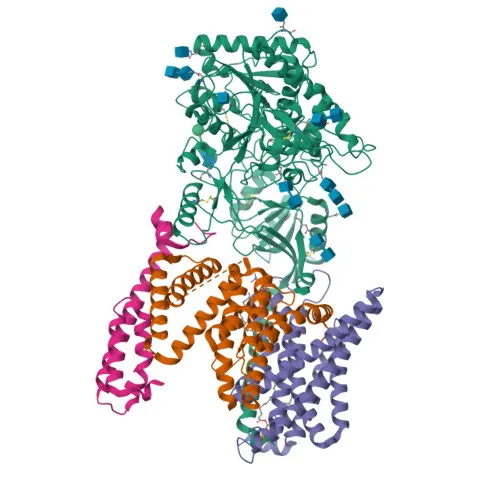
- APH1A (gamma-secretase subunit APH-1A) is a non-catalytic component of the gamma-secretase complex, an endoprotease that catalyzes the intramembrane cleavage of integral membrane proteins such as Notch receptors and amyloid-beta precursor protein (APP). Related references: PMID:12297508, PMID:12522139, PMID:12679784
- APH1A is required for normal gamma-secretase assembly and stability, contributing to the maturation and trafficking of the complex. Related references: PMID:12471034, PMID:12522139, PMID:12763021
- The gamma-secretase complex, through APH1A's role, participates in Notch and Wnt signaling pathways, influencing downstream cellular processes and regulating cytosolic beta-catenin (CTNNB1) levels.
- APH1A localizes predominantly to the endoplasmic reticulum and Golgi apparatus membranes, consistent with its function in early secretory pathway processing.
- APH1A is widely expressed across human tissues, including leukocytes, lung, placenta, small intestine, liver, kidney, spleen, thymus, skeletal muscle, heart, and brain. Two major isoforms are expressed at similar levels.
- APH1A is a multi-pass transmembrane protein with several helical domains and is subject to alternative splicing, yielding multiple isoforms.
Experimental Guidance and Technical Tips
- The immunogen corresponds to the C-terminal region (aa 200-C-terminus) of human APH1A, which may recognize both major isoforms. For WB, APH1A is predicted at ~29 kDa; however, post-translational modifications or protein complex formation might result in additional bands.
- For IF/ICC, consider optimizing fixation and permeabilization conditions, as APH1A is a transmembrane protein localized to the ER and Golgi. Use appropriate organelle markers for colocalization studies.
- For ELISA, validate the antibody with the relevant peptide or recombinant protein to ensure optimal sensitivity and specificity in your assay system.
- As a polyclonal antibody, lot-to-lot variability may exist; it is advisable to titrate the antibody for each new application and sample type.
CamelBio: Your One-Stop Sourcing Bridge
CamelBio serves as a comprehensive sourcing partner for IVD raw materials, supporting diagnostic manufacturers and research laboratories from concept to clinic. For APH1A and gamma-secretase research, we offer validated antibody pairs, optimized monoclonal and polyclonal antibodies, bulk ancillary reagents, and rare target raw-material sourcing. Our integrated supply chain ensures access to high-quality reagents for your assay development needs.
REQUEST A QUOTE
Our professional team will reply to you within one business day. Please feel free to contact us!