Monoclonal Antibodies
Anti-AP1G1 Rabbit Monoclonal Antibody for WB, IHC-P, ELISA - O43747
Item Number : CM0003510
Price varies based on specs and customizations
- Application
- WB, IHC-P, ELISA
- Cross Reactivity
- Human, Mouse, Rat
- Protein Weight
- 91kDa

Shipping:
Contact us to get shipping details Enjoy On-time Dispatch Guarantee.
Why Choose Us
Easy ordering process, quality products, and dedicated support for your business success.
Core Product Specifications and Parameters
| Parameter | Value |
|---|---|
| Product Name | AP1G1 Rabbit mAb |
| Remarks/Alias | ADTG; CLAPG1; USRISD; AP1G1 |
| Species | Human |
| Gene ID (Human) | 164 |
| Gene ID | 164 |
| Immunogen | A synthetic peptide corresponding to a sequence within amino acids 723-822 of human AP1G1 (O43747) |
| Source | Rabbit |
| Category | Monoclonal Antibodies |
| Application | WB, IHC-P, ELISA |
| Cross Reactivity | Human, Mouse, Rat |
| SWISS | O43747 |
| Protein Weight | 91kDa |
| Shipping | Ice bag |
Biological Background: AP1G1 Function and Localization
- Encoded by the AP1G1 gene (aliases ADTG, CLAPG1), the AP-1 complex subunit gamma-1 (also known as gamma-adaptin) is a large chain of the heterotetrameric adaptor protein complex 1 (AP-1). It belongs to the adaptin family of clathrin-associated proteins.
- As a core subunit of the AP-1 complex, AP1G1 mediates protein sorting in the late-Golgi/trans-Golgi network (TGN) and endosomes. It facilitates clathrin recruitment to membranes and recognizes sorting signals on transmembrane cargo proteins. Specifically, in association with AFTPH/aftiphilin, it regulates the trafficking of transferrin, furin, and cathepsin D between the TGN and endosomes.
Related references:
PMID:15758025 - AP1G1 localizes to the Golgi apparatus, clathrin-coated vesicles, and the perinuclear region of the cytoplasm, consistent with its function in membrane trafficking pathways.
- The protein is part of the AP-1 complex, which is composed of two large chains (gamma and beta1), a medium chain (mu1), and a small chain (sigma1). Alternative splicing of the AP1G1 gene generates multiple isoforms that may diversify its functional and localization repertoire.
- AP1G1 is widely expressed across tissues, underscoring its fundamental role in cellular membrane dynamics.
- Mutations in AP1G1 are linked to USRISD, an autosomal recessive syndrome characterized by intellectual disability, spasticity, short stature, and skeletal anomalies, highlighting the protein's importance in neurodevelopment and other processes.
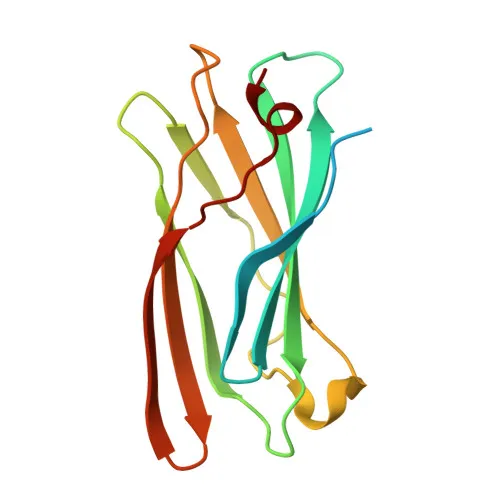
- Key annotated features include 3D-structure determination, alternative splicing, coated pit formation, cytoplasmic vesicle involvement, and a disease association with intellectual disability.
Experimental Guidance and Technical Tips
- The immunogen for this antibody is a synthetic peptide corresponding to amino acids 723–822 of human AP1G1. This region is likely specific to the gamma-1 subunit, minimizing cross-reactivity with other adaptor complex proteins. For researchers generating custom antibodies, similar peptide design strategies may be considered.
- This rabbit monoclonal antibody is validated for Western blot (WB), immunohistochemistry (paraffin, IHC-P), and ELISA. For WB, the target protein migrates at approximately 91 kDa; it is recommended to use appropriate molecular weight markers and validate against known positive and negative control lysates.
- For IHC-P on formalin-fixed paraffin-embedded tissues, consider optimizing antigen retrieval methods (e.g., heat-induced epitope retrieval) and titrating the antibody to achieve specific staining with low background. Due to cross-reactivity with mouse and rat, this antibody may be suitable for analyzing AP1G1 in rodent models.
- As with all antibodies, we advise initial titration experiments to determine optimal working dilutions in your specific assay conditions.
CamelBio: Your One-Stop Sourcing Bridge
CamelBio serves as a comprehensive sourcing partner for IVD raw materials, offering a broad portfolio of validated antibodies, bulk reagents, and custom procurement services. This AP1G1 monoclonal antibody exemplifies our capability to deliver high-quality reagents for clathrin-mediated trafficking and membrane biology research. Whether you need antibody pairs, optimized monoclonals, or assistance with rare-target material sourcing, CamelBio provides end-to-end support to accelerate your diagnostic assay development.
REQUEST A QUOTE
Our professional team will reply to you within one business day. Please feel free to contact us!