Polyclonal Antibodies
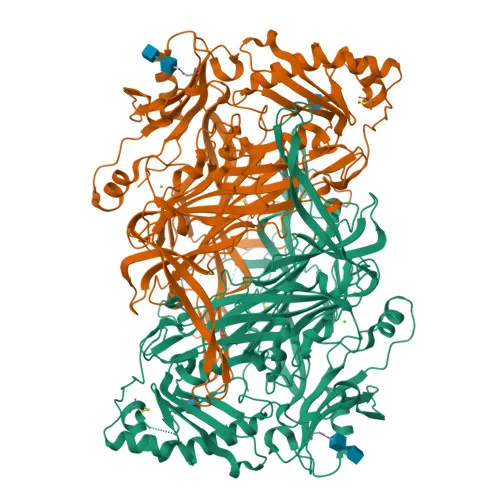
Anti-AOC3 Rabbit Polyclonal Antibody for WB and ELISA - Q16853
Item Number : CM0023158
Price varies based on specs and customizations
- Application
- WB, ELISA
- Cross Reactivity
- Mouse, Rat
- Protein Weight
- 85kDa

Shipping:
Contact us to get shipping details Enjoy On-time Dispatch Guarantee.
Why Choose Us
Easy ordering process, quality products, and dedicated support for your business success.
Core Product Specifications and Parameters
| Parameter | Value |
|---|---|
| Product Name | AOC3 Rabbit pAb |
| Remarks/Alias | HPAO; SSAO; VAP1; VAP-1; AOC3 |
| Species | Human |
| Gene ID (Human) | 8639 |
| Gene ID | 8639 |
| Immunogen | Recombinant fusion protein containing a sequence corresponding to amino acids 27-190 of human AOC3 (NP_003725.1) |
| Source | Rabbit |
| Category | Polyclonal Antibodies |
| Application | WB, ELISA |
| Cross Reactivity | Mouse, Rat |
| SWISS | Q16853 |
| Protein Weight | 85kDa |
| Shipping | Ice bag |
Biological Background: AOC3 Function and Localization
- Encoded by AOC3 gene, also known as VAP-1, SSAO, or HPAO; belongs to the copper-containing amine oxidase family.
- Catalyzes oxidative deamination of primary amines (e.g., methylamine, benzylamine) to aldehydes, producing H₂O₂ and ammonia. Related references: PMID:19588076 PMID:24304424 PMID:9653080
- Functions as a cell adhesion molecule (VAP-1) mediating lymphocyte binding to endothelial cells, aiding extravasation. Related references: PMID:9254657 PMID:9653080
- Despite historical naming, the protein lacks semicarbazide-sensitive amine oxidase activity; its enzymatic activity is copper-dependent.
- Localizes to the cell membrane; acts as a transmembrane protein with a signal-anchor.
- Contains key structural elements: copper ion binding site, disulfide bonds, and the post-translationally modified residue TPQ (topaquinone) essential for amine oxidase activity.
- Undergoes alternative splicing, yielding at least two isoforms with tissue-specific expression patterns.
- Highly expressed in high endothelial venules of lymph nodes, hepatic endothelia, appendix, lung, small intestine; also found in adipose, bone marrow, heart, kidney, etc. Isoform 2 predominates in fetal tissues and adult skeletal muscle, heart, pancreas, kidney, lung.
Experimental Guidance and Technical Tips
- For Western blotting, a band corresponding to AOC3 is expected near 85 kDa; taking into account post-translational modifications, the observed molecular weight may slightly differ.
- Given the immunogen is an N-terminal fragment (aa 27-190), this antibody may recognize all known isoforms; however, isoform-specific validation is recommended for specialized applications.
- Cross-reactivity with mouse and rat AOC3 is indicated; consider testing in relevant tissue lysates (e.g., adipose, liver, lymph node) where AOC3 is abundantly expressed.
- For ELISA, this polyclonal antibody can be used as a detection reagent; pairing with a monoclonal capture antibody may improve assay specificity — recommend systematic optimization.
CamelBio: Your One-Stop Sourcing Bridge
CamelBio provides diagnostic manufacturers and research laboratories with a single access point for high-quality IVD raw materials, including validated antibody pairs, optimized monoclonal/polyclonal antibodies, and bulk ancillary reagents. From this anti-AOC3 polyclonal antibody to a complete menu of amine-oxidase-related reagents, we help streamline your assay development and procurement workflows. For rare or custom targets, our sourcing network delivers tailored solutions.
REQUEST A QUOTE
Our professional team will reply to you within one business day. Please feel free to contact us!