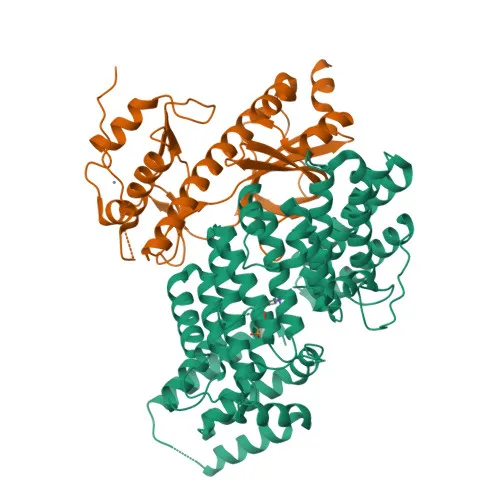
Polyclonal Antibodies
Anti-ALPK1 Rabbit Polyclonal Antibody for WB and ELISA - Q96QP1
Item Number : CM0019498
Price varies based on specs and customizations
- Application
- WB, ELISA
- Cross Reactivity
- Human
- Protein Weight
- 139kDa

Shipping:
Contact us to get shipping details Enjoy On-time Dispatch Guarantee.
Why Choose Us
Easy ordering process, quality products, and dedicated support for your business success.
Core Product Specifications and Parameters
| Parameter | Value |
|---|---|
| Product Name | ALPK1 Rabbit pAb |
| Remarks/Alias | LAK; ROSAH; 8430410J10Rik; ALPK1 |
| Species | Human |
| Gene ID | 80216 |
| Immunogen | Recombinant fusion protein containing a sequence corresponding to amino acids 340-500 of human ALPK1 (NP_001095876.1). |
| Source | Rabbit |
| Category | Polyclonal Antibodies |
| Application | WB, ELISA |
| Cross Reactivity | Human |
| SWISS | Q96QP1 |
| Protein Weight | 139kDa |
| Shipping | Ice bag |
Biological Background: ALPK1 Function and Localization
- Functions as a serine/threonine-protein kinase that detects bacterial ADP-heptose, a pathogen-associated molecular pattern (PAMP), and initiates innate immune responses by phosphorylating TIFA and activating NF-kB signaling. This process is critical for pathogen elimination and engagement of adaptive immunity. Related references: PMID:28222186, PMID:28877472, PMID:30111836, PMID:35868845, PMID:38060563
- May be involved in monosodium urate monohydrate (MSU)-induced inflammation by mediating phosphorylation of unconventional myosin MYO9A. Related references: PMID:27169898
- May play a role in apical protein transport by mediating phosphorylation of unconventional myosin MYO1A. Related references: PMID:15883161
- May play a role in ciliogenesis. Related references: PMID:30967659
- Also known as Chromosome 4 kinase (LAK) or Lymphocyte alpha-protein kinase.
- Localizes to the cytoplasm, cytoskeleton (spindle pole, microtubule organizing center, centrosome), and cell projection cilium.
- Highly expressed in liver; expressed in the optic nerve and retinal pigmented epithelium, with lower expression in the macula and extramacular retina.
- Key biological processes include innate immunity, cilium biogenesis/degradation; associated with disease variants and alternative splicing.
Experimental Guidance and Technical Tips
- For Western blotting, consider using standard protocols with an optimized antibody dilution. The predicted molecular weight is approximately 139 kDa; ensure adequate protein separation and efficient transfer conditions.
- In ELISA applications, coat the antigen appropriately and titrate the antibody to achieve optimal signal-to-noise ratio.
- The immunogen covers amino acids 340–500 of human ALPK1; validate antibody specificity in relevant cell or tissue lysates (e.g., liver, immune cells) where ALPK1 is highly expressed.
- Cross-reactivity is reported for human; if testing other species, verify reactivity experimentally.
- For functional assays, consider using known stimuli such as ADP-heptose to induce ALPK1 signaling pathways.
CamelBio: Your One-Stop Sourcing Bridge
CamelBio is your one-stop sourcing partner for IVD raw materials, supporting diagnostic manufacturers and research laboratories from concept to clinic. This ALPK1 polyclonal antibody is part of our extensive portfolio for innate immunity and signal transduction research, backed by reliable supply of validated antibodies, recombinant proteins, and ancillary reagents. Contact us to streamline your procurement with bulk ordering options and tailored technical support.
REQUEST A QUOTE
Our professional team will reply to you within one business day. Please feel free to contact us!