Polyclonal Antibodies
Anti-ALDH7A1 Polyclonal Antibody for WB, IHC-P, IF/ICC, ELISA - P49419
Item Number : CM0028906
Price varies based on specs and customizations
- Application
- WB, IHC-P, IF/ICC, ELISA
- Cross Reactivity
- Human, Mouse, Rat
- Protein Weight
- 58kDa

Shipping:
Contact us to get shipping details Enjoy On-time Dispatch Guarantee.
Why Choose Us
Easy ordering process, quality products, and dedicated support for your business success.
Core Product Specifications and Parameters
| Parameter | Specification |
|---|---|
| Product Name | ALDH7A1 Rabbit pAb |
| Remarks/Alias | EPD; PDE; ATQ1; ALDH7A1 |
| Species | Human |
| Gene ID | 501 |
| Immunogen | Recombinant fusion protein containing a sequence corresponding to amino acids 430-539 of human ALDH7A1 (NP_001173.2) |
| Source | Rabbit |
| Category | Polyclonal Antibodies |
| Application | WB, IHC-P, IF/ICC, ELISA |
| Cross Reactivity | Human, Mouse, Rat |
| SWISS | P49419 |
| Protein Weight | 58kDa |
| Shipping | Ice bag |
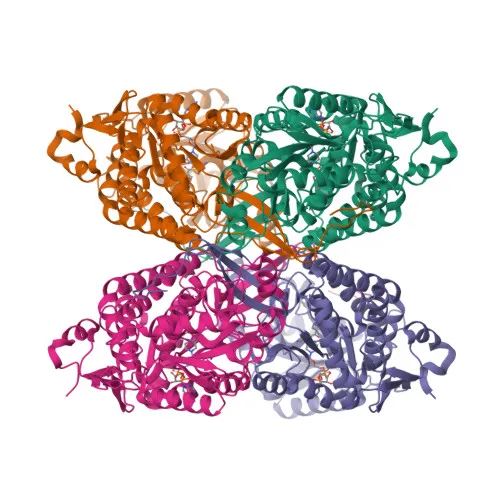
Biological Background: ALDH7A1 Function and Localization
- ALDH7A1 (antiquitin-1) is a key aldehyde dehydrogenase that protects cells from oxidative stress by metabolizing lipid peroxidation-derived aldehydes, such as 4-hydroxynonenal and malonaldehyde. Related references: PMID:16491085 PMID:20207735 PMID:20554659 PMID:21338592
- It plays a critical role in lysine catabolism in the brain, converting L-aminoadipate-semialdehyde to L-2-aminoadipate.
- ALDH7A1 acts as a key inhibitor of ferroptosis by generating membrane NADH and decreasing reactive aldehydes; it is recruited to the plasma membrane under ferroptotic stress and phosphorylated by AMPK to support AIFM2/FSP1 activity. Related references: PMID:40233740
- It also regulates cellular energy homeostasis by inhibiting COPI-mediated intracellular transport under energy stress conditions like starvation and hypoxia. Related references: PMID:31492851
- The protein localizes to multiple subcellular compartments including mitochondria, cytosol, cell membrane, Golgi apparatus membrane, and nucleus.
- ALDH7A1 is widely expressed, with high levels in hepatoma cells, fetal cochlea, ovary, eye, heart, adrenal gland, liver, and kidney; lower levels in adult leukocytes and fetal brain, thymus, spleen, skeletal muscle, lung, and tongue.
- The protein undergoes post-translational modifications such as acetylation and phosphorylation, and is associated with disease variants linked to epilepsy.
Experimental Guidance and Technical Tips
- The immunogen corresponds to amino acids 430-539, a C-terminal region of human ALDH7A1. This region is relatively conserved, so the antibody may recognize multiple splice variants or isoforms across species.
- For Western blotting (WB), the predicted molecular weight is approximately 58 kDa; validate in your sample system, and consider using appropriate blocking and detection protocols.
- For immunohistochemistry paraffin (IHC-P) and immunofluorescence/immunocytochemistry (IF/ICC), antigen retrieval may be necessary. Optimize antibody dilution for each tissue/cell type.
- Given its cross-reactivity with mouse and rat, this antibody is suitable for comparative studies in rodent models.
- ELISA applications may require a matched antibody pair for sandwich assays; test linearity and sensitivity with recombinant protein standards.
CamelBio: Your One-Stop Sourcing Bridge
CamelBio provides diagnostic manufacturers, labs, and research institutes with comprehensive access to IVD raw materials, including validated antibody pairs, optimized polyclonal and monoclonal antibodies, and bulk ancillary reagents. For researchers investigating aldehyde metabolism, ferroptosis, or epilepsy, we offer one-stop sourcing from concept to clinic, including rare target raw-material procurement and technical consulting.
Product Datasheet
Anti-ALDH7A1 Polyclonal Antibody for WB, IHC-P, IF/ICC, ELISA - P49419
REQUEST A QUOTE
Our professional team will reply to you within one business day. Please feel free to contact us!