Polyclonal Antibodies
Anti-ALDH1A3 Polyclonal Antibody for WB and ELISA - P47895
Item Number : CM0016547
Price varies based on specs and customizations
- Application
- WB, ELISA
- Cross Reactivity
- Human, Mouse
- Protein Weight
- 56kDa

Shipping:
Contact us to get shipping details Enjoy On-time Dispatch Guarantee.
Why Choose Us
Easy ordering process, quality products, and dedicated support for your business success.
Core Product Specifications and Parameters
| Parameter | Value |
|---|---|
| Product Name | ALDH1A3 Rabbit pAb |
| Remarks/Alias | ALDH6; MCOP8; RALDH3; ALDH1A6; ALDH1A3 |
| Species | Human |
| Gene ID (Human) | 220 |
| Gene ID | 220 |
| Immunogen | Recombinant fusion protein containing a sequence corresponding to amino acids 1-140 of human ALDH1A3 (NP_000684.2) |
| Source | Rabbit |
| Category | Polyclonal Antibodies |
| Application | WB, ELISA |
| Cross Reactivity | Human, Mouse |
| SWISS | P47895 |
| Protein Weight | 56kDa |
| Shipping | Ice bag |
Biological Background: ALDH1A3 Function and Localization
- ALDH1A3, also known as retinaldehyde dehydrogenase 3, ALDH6, or RALDH3, is a member of the aldehyde dehydrogenase family and predominantly catalyzes the NAD-dependent oxidation of all-trans-retinal to retinoic acid with high specificity; it also exhibits lower affinity toward acetaldehyde in vitro (PubMed:27759097). Related references: PMID:27759097
- This enzymatic activity is essential for retinoic acid biosynthesis in embryonic ocular and nasal regions, where retinoic acid acts as a critical morphogen regulating eye and nasal development.
- ALDH1A3 is localized to the cytoplasm, consistent with its role in intracellular retinoid metabolism.
- The protein is expressed at low levels across many tissues, with relatively higher expression observed in salivary gland, stomach, and kidney.
- Mutations in the ALDH1A3 gene are associated with microphthalmia (small eye phenotype), underscoring its importance in ocular organogenesis.
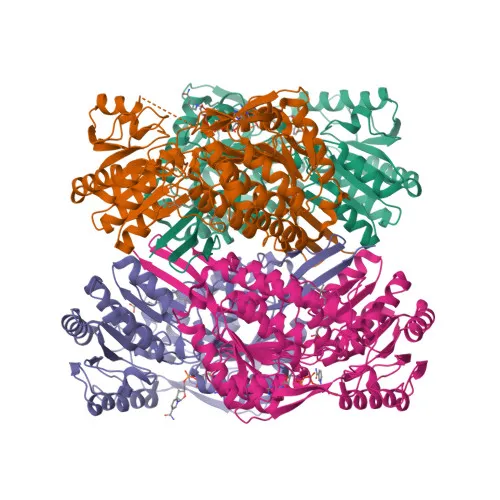
- Post‑translational modifications include acetylation, and the protein has been characterized by direct protein sequencing and X‑ray crystallography (3D‑structure available).
Experimental Guidance and Technical Tips
- The immunogen corresponds to the N‑terminal region (amino acids 1–140), which may confer specificity for ALDH1A3 over closely related ALDH1A family members; however, cross‑reactivity should be evaluated in the relevant assay system.
- For Western blot, the predicted molecular weight is approximately 56 kDa; positive controls such as human salivary gland, stomach, or kidney lysates are recommended, and loading controls should be included to confirm equal loading.
- In ELISA applications, consider using recombinant ALDH1A3 protein for coating and calibrating the assay; polyclonal antibodies may exhibit lot‑to‑lot variation, so validation of each new batch is advised.
CamelBio: Your One‑Stop Sourcing Bridge
CamelBio offers comprehensive sourcing solutions for IVD raw materials, including validated antibody pairs, monoclonal/polyclonal antibodies, and bulk ancillary reagents. For research and diagnostic projects focused on retinoic acid metabolism or developmental biology, we can supply optimized ALDH1A3 detection tools and assist with rare‑target raw‑material procurement. Our integrated supply chain supports every step from concept to clinic, ensuring reliable access to critical reagents.
REQUEST A QUOTE
Our professional team will reply to you within one business day. Please feel free to contact us!