Polyclonal Antibodies
Anti-AKT1S1/PRAS40 Rabbit pAb for WB, IHC-P, IF/ICC, ELISA - Q96B36
Item Number : CM0030710
Price varies based on specs and customizations
- Application
- WB, IHC-P, IF/ICC, ELISA
- Cross Reactivity
- Human, Mouse, Rat
- Protein Weight
- 27kDa

Shipping:
Contact us to get shipping details Enjoy On-time Dispatch Guarantee.
Why Choose Us
Easy ordering process, quality products, and dedicated support for your business success.
Core Product Specifications and Parameters
| Parameter | Value |
|---|---|
| Product Name | AKT1S1/PRAS40 Rabbit pAb |
| Remarks/Alias | Lobe; PRAS40; AKT1S1/PRAS40 |
| Species | Human |
| GeneID (Human) | 84335 |
| GeneID | 84335 |
| Immunogen | Synthetic peptide |
| Source | Rabbit |
| Category | Polyclonal Antibodies |
| Application | WB, IHC-P, IF/ICC, ELISA |
| Cross Reactivity | Human, Mouse, Rat |
| SWISS | Q96B36 |
| Protein Weight | 27kDa |
| Shipping | Ice bag |
Biological Background: AKT1S1/PRAS40 Function and Localization
- AKT1S1/PRAS40 (Proline-rich AKT1 substrate 1) is also known as 40 kDa proline-rich AKT substrate (PRAS40) and is encoded by the AKT1S1 gene, producing a protein of ~27 kDa (UniProt: Q96B36); alternative splicing generates multiple transcript variants.
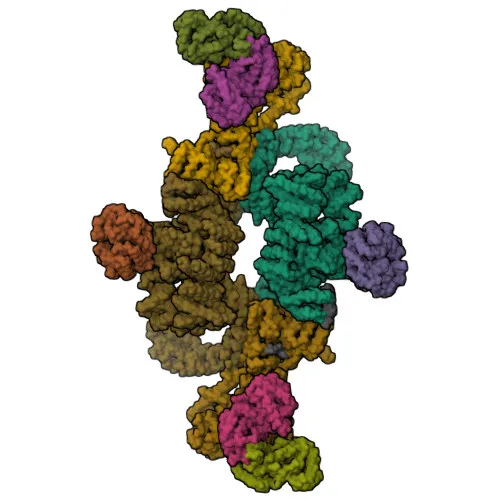
- It functions as a negative regulator of mTORC1, inhibiting kinase activity by occupying the MTOR substrate-recruitment site (PubMed:17277771, PubMed:17386266, PubMed:17510057, PubMed:29236692).
Related references: PMID:17277771, PMID:17386266, PMID:17510057, PMID:29236692 - Upon insulin or nutrient stimulation, AKT1S1 becomes hyperphosphorylated and dissociates from mTORC1, thereby relieving inhibition and allowing mTORC1 signaling to proceed (PubMed:17386266, PubMed:18372248).
Related references: PMID:17386266, PMID:18372248 - The inhibitory function of AKT1S1 is itself regulated by phosphorylation and subsequent binding to 14-3-3 proteins, which promotes its dissociation from the complex (PubMed:16174443, PubMed:18372248).
Related references: PMID:16174443, PMID:18372248 - The protein is predominantly localized in the cytoplasm/cytosol, consistent with its role in modulating mTORC1 activity at lysosomal and cytosolic sites.
- AKT1S1 is widely expressed across tissues, with highest levels in liver and heart; expression is often elevated in cancer cell lines (e.g., A-549, HeLa) compared to normal lines.
- Post-translational modifications include phosphorylation at multiple serine/threonine residues and methylation; these events influence its activity and interactions.
Experimental Guidance and Technical Tips
- The immunogen (synthetic peptide, aa 150-256) targets a central region of human AKT1S1; ensure that your sample expresses the full-length protein or isoforms containing this epitope to avoid false negatives.
- For Western blotting, AKT1S1 migrates at approximately 27 kDa; consider using a positive control like HeLa or A-549 lysate, and validate band specificity with blocking peptides or siRNA if needed.
- In IHC-P and IF/ICC, note the cytoplasmic localization of AKT1S1; permeabilization and antigen retrieval may be required for optimal detection.
- This antibody has been reported suitable for ELISA; perform checkerboard titrations to determine the optimal coating and detection conditions for your specific assay setup.
CamelBio: Your One-Stop Sourcing Bridge
CamelBio serves as a comprehensive IVD raw-material partner, offering this anti-AKT1S1/PRAS40 antibody alongside a wide range of validated reagents for mTOR signaling and oncology research. Our integrated supply chain provides diagnostic manufacturers and labs with bulk antibodies, ancillary reagents, and rare-target sourcing support to accelerate development from concept to clinic. Contact us to discuss customized procurement solutions tailored to your project needs.
REQUEST A QUOTE
Our professional team will reply to you within one business day. Please feel free to contact us!