Polyclonal Antibodies
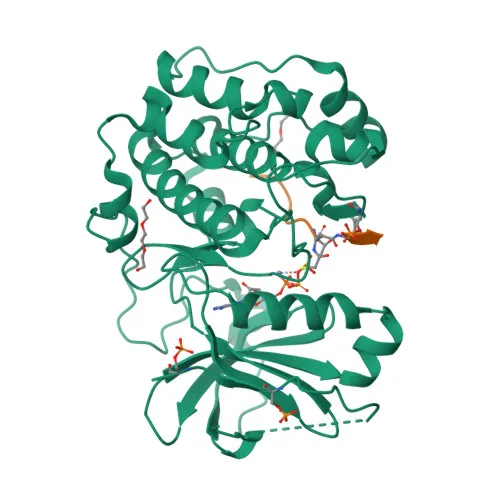
Anti-AKT1/AKT2/AKT3 Rabbit Polyclonal Antibody for WB, ELISA - P31749/P31751/Q9Y243
Item Number : CM0024318
Price varies based on specs and customizations
- Application
- WB, ELISA
- Cross Reactivity
- Human, Mouse, Rat
- Protein Weight
- 56kDa

Shipping:
Contact us to get shipping details Enjoy On-time Dispatch Guarantee.
Why Choose Us
Easy ordering process, quality products, and dedicated support for your business success.
Core Product Specifications and Parameters
| Parameter | Value |
|---|---|
| Product Name | AKT1/AKT2/AKT3 Rabbit pAb |
| Remarks/Alias | AKT; PKB; RAC; PRKBA; PKB-ALPHA; RAC-ALPHA |
| Species | Human |
| GeneID (Human) | 207/208/10000 |
| GeneID | 207/208/10000 |
| Immunogen | Recombinant fusion protein containing a sequence corresponding to amino acids 1-123 of human AKT1/AKT2/AKT3 (NP_005154.2) |
| Source | Rabbit |
| Category | Polyclonal Antibodies |
| Application | WB, ELISA |
| Cross Reactivity | Human, Mouse, Rat |
| SWISS | P31749/P31751/Q9Y243 |
| Protein Weight | 56kDa |
| Shipping | Ice bag |
Biological Background: AKT (Protein kinase B) Function and Localization
- AKT1 is one of three closely related AKT serine/threonine kinases (AKT1, AKT2, AKT3) that regulate critical cellular processes including metabolism, proliferation, survival, growth, and angiogenesis. Related references: PMID:11882383, PMID:15526160, PMID:15861136
- It plays a central role in insulin-stimulated glucose uptake by phosphorylating TBC1D4 to facilitate GLUT4 translocation, and is implicated in the regulation of glycogen synthesis through GSK3 inhibition. Related references: PMID:11994271
- AKT1 promotes cell survival by directly phosphorylating and inhibiting pro-apoptotic factors such as MAP3K5/ASK1 and BAD, and by enhancing the transcriptional activity of CREB1 to upregulate anti-apoptotic genes like BCL2 and MCL1. Related references: PMID:11154276, PMID:10926925, PMID:9829964
- As a key downstream effector of PI3K, AKT1 relays signals from growth factors (e.g., PDGF, EGF, insulin, IGF1) to control cell growth and protein synthesis via phosphorylation of TSC2, leading to mTORC1 activation, and also directly phosphorylates mTORC1 regulators CASTOR1 and DEPDC5. Related references: PMID:12176338, PMID:12964941, PMID:12150915, PMID:12172553, PMID:31548394, PMID:33594058
- AKT1 localizes to multiple subcellular compartments—cytoplasm, nucleus, plasma membrane, and mitochondrial intermembrane space—where it exerts kinase-dependent and kinase-independent functions, including activation of the lysosomal potassium channel TMEM175 and regulation of mitochondrial calcium uptake via MICU1 phosphorylation. Related references: PMID:32228865, PMID:30504268
- With over 100 reported substrates, AKT1 phosphorylates a wide array of targets including FOXO transcription factors (leading to their cytoplasmic retention and inactivation), RAF1 (negatively regulating the MAPK pathway), and PALLD (modulating cytoskeletal dynamics and cell motility). Related references: PMID:10358075, PMID:10576742, PMID:20471940
- AKT1 is ubiquitously expressed in human tissues, with elevated protein levels and activating phosphorylation observed in prostate and breast cancers, highlighting its role in oncogenesis.
Experimental Guidance and Technical Tips
- The immunogen (aa 1-123 of human AKT1, matching AKT2 and AKT3) targets a conserved N-terminal region, potentially enabling pan-AKT detection. Consider confirming isoform cross-reaction in your model system.
- For Western blotting, a band at approximately 56 kDa is anticipated. Optimize primary antibody dilution (e.g., 1:500–1:2000) and include known positive controls and molecular weight markers.
- In ELISA, the polyclonal antibody may serve as a detection reagent; pair with an appropriate capture antibody and validate assay conditions for your specific antigens.
- Cross-reactivity is reported for human, mouse, and rat; verify reactivity with samples from other species if needed.
CamelBio: Your One-Stop Sourcing Bridge
CamelBio partners with diagnostic manufacturers and laboratories to provide a comprehensive range of IVD raw materials, including validated antibody pairs, optimized polyclonal and monoclonal antibodies, and ancillary reagents. Our portfolio supports research in signal transduction, oncology, and metabolic disorders, with this anti-AKT1/AKT2/AKT3 antibody serving as a reliable tool for studying AKT-mediated pathways. In addition to catalog products, we offer bulk supply, custom antibody development, and rare-target sourcing to accelerate your assay development from concept to clinic.
Product Datasheet
Anti-AKT1/AKT2/AKT3 Rabbit Polyclonal Antibody for WB, ELISA - P31749/P31751/Q9Y243
REQUEST A QUOTE
Our professional team will reply to you within one business day. Please feel free to contact us!