Polyclonal Antibodies
Anti-AKT1 Polyclonal Antibody for WB, IHC-P, IF/ICC, ELISA - P31749
Item Number : CM0030275
Price varies based on specs and customizations
- Application
- WB, IHC-P, IF/ICC, ELISA
- Cross Reactivity
- Human, Mouse, Rat
- Protein Weight
- 56kDa

Shipping:
Contact us to get shipping details Enjoy On-time Dispatch Guarantee.
Why Choose Us
Easy ordering process, quality products, and dedicated support for your business success.
Core Product Specifications and Parameters
| Parameter | Value |
|---|---|
| Product Name | AKT1 Rabbit pAb |
| Remarks/Alias | AKT; PKB; RAC; PRKBA; PKB-ALPHA; RAC-ALPHA; AKT1 |
| Species | Human |
| GeneID (Human) | 207 |
| GeneID | 207 |
| Immunogen | A synthetic peptide corresponding to a sequence within amino acids 100-200 of human AKT1 (NP_005154.2). |
| Source | Rabbit |
| Category | Polyclonal Antibodies |
| Application | WB, IHC-P, IF/ICC, ELISA |
| Cross Reactivity | Human, Mouse, Rat |
| SWISS | P31749 |
| Protein Weight | 56kDa |
| Shipping | Ice bag |
Biological Background: AKT1 Function and Localization
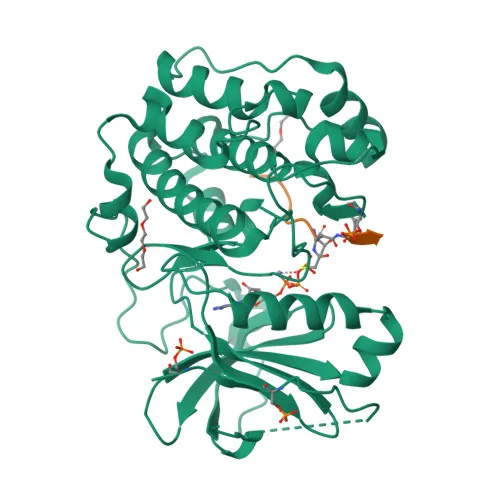
- AKT1 (PKB/PKB alpha/RAC-PK-alpha) is a serine/threonine-protein kinase and one of three closely related AKT isoforms (AKT1, AKT2, AKT3) that regulate fundamental cellular processes including metabolism, proliferation, survival, growth, and angiogenesis. Related references: PMID:11882383, PMID:15526160, PMID:15861136
- AKT1 phosphorylates a broad spectrum of substrates to control insulin signaling, glucose metabolism, and cell growth. It phosphorylates TSC2, activating mTORC1 to promote protein synthesis and cell growth, and phosphorylates FOXO transcription factors, resulting in their cytoplasmic sequestration and inhibition of pro-apoptotic gene expression. Related references: PMID:12150915, PMID:12172553, PMID:10358075, PMID:21432781
- AKT1 is critical for cell survival: it phosphorylates MAP3K5/ASK1 at Ser-83 to inhibit oxidative stress-induced apoptosis and phosphorylates BAD to block its pro-apoptotic function. It also activates CREB1, enhancing transcription of anti-apoptotic genes such as BCL2 and MCL1. Related references: PMID:11154276, PMID:10926925, PMID:9829964
- AKT1 plays a key role in insulin-mediated glucose uptake by promoting translocation of the SLC2A4/GLUT4 transporter to the plasma membrane and by inhibiting GSK3, thereby stimulating glycogen synthesis.
- AKT1 localizes to the cytoplasm, nucleus, cell membrane, and mitochondrial intermembrane space, enabling it to modulate signaling at multiple subcellular sites.
- Expressed ubiquitously in human tissues, AKT1 protein levels increase from normal to malignant states in prostate cancer, and its phosphorylated Tyr-176 form is elevated during breast cancer progression.
Experimental Guidance and Technical Tips
- The immunogen is a synthetic peptide from amino acids 100-200, a central region that may provide good accessibility. Consider this antibody for detecting total AKT1 protein in various lysates.
- For Western blot (WB), the predicted molecular weight is approximately 56 kDa. A band at this size is expected in human, mouse, and rat samples given the reported cross-reactivity. Verify the molecular weight marker and use appropriate loading controls.
- This polyclonal antibody is suitable for immunohistochemistry (IHC-P) and immunofluorescence (IF/ICC). Optimize antigen retrieval methods for paraffin-embedded tissues and include proper negative controls to assess specificity.
- For ELISA applications, the antibody may be used as capture or detection reagent. Validate the optimal working concentration empirically using the immunogen peptide as a positive control.
- As AKT1 activation depends on phosphorylation status (e.g., Thr-308, Ser-473), consider combining with activation-specific antibodies for signaling studies.
- Due to sequence similarity among AKT isoforms, verify isoform specificity in your experimental system.
CamelBio: Your One-Stop Sourcing Bridge
CamelBio offers diagnostic manufacturers, laboratories, and research institutes a streamlined one-stop platform for sourcing high-quality IVD raw materials, technical services, and expert consulting—guiding products from concept to clinic. This anti-AKT1 polyclonal antibody exemplifies our commitment to supporting research on the AKT signaling pathway, a central regulator of cell metabolism, proliferation, and survival. Our comprehensive catalog includes validated antibody pairs, optimized monoclonal and polyclonal antibodies, bulk ancillary reagents, and specialized sourcing for rare and emerging targets—ensuring your projects are fully equipped from discovery to validation.
REQUEST A QUOTE
Our professional team will reply to you within one business day. Please feel free to contact us!