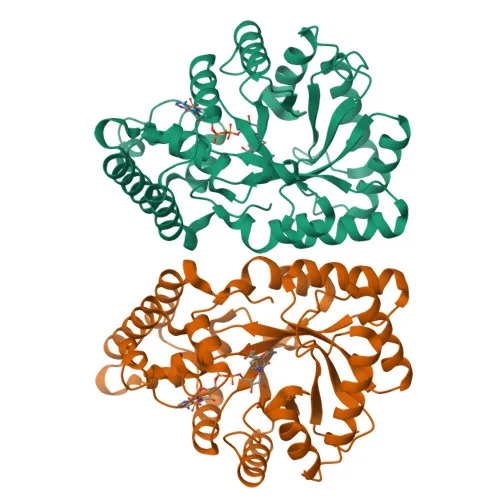
Polyclonal Antibodies
Anti-AKR7A2 Rabbit Polyclonal Antibody for WB and ELISA - O43488
Item Number : CM0018729
Price varies based on specs and customizations
- Application
- WB, ELISA
- Cross Reactivity
- Human, Mouse
- Protein Weight
- 40kDa

Shipping:
Contact us to get shipping details Enjoy On-time Dispatch Guarantee.
Why Choose Us
Easy ordering process, quality products, and dedicated support for your business success.
Core Product Specifications and Parameters
| Parameter | Value |
|---|---|
| Product Name | AKR7A2 Rabbit pAb |
| Remarks/Alias | AFAR; AKR7; AFAR1; AFB1-AR1; AKR7A2 |
| Species | Human |
| GeneID (Human) | 8574 |
| GeneID | 8574 |
| Immunogen | Recombinant protein (Recombinant fusion protein containing a sequence corresponding to amino acids 100-359 of human AKR7A2 (NP_003680.2)) |
| Source | Rabbit |
| Category | Polyclonal Antibodies |
| Application | WB, ELISA |
| Cross Reactivity | Human, Mouse |
| SWISS | O43488 |
| Protein Weight | 40kDa |
| Shipping | Ice bag |
Biological Background: AKR7A2 Function and Localization
- AKR7A2, also known as AFAR, AFB1-AR1, or SSA reductase, is a member of the aldo-keto reductase 7 family (UniProt: O43488).
- It catalyzes the NADPH-dependent reduction of succinic semialdehyde to gamma-hydroxybutyrate (GHB), a neuromodulator, suggesting a role in central nervous system function.
- Exhibits broad substrate specificity, including reduction of various aldehydes and quinones such as 2-carboxybenzaldehyde and 9,10-phenanthrenequinone in vitro.
- Plays a protective role in liver by reducing the dialdehyde form of aflatoxin B1 (AFB1) to a non-binding dialcohol, thereby mitigating AFB1-induced hepatocarcinogenesis.
- Localizes to multiple subcellular compartments, including mitochondria, Golgi apparatus, and cytoplasm.
- Widely expressed at the protein level, with higher abundance in brain, liver, small intestine, and testis; also detected in kidney tubules and endothelial cells.
- Post-translational modifications include acetylation and phosphorylation, as identified by proteomics studies.
Experimental Guidance and Technical Tips
- The immunogen corresponds to amino acids 100–359 of human AKR7A2; the resulting polyclonal antibody may recognize epitopes across this region. Cross-reactivity with mouse is expected based on supplier data.
- For Western blot, a band at approximately 40 kDa (theoretical molecular weight 39.6 kDa) should be observed; consider using reducing conditions and appropriate positive controls such as liver or brain lysates.
- For ELISA, validate the antibody with recombinant human AKR7A2 protein as a reference standard and optimize coating and detection conditions.
- Given the broad tissue distribution, ensure sample preparation and normalization are tailored to the target tissue, particularly when analyzing low-expressing organs like lung or pancreas.
- Consider testing a range of antibody dilutions (e.g., 1:500–1:2000 for WB) to achieve optimal signal-to-noise ratio; results should be validated in the relevant experimental system.
CamelBio: Your One-Stop Sourcing Bridge
CamelBio serves as a comprehensive partner for IVD manufacturers and research institutions, offering a seamless supply chain from concept to clinic. With this AKR7A2 polyclonal antibody, researchers gain reliable access to a key reagent for studies in liver detoxification, neuromodulation, and cancer biology. CamelBio also provides validated antibody pairs, bulk monoclonal and polyclonal antibodies, ancillary reagents, and sourcing of rare-target raw materials to accelerate your diagnostic and research programs.
REQUEST A QUOTE
Our professional team will reply to you within one business day. Please feel free to contact us!