Polyclonal Antibodies
Anti-AKR1B10 Polyclonal Antibody for WB, IP, ELISA - O60218
Item Number : CM0027070
Price varies based on specs and customizations
- Application
- WB, IP, ELISA
- Cross Reactivity
- Human, Mouse, Rat
- Protein Weight
- 36kDa

Shipping:
Contact us to get shipping details Enjoy On-time Dispatch Guarantee.
Why Choose Us
Easy ordering process, quality products, and dedicated support for your business success.
Core Product Specifications and Parameters
| Parameter | Value |
|---|---|
| Product Name | AKR1B10 Rabbit pAb |
| Remarks/Alias | HIS; HSI; ARL1; ARL-1; ALDRLn; AKR1B11; AKR1B12; AKR1B10 |
| Species | Human |
| Gene ID (Human) | 57016 |
| Gene ID | 57016 |
| Immunogen | Recombinant fusion protein containing a sequence corresponding to amino acids 1-316 of human AKR1B10 (NP_064695.3) |
| Source | Rabbit |
| Category | Polyclonal Antibodies |
| Application | WB, IP, ELISA |
| Cross Reactivity | Human, Mouse, Rat |
| SWISS | O60218 |
| Protein Weight | 36kDa |
| Shipping | Ice bag |
Biological Background: AKR1B10 Function and Localization
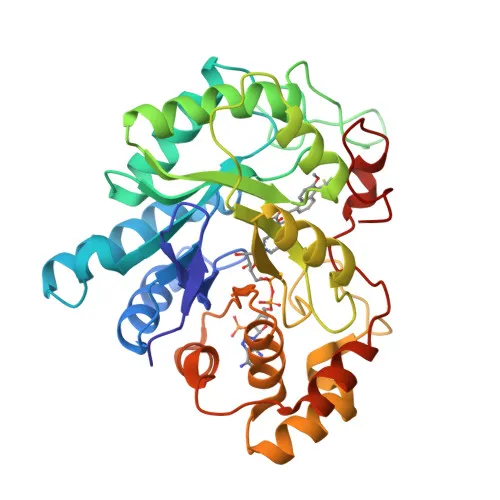
- AKR1B10 (Aldo-keto reductase family 1 member B10), also known as ARL-1, aldose reductase-like, and small intestine reductase (SI reductase), is a member of the aldo-keto reductase superfamily.
- Functions as an NADPH-dependent oxidoreductase involved in retinoid metabolism by efficiently reducing all-trans-retinal, 9-cis-retinal, and 13-cis-retinal to their corresponding retinols. Related references: PMID:12732097, PMID:18087047, PMID:19013440
- Plays a critical role in detoxifying reactive carbonyl species, including dietary and lipid-derived unsaturated carbonyls such as crotonaldehyde, 4-hydroxynonenal, trans-2-hexenal, and their glutathione conjugates. Related references: PMID:19013440, PMID:19563777
- Displays no measurable reductase activity toward glucose, distinguishing it from classical aldose reductase. Related references: PMID:12732097
- Predominantly localized to lysosomes and also found in the secreted form, consistent with its role in intracellular and extracellular detoxification processes.
- Expressed across multiple tissues, with highest levels in the small intestine, colon, and adrenal gland, aligning with its detoxification functions in absorptive and secretory epithelia.
- Post-translational modifications include acetylation, and the enzyme is classified under lipid metabolism and NADP-dependent oxidoreductase pathways.
Experimental Guidance and Technical Tips
- The immunogen corresponds to full-length human AKR1B10 (amino acids 1–316), so the polyclonal antibody is expected to recognize multiple epitopes; validate specificity by comparing signal in positive versus knockout or low-expressing controls.
- For western blot, the predicted molecular weight is ~36 kDa; consider using reducing conditions and appropriate lysates from tissues such as colon or cell lines expressing AKR1B10.
- This antibody cross-reacts with mouse and rat AKR1B10 orthologs, suggesting conserved epitopes; verify cross-reactivity in your model system before quantitative studies.
- In immunoprecipitation, use whole cell lysates and optimize antibody-to-lysate ratios to efficiently pull down endogenous AKR1B10.
- For ELISA applications, confirm binding to recombinant AKR1B10 protein and establish a standard curve with known concentrations.
CamelBio: Your One-Stop Sourcing Bridge
CamelBio provides comprehensive access to IVD raw materials, supporting diagnostic developers and research teams in streamlining assay development. This anti-AKR1B10 polyclonal antibody is part of our portfolio covering aldo-keto reductase targets for cancer, metabolic, and gastrointestinal research. In addition to validated antibodies, we offer optimized antibody pairs, bulk ancillary reagents, and sourcing of rare-target raw materials to meet your project needs from concept to clinic.
REQUEST A QUOTE
Our professional team will reply to you within one business day. Please feel free to contact us!