Polyclonal Antibodies
Anti-AKR1B1 Rabbit Polyclonal Antibody for WB - P15121
Item Number : CM0022457
Price varies based on specs and customizations
- Application
- WB, IF/ICC, ELISA
- Cross Reactivity
- Human, Mouse, Rat
- Protein Weight
- 36kDa

Shipping:
Contact us to get shipping details Enjoy On-time Dispatch Guarantee.
Why Choose Us
Easy ordering process, quality products, and dedicated support for your business success.
Core Product Specifications and Parameters
| Parameter | Value |
|---|---|
| Product Name | AKR1B1 Rabbit pAb |
| Remarks/Alias | AR; ADR; ALR2; ALDR1; AKR1B1 |
| Species | Human |
| GeneID (Human) | 231 |
| GeneID | 231 |
| Immunogen | Recombinant fusion protein containing a sequence corresponding to amino acids 1-316 of human AKR1B1 (NP_001619.1). |
| Source | Rabbit |
| Category | Polyclonal Antibodies |
| Application | WB, IF/ICC, ELISA |
| Cross Reactivity | Human, Mouse, Rat |
| SWISS | P15121 |
| Protein Weight | 36kDa |
| Shipping | Ice bag |
Biological Background: AKR1B1 Function and Localization
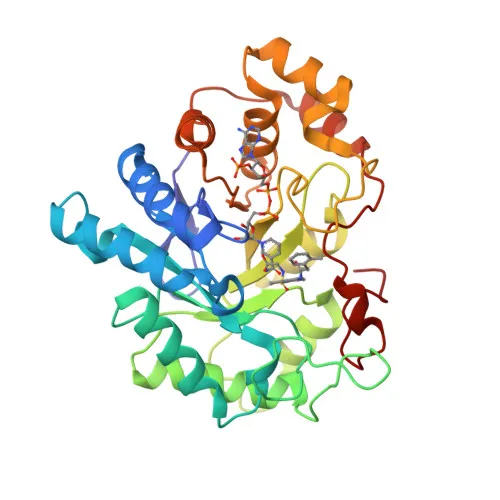
- AKR1B1, also known as aldose reductase (AR), aldehyde reductase, or alditol:NADP oxidoreductase, is a member of the aldo-keto reductase family encoded by the AKR1B1 gene (also designated ALDR1, ALR2) in humans.
- It catalyzes the NADPH-dependent reduction of glucose to sorbitol, the first and rate-limiting step of the polyol pathway. This alternative glucose metabolism pathway becomes highly active under hyperglycemic conditions, contributing to diabetic complications. Related references: PMID:4402695, PMID:1936586
- Beyond glucose, AKR1B1 reduces a broad spectrum of carbonyl substrates, including steroids, prostaglandins, and lipid peroxidation-derived aldehydes such as 4-hydroxynonenal and phospholipid aldehydes, highlighting its role in cellular detoxification. Related references: PMID:12732097, PMID:19010934, PMID:8343525, PMID:17381426
- The enzyme also detoxifies dietary and lipid-derived unsaturated carbonyls and their glutathione conjugates, acting as a defense against oxidative stress. Related references: PMID:21329684
- AKR1B1 is localized in the cytoplasm.
- Its expression is highly induced in embryonic epithelial cells under osmotic stress, indicating a role in stress responses.
- Post-translational modifications include acetylation and phosphorylation, which may regulate its activity.
Experimental Guidance and Technical Tips
- The recombinant immunogen spans amino acids 1–316 of the full-length human AKR1B1, providing broad epitope coverage; verify reactivity in your specific sample system.
- For western blotting, a band near 36 kDa is expected; use appropriate molecular weight markers and consider protein loading controls.
- For immunofluorescence/ICC, perform permeabilization suitable for cytoplasmic antigens and validate with a negative control.
- This antibody has been reported to cross-react with mouse and rat orthologs; confirm suitability in your model.
- When using for ELISA, optimize coating and detection conditions, and consider pairing with a matched antibody pair if quantitative detection is required.
CamelBio: Your One-Stop Sourcing Bridge
CamelBio provides diagnostic manufacturers, laboratories, and research institutions with streamlined access to high-quality IVD raw materials and technical support—from early development through clinical application. Our portfolio includes validated AKR1B1 polyclonal antibodies and related ancillary reagents to accelerate your metabolic disease and diabetes research. For rare or custom targets, our sourcing and development teams can tailor solutions to your specific assay requirements.
REQUEST A QUOTE
Our professional team will reply to you within one business day. Please feel free to contact us!