Polyclonal Antibodies
Anti-AKR1B1 Polyclonal Antibody for WB and ELISA - P15121
Item Number : CM0015909
Price varies based on specs and customizations
- Application
- WB, ELISA
- Cross Reactivity
- Human, Mouse
- Protein Weight
- 36kDa

Shipping:
Contact us to get shipping details Enjoy On-time Dispatch Guarantee.
Why Choose Us
Easy ordering process, quality products, and dedicated support for your business success.
Core Product Specifications and Parameters
| Parameter | Value |
|---|---|
| Product Name | AKR1B1 Rabbit pAb |
| Remarks/Alias | AR; ADR; ALR2; ALDR1; AKR1B1 |
| Species | Human |
| GeneID (Human) | 231 |
| GeneID | 231 |
| Immunogen | Recombinant fusion protein containing a sequence corresponding to amino acids 1-316 of human AKR1B1 (NP_001619.1). |
| Source | Rabbit |
| Category | Polyclonal Antibodies |
| Application | WB, ELISA |
| Cross Reactivity | Human, Mouse |
| SWISS | P15121 |
| Protein Weight | 36kDa |
| Shipping | Ice bag |
Biological Background: AKR1B1 Function and Localization
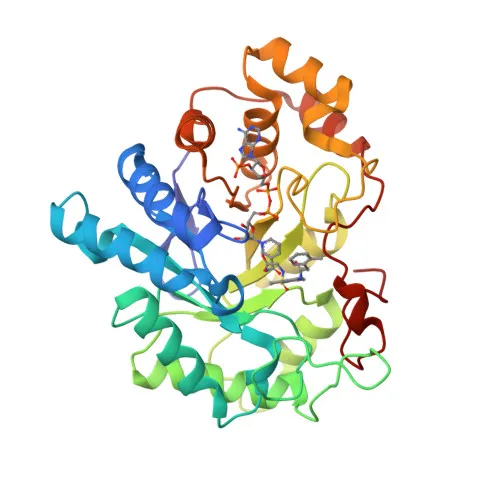
- AKR1B1 (also known as Aldose reductase, AR, ALR2, ALDR1) is a member of the aldo-keto reductase superfamily, a group of NADPH-dependent oxidoreductases with broad substrate specificity.
- It catalyzes the NADPH-dependent reduction of a wide variety of carbonyl-containing compounds, including aromatic and aliphatic aldehydes, ketones, monosaccharides, bile acids, and xenobiotics, to their corresponding alcohols. Related references: PMID:10510318, PMID:12732097, PMID:1332968
- In the polyol pathway, AKR1B1 reduces glucose to sorbitol, the first step in converting glucose to fructose; this pathway is highly active under hyperglycemic conditions. Related references: PMID:4402695, PMID:1936586
- The enzyme also reduces steroids, their derivatives, and prostaglandins, and displays low activity toward various retinal isomers. Related references: PMID:12732097, PMID:19010934, PMID:8343525
- AKR1B1 participates in detoxification by reducing phospholipid aldehydes (e.g., POVPC) and lipid peroxidation products such as 4-hydroxynonenal and related carbonyls. Related references: PMID:17381426, PMID:21329684
- Subcellularly, AKR1B1 is predominantly localized in the cytoplasm.
- Tissue specificity: highly expressed in embryonic epithelial cells (EUE) in response to osmotic stress.
- Post-translational modifications include acetylation and phosphorylation, and the protein has been identified through proteomics and direct protein sequencing.
Experimental Guidance and Technical Tips
- This polyclonal antibody was generated against recombinant human AKR1B1 (aa 1–316). For Western blotting, consider starting with a 1:500–1:2000 dilution and titrate appropriately; a major band expected at ~36 kDa.
- For ELISA applications, validate the antibody pair and optimize coating conditions; direct or sandwich ELISA may be employed.
- Demonstrated cross-reactivity with human and mouse suggests conserved epitopes; validate reactivity in your specific sample system.
- Since AKR1B1 expression can be induced by osmotic stress or hyperglycemia, appropriate cell treatment may enhance detection.
CamelBio: Your One-Stop Sourcing Bridge
CamelBio offers diagnostic manufacturers and research laboratories a reliable, one-stop supply of IVD raw materials. For AKR1B1-related research, particularly in diabetic complications and oxidative stress, we provide validated antibodies, recombinant proteins, and ancillary reagents to support your assay development. Our supply chain capabilities encompass bulk orders, technical consultation, and sourcing of rare-target reagents, ensuring you have the materials needed from concept to clinic.
REQUEST A QUOTE
Our professional team will reply to you within one business day. Please feel free to contact us!