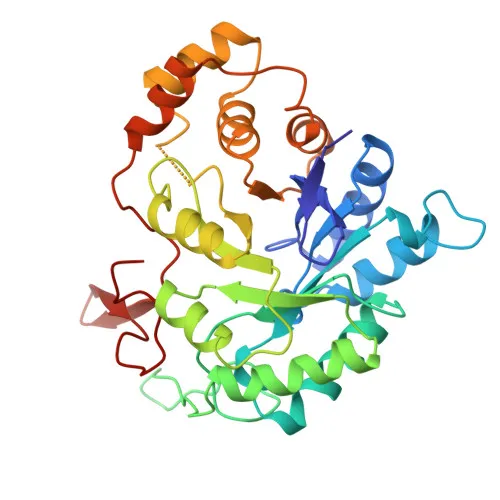
Polyclonal Antibodies
Anti-AKR1A1 Rabbit Polyclonal Antibody for WB, IHC-P, ELISA - P14550
Item Number : CM0014400
Price varies based on specs and customizations
- Application
- WB, IHC-P, ELISA
- Cross Reactivity
- Human, Mouse, Rat
- Protein Weight
- 37kDa

Shipping:
Contact us to get shipping details Enjoy On-time Dispatch Guarantee.
Why Choose Us
Easy ordering process, quality products, and dedicated support for your business success.
Core Product Specifications and Parameters
| Parameter | Value |
|---|---|
| Product Name | AKR1A1 Rabbit pAb |
| Remarks/Alias | ALR; ARM; DD3; ALDR1; HEL-S-6; AKR1A1 |
| Species | Human |
| GeneID (Human) | 10327 |
| GeneID | 10327 |
| Immunogen | Recombinant fusion protein containing a sequence corresponding to amino acids 1-325 of human AKR1A1 (NP_006057.1) |
| Source | Rabbit |
| Category | Polyclonal Antibodies |
| Application | WB, IHC-P, ELISA |
| Cross Reactivity | Human, Mouse, Rat |
| SWISS | P14550 |
| Protein Weight | 37kDa |
| Shipping | Ice bag |
Biological Background: AKR1A1 Function and Localization
- AKR1A1 is a member of the aldo-keto reductase superfamily, catalyzing NADPH-dependent reduction of a wide variety of carbonyl compounds to their corresponding alcohols, including aromatic aldehydes, ketones, monosaccharides, and bile acids. Related references: PMID:10510318 PMID:30538128
- Functions as a detoxifying enzyme by reducing toxic aldehydes such as methylglyoxal, 3‑deoxyglucosone (elevated under hyperglycemic conditions), and lipid‑derived aldehydes like acrolein.
- Plays a role in the activation of procarcinogens (e.g., polycyclic aromatic hydrocarbon trans‑dihydrodiols) and in the metabolism of xenobiotics and drugs, including the anthracyclines doxorubicin and daunorubicin. Related references: PMID:11306097 PMID:18276838
- Acts as an inhibitor of protein S‑nitrosylation by mediating degradation of S‑nitroso‑coenzyme A (S‑nitroso‑CoA), a cofactor required for protein S‑nitrosylation; this activity is involved in reprogramming intermediary metabolism in renal proximal tubules. Related references: PMID:30538128
- Also exhibits S‑nitroso‑glutathione reductase activity, catalyzing the NADPH‑dependent reduction of S‑nitrosoglutathione, thereby contributing to nitric oxide signalling. Related references: PMID:31649033
- Predominantly localizes to the cytoplasm and cytosol, with additional association at the apical cell membrane.
- Widely expressed across tissues, with highest levels observed in kidney, salivary gland, and liver, and detectable in trachea, stomach, brain, lung, prostate, placenta, mammary gland, and small intestine.
- Post‑translational modifications include acetylation and phosphorylation, as identified by proteomics and direct protein sequencing.
Experimental Guidance and Technical Tips
- The immunogen encompasses the full‑length sequence of human AKR1A1 (aa 1‑325); therefore, the antibody is expected to detect total AKR1A1 without isoform selectivity.
- For western blotting, the predicted molecular weight is ~37 kDa; verify the band size in relevant cell or tissue lysates, and consider using a reducing SDS‑PAGE protocol.
- In immunohistochemistry (paraffin‑embedded sections), signal may be enhanced by antigen retrieval; validate staining patterns in tissues with known high AKR1A1 expression, such as kidney or liver.
- For ELISA applications, the polyclonal antibody can serve as either capture or detection reagent; when developing a sandwich ELISA, pairing with a monoclonal detector may improve specificity.
- Due to cross‑reactivity with mouse and rat, this antibody is suitable for translational studies in rodent models; adjust dilutions empirically for each species.
CamelBio: Your One-Stop Sourcing Bridge
CamelBio serves as a comprehensive sourcing partner for IVD raw materials, connecting diagnostic manufacturers and research laboratories with validated antibodies, bulk ancillary reagents, and rare‑target materials. For AKR1A1, a key enzyme in carbonyl metabolism and detoxification pathways, CamelBio offers reliable access to polyclonal and monoclonal antibodies, optimized for applications ranging from early‑stage biomarker discovery to clinical assay development. Beyond individual antibodies, CamelBio supports your workflow with technical consulting, custom reagent supply, and end‑to‑end material solutions, helping to streamline the journey from concept to clinic.
REQUEST A QUOTE
Our professional team will reply to you within one business day. Please feel free to contact us!