Polyclonal Antibodies
Anti-AK1 Rabbit Polyclonal Antibody for WB, IHC-P, ELISA - P00568
Item Number : CM0014544
Price varies based on specs and customizations
- Application
- WB, IHC-P, ELISA
- Cross Reactivity
- Human, Mouse, Rat
- Protein Weight
- 22kDa

Shipping:
Contact us to get shipping details Enjoy On-time Dispatch Guarantee.
Why Choose Us
Easy ordering process, quality products, and dedicated support for your business success.
Core Product Specifications and Parameters
| Parameter | Value |
|---|---|
| Product Name | AK1 Rabbit pAb |
| Remarks/Alias | HTL-S-58j; AK1 |
| Species | Human |
| GeneID (human) | 203 |
| GeneID | 203 |
| Immunogen | Recombinant fusion protein containing a sequence corresponding to amino acids 1-194 of human AK1 (NP_000467.1). |
| Source | Rabbit |
| Category | Polyclonal Antibodies |
| Application | WB, IHC-P, ELISA |
| Cross Reactivity | Human, Mouse, Rat |
| SWISS | P00568 |
| Protein Weight | 22kDa |
| Shipping | Ice bag |
Biological Background: Adenylate Kinase 1 (AK1) Function and Localization
- Adenylate kinase isoenzyme 1 (AK1), also known as myokinase or ATP-AMP transphosphorylase, is a cytosolic enzyme that plays a central role in cellular energy homeostasis by catalyzing the reversible transfer of the terminal phosphate group between ATP and AMP. Related references: PMID:21080915, PMID:23416111, PMID:2542324
- Beyond its primary activity, AK1 exhibits broad nucleoside diphosphate kinase activity, contributing to the maintenance of adenine nucleotide pools (By similarity).
- At very low rates, AK1 can also synthesize thiamine triphosphate (ThTP) from thiamine diphosphate (ThDP) and ADP, hinting at additional metabolic roles (By similarity).
- AK1 is predominantly localized in the cytoplasm, where it rapidly responds to changes in cellular energy demand.
- The protein is subject to post-translational modifications including acetylation and phosphorylation, as identified by proteomics studies.
- Mutations in the AK1 gene are associated with hereditary hemolytic anemia, underscoring its importance in erythrocyte energy metabolism.
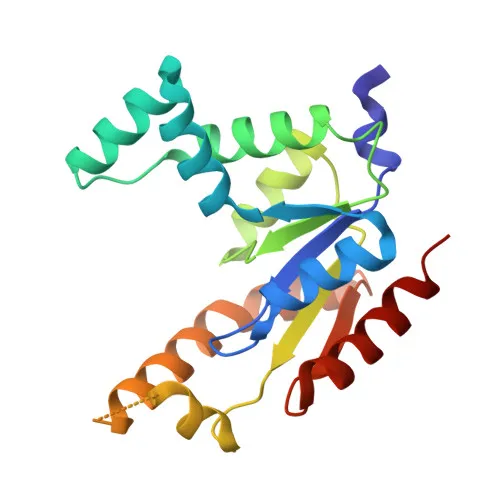
- AK1 is a member of the adenylate kinase family and shares structural features including an ATP-binding domain and a conserved kinase fold, as evidenced by its 3D structure.
Experimental Guidance and Technical Tips
- For western blotting (WB), observe a band around 22 kDa corresponding to the predicted molecular weight of AK1; validate specificity in your sample system using positive and negative controls.
- In immunohistochemistry (IHC-P), consider antigen retrieval methods (e.g., heat-induced epitope retrieval in citrate buffer) to enhance detection of AK1 in formalin-fixed paraffin-embedded tissues.
- For ELISA applications, titrate the antibody to determine optimal working concentrations for your specific assay format and sample matrix.
- As the immunogen corresponds to the full-length recombinant AK1 protein (aa 1-194), this polyclonal antibody is expected to recognize both native and denatured forms of the protein; however, individual experiment optimization is recommended.
CamelBio: Your One-Stop Sourcing Bridge
CamelBio serves as a comprehensive sourcing partner for IVD manufacturers and research laboratories, offering streamlined access to high-quality raw materials, including validated antibodies, antigens, and ancillary reagents. For studies targeting adenylate kinase 1 (AK1) and cellular energy metabolism, we provide reliable polyclonal antibodies, optimized antibody pairs, and bulk supply options to support your assay development. Whether you require rare target sourcing or custom reagent development, our team is dedicated to accelerating your diagnostic and research workflows with efficient, one-stop solutions.
REQUEST A QUOTE
Our professional team will reply to you within one business day. Please feel free to contact us!