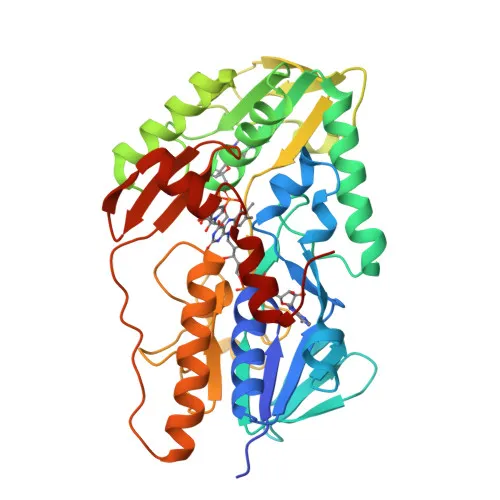
Monoclonal Antibodies
Anti-AIFM2/FSP1 Rabbit Monoclonal Antibody for WB, IHC-P, ELISA - Q9BRQ8
Item Number : CM0006512
Price varies based on specs and customizations
- Application
- WB, IHC-P, ELISA
- Cross Reactivity
- Human, Mouse, Rat
- Protein Weight
- 41kDa

Shipping:
Contact us to get shipping details Enjoy On-time Dispatch Guarantee.
Why Choose Us
Easy ordering process, quality products, and dedicated support for your business success.
Core Product Specifications and Parameters
| Parameter | Value |
|---|---|
| Product Name | AIFM2/FSP1 Rabbit mAb |
| Remarks/Alias | AMID; FSP1; PRG3; AIFM2/FSP1 |
| Species | Human |
| GeneID (Human) | 84883 |
| GeneID | 84883 |
| Immunogen | Recombinant fusion protein containing a sequence corresponding to amino acids 43-371 of human AIFM2/FSP1 (NP_116186.1). |
| Source | Rabbit |
| Category | Monoclonal Antibodies |
| Application | WB, IHC-P, ELISA |
| Cross Reactivity | Human, Mouse, Rat |
| SWISS | Q9BRQ8 |
| Protein Weight | 41kDa |
| Shipping | Ice bag |
Biological Background: AIFM2/FSP1 Function and Localization
- AIFM2, also known as AMID, FSP1, or PRG3, encodes ferroptosis suppressor protein 1, a 41 kDa oxidoreductase that plays a central role in regulating ferroptosis.
- Functions as a key inhibitor of ferroptosis by catalyzing the NAD(P)H-dependent reduction of coenzyme Q/ubiquinone-10 to ubiquinol-10, a potent lipophilic radical-trapping antioxidant that prevents lipid oxidative damage (PubMed:31634899, PubMed:31634900, PubMed:37739993). Related references: PMID:31634899 PMID:31634900 PMID:37739993
- Acts in parallel to GPX4 to suppress phospholipid peroxidation, independent of intracellular glutathione levels, providing an alternative ferroptosis defense mechanism (PubMed:31634899, PubMed:31634900). Related references: PMID:31634899 PMID:31634900
- Catalyzes warfarin-resistant reduction of vitamin K (phylloquinone, menaquinone-4, menadione) to their hydroquinone forms, which also act as radical-trapping antioxidants inhibiting lipid peroxidation (PubMed:35922516, PubMed:36788244). Related references: PMID:35922516 PMID:36788244
- In response to oxidative stress, forms a lipid adduct with 4-hydroxy-2-nonenal (HNE), loses its oxidoreductase activity, and translocates from mitochondria to the nucleus to induce DNA damage and cell death (PubMed:26689472). Related references: PMID:26689472
- Exhibits non-sequence-specific DNA binding capability (PubMed:15958387). Related references: PMID:15958387
- Localizes to multiple cellular compartments including lipid droplets, cell membrane, cytoplasm, mitochondrial membrane, and nucleus, reflecting its dynamic roles in ferroptosis regulation and stress signaling.
- Highly expressed in heart, moderately in liver and skeletal muscle, and at lower levels in placenta, lung, kidney, and pancreas; expression is inducible by p53/TP53.
Experimental Guidance and Technical Tips
- The immunogen encompasses amino acids 43–371 of human AIFM2/FSP1, providing broad epitope coverage; this may support detection of endogenous FSP1 across human, mouse, and rat samples.
- For Western blotting (WB), the predicted molecular weight is 41 kDa; consider using heart or liver tissue lysates as positive controls, where FSP1 is highly expressed.
- For immunohistochemistry (IHC-P), validate the antibody on human heart or skeletal muscle sections, and optimize antigen retrieval and blocking conditions.
- When performing ELISA, pair this antibody with a suitable detection reagent and validate the assay using recombinant FSP1 protein.
- Due to FSP1’s association with lipid droplets and membranes, assess sample lysis buffers and conditions to ensure efficient protein extraction and solubility.
CamelBio: Your One-Stop Sourcing Bridge
CamelBio supports diagnostic manufacturers, laboratories, and research institutes with a comprehensive one-stop platform for IVD raw materials, technical services, and consulting—from concept to clinical application. This anti-AIFM2/FSP1 rabbit monoclonal antibody is ideal for ferroptosis and cell death research, complementing our portfolio of validated antibody pairs, optimized monoclonal/polyclonal antibodies, and bulk ancillary reagents. For specialized requirements, our team can assist with rare target raw material sourcing to accelerate your assay development.
Product Datasheet
Anti-AIFM2/FSP1 Rabbit Monoclonal Antibody for WB, IHC-P, ELISA - Q9BRQ8
REQUEST A QUOTE
Our professional team will reply to you within one business day. Please feel free to contact us!