Polyclonal Antibodies
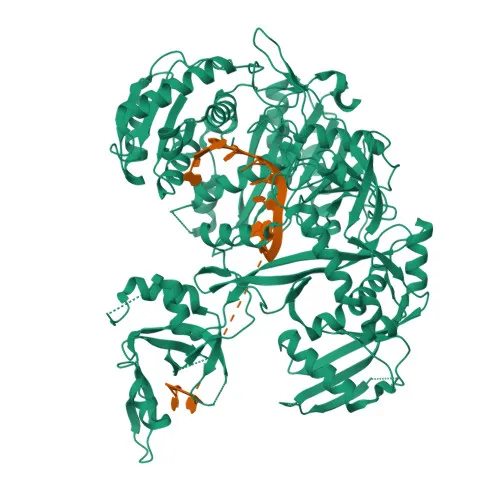
Anti-AGO1 Polyclonal Antibody for WB, ELISA - Q9UL18
Item Number : CM0024837
Price varies based on specs and customizations
- Application
- WB, ELISA
- Cross Reactivity
- Human, Mouse, Rat
- Protein Weight
- 97kDa

Shipping:
Contact us to get shipping details Enjoy On-time Dispatch Guarantee.
Why Choose Us
Easy ordering process, quality products, and dedicated support for your business success.
Core Product Specifications and Parameters
| Parameter | Value |
|---|---|
| Product Name | AGO1 Rabbit pAb |
| Remarks/Alias | Q99; EIF2C; hAgo1; EIF2C1; GERP95; NEDLBAS; AGO1 |
| Species | Human |
| GeneID (Human) | 26523 |
| GeneID | 26523 |
| Immunogen | Recombinant fusion protein containing a sequence corresponding to amino acids 1-170 of human AGO1 (NP_036331.1) |
| Source | Rabbit |
| Category | Polyclonal Antibodies |
| Application | WB, ELISA |
| Cross Reactivity | Human, Mouse, Rat |
| SWISS | Q9UL18 |
| Protein Weight | 97kDa |
| Shipping | Ice bag |
Biological Background: AGO1 Function and Localization
- AGO1 (Protein argonaute-1) is a member of the highly conserved Argonaute family of proteins that play a central role in RNA interference (RNAi) pathways.
- It binds small non-coding RNAs, including microRNAs (miRNAs) and short interfering RNAs (siRNAs), to form the RNA-induced silencing complex (RISC).
- Unlike some other Argonautes, AGO1 lacks endonuclease (“slicer”) activity and primarily represses translation of target mRNAs rather than cleaving them.
- AGO1 can also mediate transcriptional gene silencing (TGS) by binding short antigene RNAs (agRNAs) to complementary promoter regions.
- The protein localizes predominantly in the cytoplasm and accumulates in P-bodies, cytoplasmic foci involved in mRNA degradation and translational repression.
- AGO1 is involved in key biological processes such as translation regulation, transcription regulation, and RNA-mediated gene silencing.
- Genetic variants in AGO1 have been associated with neurodevelopmental disorders, including epilepsy and intellectual disability (based on disease variant keywords).
Experimental Guidance and Technical Tips
- The immunogen used to raise this antibody corresponds to the N-terminal region (amino acids 1–170) of human AGO1; thus, the antibody may recognize epitopes within this conserved region. Check sequence alignment for reactivity with mouse and rat orthologs to confirm expected cross-reactivity.
- For western blotting (WB), the expected molecular weight is approximately 97 kDa. Use appropriate gel percentages and transfer conditions to resolve high-molecular-weight proteins. Include positive and negative controls to validate band specificity.
- When using ELISA, consider direct or indirect detection formats and validate the antibody in your specific sample matrix to ensure sensitivity and specificity.
- As AGO1 expression may vary across tissues and cell lines, it is advisable to confirm expression levels in your experimental system prior to quantitative assays.
CamelBio: Your One-Stop Sourcing Bridge
CamelBio empowers diagnostic manufacturers, labs, and research institutes with streamlined access to IVD raw materials, technical services, and consulting for every stage—from concept to clinic. Our portfolio includes validated antibody pairs, optimized monoclonal and polyclonal antibodies, bulk ancillary reagents, and custom raw-material sourcing for challenging targets like the AGO1 RNAi pathway. We bridge research gaps and supply chain needs to accelerate your project towards clinical application.
REQUEST A QUOTE
Our professional team will reply to you within one business day. Please feel free to contact us!