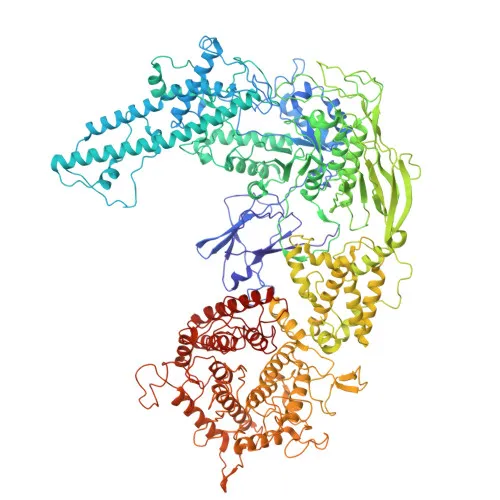
Monoclonal Antibodies
Anti-AGL (GDE) Rabbit Monoclonal Antibody for WB, IF/ICC, ELISA - P35573
Item Number : CM0004660
Price varies based on specs and customizations
- Application
- WB, IF/ICC, ELISA
- Cross Reactivity
- Human, Mouse, Rat
- Protein Weight
- 175kDa

Shipping:
Contact us to get shipping details Enjoy On-time Dispatch Guarantee.
Why Choose Us
Easy ordering process, quality products, and dedicated support for your business success.
Core Product Specifications and Parameters
| Parameter | Value |
|---|---|
| Product Name | AGL Rabbit mAb |
| Remarks/Alias | GDE; AGL |
| Species | Human |
| GeneID (Human) | 178 |
| GeneID | 178 |
| Immunogen | Synthetic Peptide: A synthetic peptide corresponding to a sequence within amino acids 1-100 of human AGL (P35573). |
| Source | Rabbit |
| Category | Monoclonal Antibodies |
| Application | WB, IF/ICC, ELISA |
| Cross Reactivity | Human, Mouse, Rat |
| SWISS | P35573 |
| Protein Weight | 175kDa |
| Shipping | Ice bag |
Biological Background: AGL Function and Localization
- AGL, also known as glycogen debranching enzyme (GDE), is encoded by the AGL gene and belongs to the glycoside hydrolase family, combining glycosidase and glycosyltransferase activities.
- It functions as a multifunctional enzyme in glycogen degradation, possessing both 4-alpha-glucanotransferase and amylo-1,6-glucosidase domains that work sequentially.
- The enzyme is essential for complete glycogen breakdown, transferring a short oligosaccharide chain and then cleaving the remaining alpha-1,6-linked glucose at branch points.
- AGL localizes to the cytoplasm, consistent with its role in cytosolic glycogen metabolism and its interaction with glycogen particles.
- Multiple isoforms are produced via alternative splicing, with tissue-specific expression: isoform 1 predominates in liver, kidney, and lymphoblastoid cells; isoforms 2, 3, and 4 are additional in muscle and heart; isoforms 5 and 6 are found in both liver and muscle.
- Mutations in the AGL gene cause glycogen storage disease type III (Cori disease), highlighting its critical role in glycogen homeostasis.
- Post-translational modifications include phosphorylation and ubiquitination, as evidenced by proteomics studies, which may regulate enzyme activity or stability.
Experimental Guidance and Technical Tips
- The immunogen is a synthetic peptide mapping to amino acids 1-100 of human AGL (P35573). This N-terminal region may exhibit high conservation across human, mouse, and rat, consistent with reported cross-reactivity.
- For Western blot (WB), the predicted molecular weight is approximately 175 kDa; however, alternative splicing may generate additional bands corresponding to tissue-specific isoforms.
- When performing immunofluorescence (IF/ICC), cytoplasmic staining is expected, and appropriate permeabilization and fixation methods should be optimized.
- For ELISA applications, the antibody may be used for direct or capture/detection setups; serial dilution experiments are recommended to determine optimal working concentrations.
- Consider validating the antibody's performance in your specific sample system, as expression levels and isoform prevalence can vary between cell types and tissues.
CamelBio: Your One-Stop Sourcing Bridge
CamelBio provides diagnostic manufacturers, clinical laboratories, and research institutes with a comprehensive one-stop sourcing solution for IVD raw materials. This Anti-AGL (GDE) Rabbit Monoclonal Antibody supports glycogen metabolism research and can be integrated into custom assay development. Beyond individual antibodies, CamelBio offers validated antibody pairs, optimized recombinant proteins, and bulk ancillary reagents to streamline your entire workflow from concept to clinic.
Product Datasheet
Anti-AGL (GDE) Rabbit Monoclonal Antibody for WB, IF/ICC, ELISA - P35573
REQUEST A QUOTE
Our professional team will reply to you within one business day. Please feel free to contact us!