Polyclonal Antibodies
Anti-ADRB3 Rabbit Polyclonal Antibody for WB, IF/ICC, ELISA - P13945
Item Number : CM0027361
Price varies based on specs and customizations
- Application
- WB, IF/ICC, ELISA
- Cross Reactivity
- Human, Mouse, Rat
- Protein Weight
- 44kDa

Shipping:
Contact us to get shipping details Enjoy On-time Dispatch Guarantee.
Why Choose Us
Easy ordering process, quality products, and dedicated support for your business success.
Core Product Specifications and Parameters
| Parameter | Value |
|---|---|
| Product Name | ADRB3 Rabbit pAb |
| Remarks/Alias | BETA3AR; ADRB3 |
| Species | Human |
| Gene ID (Human) | 155 |
| Gene ID | 155 |
| Immunogen | Synthetic peptide: A synthetic peptide corresponding to a sequence within amino acids 1-100 of human ADRB3 (NP_000016.1). |
| Source | Rabbit |
| Category | Polyclonal Antibodies |
| Application | WB, IF/ICC, ELISA |
| Cross Reactivity | Human, Mouse, Rat |
| SWISS | P13945 |
| Protein Weight | 44kDa |
| Shipping | Ice bag |
Biological Background: ADRB3 Function and Localization
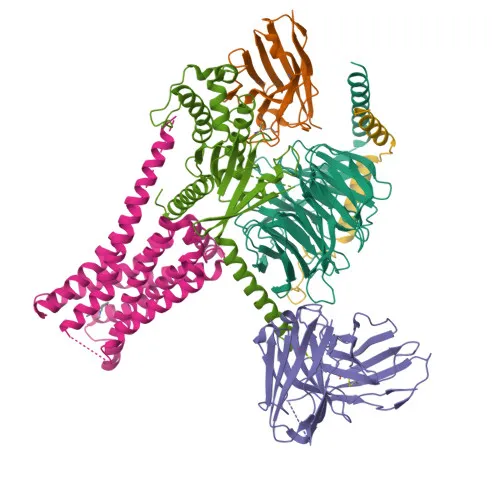
- ADRB3 encodes the beta-3 adrenergic receptor, a member of the G protein-coupled receptor (GPCR) superfamily characterized by seven transmembrane domains.
- It functions as a receptor for catecholamines, coupling to both G(s) and G(i) proteins to activate or inhibit adenylate cyclase and modulate cAMP levels, with a potency order of norepinephrine > epinephrine. Related references: PMID:10188996, PMID:2570461, PMID:8641219
- In adipose tissue, G(s) coupling stimulates the cAMP-PKA axis to regulate thermogenesis and lipolysis, while G(i) coupling triggers the ERK1/2 MAP kinase cascade, further promoting lipolytic processes. Related references: PMID:10207024
- ADRB3 mediates relaxation of blood vessels and urinary bladder and exerts negative inotropic effects in cardiomyocytes via an NO synthase pathway that increases cGMP levels. Related references: PMID:10188996, PMID:9769330
- The receptor is predominantly expressed in adipose tissues and localizes to the cell membrane.
- Key structural features include potential N-glycosylation sites, disulfide bonds, and palmitoylation, which are critical for receptor folding and signaling; it is associated with metabolic disorders such as obesity and diabetes.
Experimental Guidance and Technical Tips
- The immunogen is a synthetic peptide from the N-terminal extracellular domain (aa 1-100), so this antibody may recognize the receptor on live, non-permeabilized cells in immunofluorescence applications.
- For Western blotting, expect a major band around 44 kDa; however, glycosylation and other modifications may result in higher molecular weight species; consider deglycosylation experiments to confirm specificity.
- Validate cross-reactivity with mouse and rat samples, as the immunogen sequence may have species-specific variations; use appropriate positive controls and blocking peptides if available.
- For ELISA, ensure proper antigen coating and antibody titration to achieve optimal signal-to-noise ratio; test on recombinant protein or cell lysates known to express ADRB3.
CamelBio: Your One-Stop Sourcing Bridge
CamelBio provides diagnostic manufacturers and research laboratories with a comprehensive one-stop supply chain for IVD raw materials, including validated antibody pairs, optimized monoclonal and polyclonal antibodies, and bulk ancillary reagents. For GPCR signaling and metabolic disease research, we offer reliable anti-ADRB3 antibodies like this polyclonal antibody, alongside custom sourcing for rare targets and technical support from concept to clinical application. Contact us to streamline your procurement and accelerate your diagnostic development.
REQUEST A QUOTE
Our professional team will reply to you within one business day. Please feel free to contact us!