Monoclonal Antibodies
Anti-ADORA1 Monoclonal Antibody for WB, IHC-P, ELISA - P30542
Item Number : CM0004481
Price varies based on specs and customizations
- Application
- WB, IHC-P, ELISA
- Cross Reactivity
- Human, Mouse, Rat
- Protein Weight
- 37kDa

Shipping:
Contact us to get shipping details Enjoy On-time Dispatch Guarantee.
Why Choose Us
Easy ordering process, quality products, and dedicated support for your business success.
Core Product Specifications and Parameters
| Parameter | Value |
|---|---|
| Product Name | ADORA1 Rabbit mAb |
| Remarks/Alias | RDC7; ADORA1 |
| Species | Human |
| Gene ID (Human) | 134 |
| Gene ID | 134 |
| Immunogen | Synthetic peptide corresponding to a sequence within amino acids 100-200 of human ADORA1 (P30542) |
| Source | Rabbit |
| Category | Monoclonal Antibodies |
| Application | WB, IHC-P, ELISA |
| Cross Reactivity | Human, Mouse, Rat |
| SWISS | P30542 |
| Protein Weight | 37kDa |
| Shipping | Ice bag |
Biological Background: ADORA1 Function and Localization
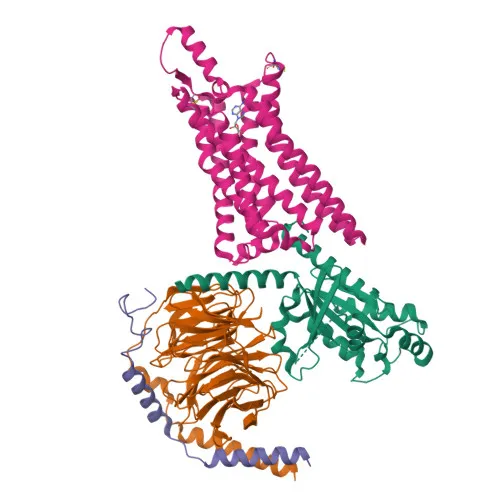
- Adenosine receptor A1 (ADORA1) is a G protein-coupled receptor (GPCR) that serves as the primary receptor for extracellular adenosine, mediating inhibitory signaling cascades. Related references: PMID:29925945
- Activation of ADORA1 by adenosine leads to coupling with GNAI2 G proteins, inhibiting adenylyl cyclase activity and reducing intracellular cAMP levels.
- ADORA1 is subject to alternative splicing, generating multiple protein isoforms with potential differential expression or functional properties.
- The receptor is anchored at the cell membrane, where it undergoes post-translational modifications including N-linked glycosylation, palmitoylation, and disulfide bond formation, which are critical for proper folding, trafficking, and signal transduction.
- As a member of the rhodopsin-like GPCR superfamily, ADORA1 contains seven transmembrane helices and is classified under keywords such as transmembrane, transducer, and receptor.
- The protein has a calculated molecular weight of approximately 36.5 kDa (based on UniProt), but observed migration may vary due to glycosylation and other modifications (noted at 37 kDa in this product's validation).
Experimental Guidance and Technical Tips
- The immunogen is a synthetic peptide from the central region (aa 100-200) of human ADORA1; antibody recognition may be influenced by the conformational state of the receptor or by post-translational modifications.
- For Western blotting, expect a predominant band near 37 kDa under reducing conditions; additional bands or slight shifts may occur due to glycosylation or dimerization.
- In immunohistochemistry-paraffin (IHC-P), antigen retrieval methods (e.g., heat-induced epitope retrieval) and tissue pre-treatment should be optimized for the specific sample type; consider the receptor’s membrane localization.
- ELISA performance depends on the coating format and epitope accessibility; the antibody may be suitable as a capture or detection reagent when paired appropriately.
CamelBio: Your One-Stop Sourcing Bridge
CamelBio is your integrated partner for IVD raw-material sourcing, offering validated monoclonal and polyclonal antibodies, antibody pairs, and ancillary reagents for immunoassay development. Whether you are advancing adenosine receptor research, developing GPCR-targeting diagnostics, or require bulk quantities of this anti-ADORA1 antibody, CamelBio bridges the gap from early-stage discovery to clinical application with reliable supply and technical support. Explore our portfolio to accelerate your next diagnostic project.
REQUEST A QUOTE
Our professional team will reply to you within one business day. Please feel free to contact us!