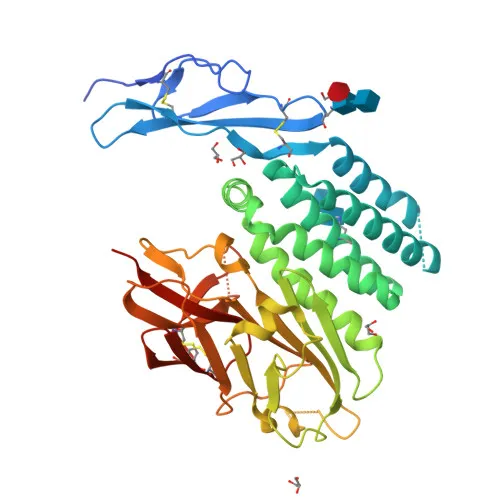
Polyclonal Antibodies
Anti-ADGRB3 Rabbit Polyclonal Antibody for WB, ELISA - O60242
Item Number : CM0017197
Price varies based on specs and customizations
- Application
- WB, ELISA
- Cross Reactivity
- Human
- Protein Weight
- 172kDa

Shipping:
Contact us to get shipping details Enjoy On-time Dispatch Guarantee.
Why Choose Us
Easy ordering process, quality products, and dedicated support for your business success.
Core Product Specifications and Parameters
| Parameter | Value |
|---|---|
| Product Name | ADGRB3 Rabbit pAb |
| Remarks/Alias | BAI3; ADGRB3 |
| Species | Human |
| GeneID (Human) | 577 |
| GeneID | 577 |
| Immunogen | Recombinant fusion protein containing a sequence corresponding to amino acids 70-280 of human ADGRB3 (NP_001695.1). |
| Source | Rabbit |
| Category | Polyclonal Antibodies |
| Application | WB, ELISA |
| Cross Reactivity | Human |
| SWISS | O60242 |
| Protein Weight | 172kDa |
| Shipping | Ice bag |
Biological Background: ADGRB3 Function and Localization
- ADGRB3 (Adhesion G protein-coupled receptor B3) is a member of the adhesion GPCR family, characterized by a large N-terminal extracellular domain with thrombospondin repeats, a seven-transmembrane region, and a cytoplasmic tail.
- It plays a critical role in synapse formation and dendritic spine morphogenesis through ELMO1/RAC1-dependent pathways (By similarity).
- Additionally, ADGRB3 facilitates myoblast fusion, underscoring its involvement in actin cytoskeleton remodeling. Related references: PMID:24567399
- The protein is predominantly expressed on the cell membrane of neurons and cardiomyocytes, consistent with its function in the brain and heart.
- Post-translational modifications, including glycosylation and phosphorylation, along with alternative splicing, generate functionally distinct isoforms and regulate receptor activity.
Experimental Guidance and Technical Tips
- The immunogen corresponds to amino acids 70-280 in the extracellular domain, a region expected to be well surface-exposed; this antibody may recognize both native and denatured forms.
- For Western blot, consider loading 20–50 µg of total protein from human brain or heart lysates and using a gradient gel (e.g., 4–12%) to resolve the 172 kDa band; validate antibody specificity with a blocking peptide or knockdown controls.
- In ELISA, the antibody can be used as a capture or detection reagent; pair with a recombinant ADGRB3 standard and optimize coating concentrations to establish a standard curve.
- Due to the large protein size, ensure proper transfer conditions (e.g., extended transfer time or wet transfer) to avoid poor membrane retention.
CamelBio: Your One-Stop Sourcing Bridge
CamelBio streamlines IVD raw material sourcing for diagnostic developers, offering validated antibodies like the Anti-ADGRB3 polyclonal antibody for neuroscience and oncology research applications. We supply optimized monoclonal and polyclonal antibodies, bulk reagents, and access to rare targets, supporting assay development from concept to clinic. Choose CamelBio for a reliable one-stop procurement solution.
REQUEST A QUOTE
Our professional team will reply to you within one business day. Please feel free to contact us!