Polyclonal Antibodies
Anti-ADCYAP1R1 (PAC1) Rabbit Polyclonal Antibody for WB, IF/ICC, ELISA - P41586
Item Number : CM0025214
Price varies based on specs and customizations
- Application
- WB, IF/ICC, ELISA
- Cross Reactivity
- Human, Mouse, Rat
- Protein Weight
- 53kDa

Shipping:
Contact us to get shipping details Enjoy On-time Dispatch Guarantee.
Why Choose Us
Easy ordering process, quality products, and dedicated support for your business success.
Core Product Specifications and Parameters
| Parameter | Value |
|---|---|
| Product Name | ADCYAP1R1 Rabbit pAb |
| Remarks/Alias | PAC1; PAC1R; PACAPR; PACAPRI; ADCYAP1R1 |
| Species | Human |
| GeneID (Human) | 117 |
| GeneID | 117 |
| Immunogen | Recombinant fusion protein containing a sequence corresponding to amino acids 25-140 of human ADCYAP1R1 (NP_001109.2) |
| Source | Rabbit |
| Category | Polyclonal Antibodies |
| Application | WB, IF/ICC, ELISA |
| Cross Reactivity | Human, Mouse, Rat |
| SWISS | P41586 |
| Protein Weight | 53kDa |
| Shipping | Ice bag |
Biological Background: ADCYAP1R1 Function and Localization
- ADCYAP1R1 (PAC1) is a class B G protein-coupled receptor (GPCR) that functions as the high-affinity receptor for the pituitary adenylate cyclase-activating polypeptide (PACAP), binding both PACAP27 and PACAP38 isoforms (PubMed:32004469, PubMed:32047270, PubMed:35477937).
Related references: PMID:32004469 PMID:32047270 PMID:35477937 - Ligand engagement triggers G protein-mediated activation of adenylyl cyclase and the cAMP-dependent signaling cascade, modulating diverse downstream effectors (PubMed:32004469, PubMed:32047270, PubMed:33715378).
Related references: PMID:32004469 PMID:32047270 PMID:33715378 - The receptor is involved in neuroendocrine regulation, with proposed roles in controlling the release of adrenocorticotropin, luteinizing hormone, growth hormone, prolactin, epinephrine, and catecholamine.
- In the gastrointestinal system, ADCYAP1R1 mediates smooth muscle relaxation and secretory processes (PubMed:32047270, PubMed:33715378).
Related references: PMID:32047270 PMID:33715378 - The protein is localized to the cell membrane, featuring seven transmembrane domains typical of GPCRs.
- Expression is predominantly in the brain, with lower levels detectable in lung, liver, thymus, spleen, pancreas, and placenta.
- ADCYAP1R1 is associated with developmental processes, cell differentiation, and spermatogenesis, and is subject to alternative splicing and post-translational modifications such as disulfide bond formation, glycosylation, and phosphorylation.
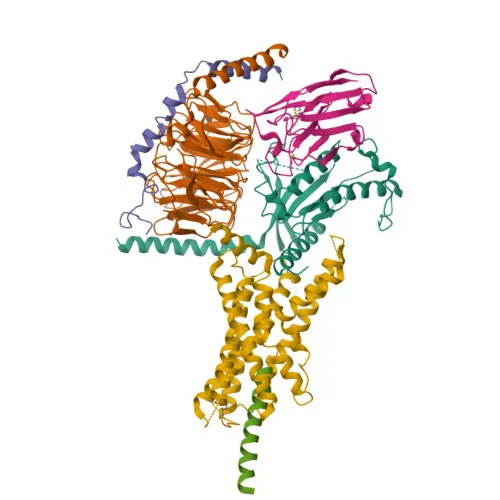
- Structural studies have resolved its 3D architecture, revealing key features for ligand recognition and signal transduction.
Experimental Guidance and Technical Tips
- The immunogen corresponds to the N-terminal extracellular domain (amino acids 25–140), which is exposed on the cell surface; this design favors detection of the native receptor by WB and IF/ICC.
- For Western blotting, anticipate a band near 53 kDa in lysates from human, mouse, or rat tissues; validate expression in brain samples where the target is abundant.
- In immunofluorescence/immunocytochemistry, optimize permeabilization and antibody concentration to visualize membrane-localized PAC1 in neuronal cell lines or primary cultures.
- As a polyclonal antibody, it may generate additional bands; include appropriate controls and consider using knockout or knockdown validation to confirm specificity.
- For ELISA applications, the antibody can be used as a capture or detection reagent; pair with a matched monoclonal antibody for sandwich immunoassays if quantitative detection is required.
CamelBio: Your One-Stop Sourcing Bridge
CamelBio streamlines IVD raw material procurement by providing one-stop access to validated antibodies, antigen-grade proteins, and ancillary reagents for diagnostic development. This ADCYAP1R1 antibody supports neuroscience and GPCR research, and we can supply complementary products such as optimized monoclonal/polyclonal pairs, bulk recombinant proteins, and rare target sourcing tailored to your workflow. From concept to clinic, CamelBio bridges your supply needs with technical expertise.
Product Datasheet
Anti-ADCYAP1R1 (PAC1) Rabbit Polyclonal Antibody for WB, IF/ICC, ELISA - P41586
REQUEST A QUOTE
Our professional team will reply to you within one business day. Please feel free to contact us!