Polyclonal Antibodies
Anti-ADAMTS1 Polyclonal Antibody for WB, IF/ICC, ELISA - Q9UHI8
Item Number : CM0016628
Price varies based on specs and customizations
- Application
- WB, IF/ICC, ELISA
- Cross Reactivity
- Human, Mouse, Rat
- Protein Weight
- 105kDa

Shipping:
Contact us to get shipping details Enjoy On-time Dispatch Guarantee.
Why Choose Us
Easy ordering process, quality products, and dedicated support for your business success.
Core Product Specifications and Parameters
| Parameter | Details |
|---|---|
| Product Name | ADAMTS1 Rabbit pAb |
| Remarks / Alias | C3-C5; METH1; ADAMTS1 |
| Species | Human |
| GeneID (Human) | 9510 |
| GeneID | 9510 |
| Immunogen | Recombinant fusion protein containing a sequence corresponding to amino acids 718-967 of human ADAMTS1 (NP_008919.3) |
| Source | Rabbit |
| Category | Polyclonal Antibodies |
| Application | WB, IF/ICC, ELISA |
| Cross Reactivity | Human, Mouse, Rat |
| SWISS | Q9UHI8 |
| Protein Weight | 105kDa |
| Shipping | Ice bag |
Biological Background: ADAMTS1 Function and Localization
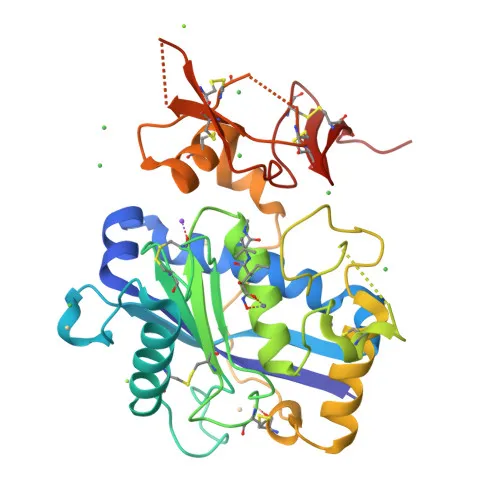
- ADAMTS1, also known as METH‑1, is a member of the ADAMTS (A Disintegrin And Metalloproteinase with Thrombospondin motifs) family of secreted proteases. It comprises a propeptide, a metalloprotease domain, a disintegrin‑like domain, and a thrombospondin type‑1 (TSP1) repeat region.
- It functions as a metalloprotease that cleaves aggrecan, a major cartilage proteoglycan, at the Glu³⁸⁹-Leu³⁹³⁹ site, and may be involved in aggrecan turnover (By similarity). It also cleaves cartilage oligomeric matrix protein (COMP).
Related references: PMID:39672391 - ADAMTS1 possesses angiogenic inhibitor activity, as demonstrated by its ability to suppress endothelial cell proliferation and angiogenesis.
Related references: PMID:10438512 - It may play a critical role in follicular rupture during ovulation, likely by remodeling the extracellular matrix of the ovarian follicle (By similarity).
- The protein is secreted into the extracellular space and localizes to the extracellular matrix, consistent with its role in matrix remodeling and cell‑surface interactions.
- Structurally, ADAMTS1 requires calcium and zinc for its metalloprotease activity and contains multiple disulfide bonds. It is synthesized as a zymogen, activated by cleavage at a pair of basic residues, and is glycosylated and heparin‑binding.
Experimental Guidance and Technical Tips
- Since the immunogen corresponds to the C‑terminal region (amino acids 718‑967), the antibody is likely to recognize both pro‑ and mature forms. In Western blot under reducing conditions, expect a principal band at ~105 kDa; glycosylation or partial processing may yield additional bands.
- For immunofluorescence (IF/ICC), cells should be permeabilized, as ADAMTS1 is secreted and may localize in the secretory pathway or remain associated with the cell surface/extracellular matrix.
- Being a polyclonal antibody, lot‑to‑lot variability can occur; consider pilot testing with positive controls such as human, mouse, or rat tissues known to express ADAMTS1 (e.g., cartilage, ovary, endothelial cells).
- Although validated for WB, IF/ICC, and ELISA, optimal working dilutions must be determined empirically in each assay system.
CamelBio: Your One-Stop Sourcing Bridge
CamelBio serves as a one‑stop sourcing platform for diagnostic manufacturers, laboratories, and research institutes, providing validated antibody pairs, optimized monoclonal and polyclonal antibodies, bulk ancillary reagents, and customized raw‑material solutions. For investigations into extracellular matrix biology, angiogenesis, and reproductive physiology, CamelBio offers reliable anti‑ADAMTS1 reagents and complementary tools to accelerate your assay development from concept to clinic.
REQUEST A QUOTE
Our professional team will reply to you within one business day. Please feel free to contact us!