Polyclonal Antibodies
Anti-ACVRL1/ALK1 Rabbit Polyclonal Antibody for WB and ELISA - P37023
Item Number : CM0022703
Price varies based on specs and customizations
- Application
- WB, ELISA
- Cross Reactivity
- Human, Mouse, Rat
- Protein Weight
- 56kDa

Shipping:
Contact us to get shipping details Enjoy On-time Dispatch Guarantee.
Why Choose Us
Easy ordering process, quality products, and dedicated support for your business success.
Core Product Specifications and Parameters
| Parameter | Specification |
|---|---|
| Product Name | ACVRL1 Rabbit pAb |
| Remarks/Alias | HHT; ALK1; HHT2; ORW2; SKR3; ALK-1; TSR-I; ACVRLK1; ACVRL1 |
| Species | Human |
| GeneID (Human) | 94 |
| GeneID | 94 |
| Immunogen | Recombinant fusion protein containing a sequence corresponding to amino acids 234-503 of human ACVRL1 (NP_001070869.1) |
| Source | Rabbit |
| Category | Polyclonal Antibodies |
| Application | WB, ELISA |
| Cross Reactivity | Human, Mouse, Rat |
| SWISS | P37023 |
| Protein Weight | 56kDa |
| Shipping | Ice bag |
Biological Background: ACVRL1/ALK1 Function and Localization
- ACVRL1 encodes the Activin receptor type-1-like protein, also known as activin receptor-like kinase 1 (ALK-1) and serine/threonine-protein kinase receptor R3 (SKR3), a member of the TGF-beta superfamily of receptors.
- Functions as a type I receptor for BMP9/GDF2 and BMP10, playing a critical role in the regulation of blood vessel development and angiogenesis.
- Upon ligand binding, forms a heteromeric complex with type II receptors, leading to phosphorylation and activation of the type I receptor, which subsequently phosphorylates SMAD transcriptional regulators.
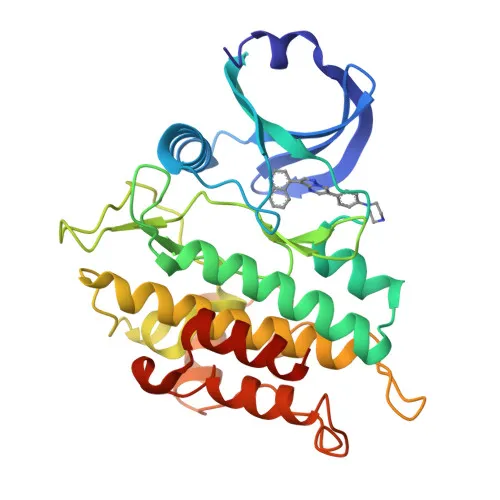
- Localizes to the cell membrane as a single-pass transmembrane protein with an extracellular ligand-binding domain and an intracellular serine/threonine kinase domain.
- The kinase domain requires ATP, magnesium, and manganese for catalytic activity, and the protein is subject to glycosylation, disulfide bond formation, and phosphorylation.
- Listed as a disease variant-associated gene; mutations in ACVRL1 are linked to hereditary hemorrhagic telangiectasia (HHT), a vascular dysplasia disorder.
Experimental Guidance and Technical Tips
- The immunogen covers the C-terminal region (aa 234–503), which includes the intracellular kinase domain; Western blot analysis under reducing conditions is expected to detect a band at approximately 56 kDa, though glycosylation may result in higher molecular weight species.
- For ELISA, the antibody can be considered for both direct antigen detection and capture formats; due to its polyclonal nature, it may exhibit batch-to-batch variation, and titration in the assay system is recommended.
- Given cross-reactivity with human, mouse, and rat, include appropriate positive and negative controls from the relevant species to confirm specificity.
- Validate performance in cell lines or tissues known to express ACVRL1, such as endothelial cells, and optimize blocking and washing conditions to minimize background.
CamelBio: Your One-Stop Sourcing Bridge
CamelBio is a dedicated sourcing partner for IVD manufacturers, offering one-stop access to high-quality raw materials, technical support, and custom solutions from concept to clinic. We provide validated antibody pairs, bulk polyclonal and monoclonal antibodies, and ancillary reagents for targets like ACVRL1, essential for angiogenesis and vascular biology research. Our global network ensures reliable, scalable supply even for rare or specialized targets, helping you accelerate assay development and commercialization.
Product Datasheet
Anti-ACVRL1/ALK1 Rabbit Polyclonal Antibody for WB and ELISA - P37023
REQUEST A QUOTE
Our professional team will reply to you within one business day. Please feel free to contact us!