Polyclonal Antibodies
Anti-ACTL6A Rabbit Polyclonal Antibody for WB, IHC-P, ELISA - O96019
Item Number : CM0026610
Price varies based on specs and customizations
- Application
- WB, IHC-P, ELISA
- Cross Reactivity
- Human, Mouse, Rat
- Protein Weight
- 47kDa

Shipping:
Contact us to get shipping details Enjoy On-time Dispatch Guarantee.
Why Choose Us
Easy ordering process, quality products, and dedicated support for your business success.
Core Product Specifications and Parameters
| Parameter | Value |
|---|---|
| Product Name | ACTL6A Rabbit pAb |
| Remarks/Alias | Arp4; ACTL6; BAF53A; INO80K; SMARCN1; ARPN-BETA; ACTL6A |
| Species | Human |
| Gene ID (Human) | 86 |
| Gene ID | 86 |
| Immunogen | Recombinant fusion protein containing a sequence corresponding to amino acids 30-120 of human ACTL6A (NP_004292.1) |
| Source | Rabbit |
| Category | Polyclonal Antibodies |
| Application | WB, IHC-P, ELISA |
| Cross Reactivity | Human, Mouse, Rat |
| SWISS | O96019 |
| Protein Weight | 47kDa |
| Shipping | Ice bag |
Biological Background: ACTL6A Function and Localization
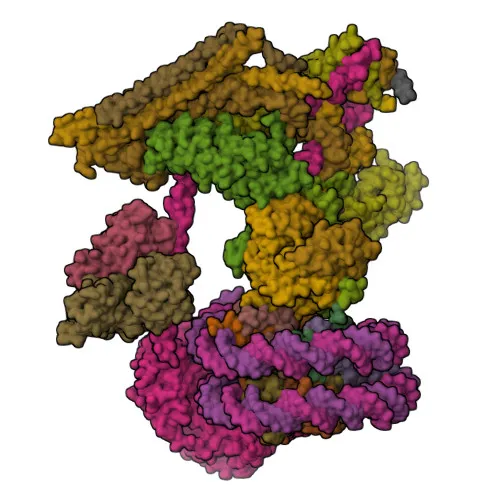
- ACTL6A (Actin-like protein 6A, also known as BAF53A, Arp4, INO80K) is a 47 kDa nuclear protein encoded by the ACTL6A gene (Gene ID: 86) and belongs to the actin-related protein family.
- As a core component of the mammalian SWI/SNF (BAF) chromatin remodeling complexes, ACTL6A alters DNA-histone contacts in an ATP-dependent manner and is required for the maximal ATPase activity of the SMARCA4/BRG1 catalytic subunit.
- ACTL6A is also an integral subunit of the NuA4 histone acetyltransferase (HAT) complex, which acetylates histones H4 and H2A to promote transcriptional activation, and is implicated in oncogene-induced growth, tumor suppression, apoptosis, and DNA repair.
- During neural development, ACTL6A is present in the neural progenitor-specific npBAF complex essential for stem cell self-renewal; a switch to the ACTL6B-containing nBAF complex drives post-mitotic neuronal differentiation and dendrite growth.
- It is part of the INO80 chromatin remodeling complex, which participates in transcriptional regulation, DNA replication, and DNA damage repair.
- Keywords highlight roles in chromatin regulation, transcription, neurogenesis, DNA repair, and cell cycle control; post-translational modifications include acetylation, phosphorylation, and ubiquitination (UniProt O96019).
Experimental Guidance and Technical Tips
- The immunogen corresponds to amino acids 30–120 of human ACTL6A, a conserved N-terminal region; cross‑reactivity with mouse and rat homologs is confirmed, making it suitable for studies across these species.
- For Western blotting, a band near 47 kDa is expected; consider optimizing blocking and antibody dilution conditions to minimize background.
- In immunohistochemistry (paraffin-embedded), antigen retrieval may be required; test heat‑induced or enzymatic methods to achieve optimal staining.
- Validate the antibody in biologically relevant cell types—e.g., proliferating neural progenitors or cancer cell lines known to express high levels of ACTL6A/BAF53A.
CamelBio: Your One‑Stop Sourcing Bridge
CamelBio provides diagnostic manufacturers and research laboratories with streamlined access to critical IVD raw materials, including validated antibodies like this ACTL6A rabbit pAb for chromatin remodeling and neurogenesis research. Our one‑stop supply capabilities encompass optimized monoclonal and polyclonal antibody pairs, bulk ancillary reagents, and custom sourcing of rare‑target raw materials—supporting your projects from feasibility to final application with a reliable B2B procurement experience.
REQUEST A QUOTE
Our professional team will reply to you within one business day. Please feel free to contact us!