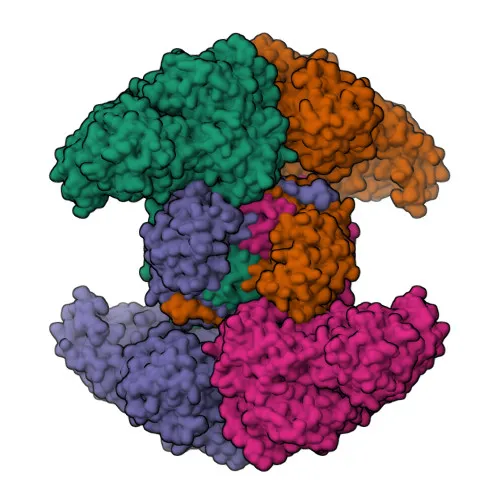
Polyclonal Antibodies
Anti-ACLY Polyclonal Antibody for WB, IHC-P, IF, ELISA - P53396
Item Number : CM0017545
Price varies based on specs and customizations
- Application
- WB, IHC-P, IF/ICC, ELISA
- Cross Reactivity
- Human, Mouse, Rat
- Protein Weight
- 121kDa

Shipping:
Contact us to get shipping details Enjoy On-time Dispatch Guarantee.
Why Choose Us
Easy ordering process, quality products, and dedicated support for your business success.
Core Product Specifications and Parameters
| Parameter | Value |
|---|---|
| Product Name | ACLY Rabbit pAb |
| Remarks/Alias | ACL; ATPCL; CLATP; ACLY |
| Species | Human |
| GeneID (Human) | 47 |
| GeneID | 47 |
| Immunogen | Recombinant fusion protein containing a sequence corresponding to amino acids 752-1101 of human ACLY (NP_001087.2) |
| Source | Rabbit |
| Category | Polyclonal Antibodies |
| Application | WB, IHC-P, IF/ICC, ELISA |
| Cross Reactivity | Human, Mouse, Rat |
| SWISS | P53396 |
| Protein Weight | 121kDa |
| Shipping | Ice bag |
Biological Background: ACLY Function and Localization
- ACLY encodes ATP-citrate synthase, also known as ATP-citrate (pro-S-)-lyase (ACL) or citrate cleavage enzyme. It is a key lipogenic enzyme that catalyzes the cleavage of citrate into oxaloacetate and acetyl-CoA, providing a critical substrate for de novo lipid biosynthesis.
- The enzyme acts as a bridge between carbohydrate metabolism and fatty acid synthesis, generating cytosolic acetyl-CoA, which is essential for cholesterol and fatty acid production.
- ACLY is predominantly localized in the cytoplasm and cytosol, where it accesses citrate exported from the mitochondria.
- Post-translational modifications, including acetylation and phosphorylation, regulate ACLY activity in response to nutritional and hormonal signals.
- Alternative splicing produces multiple transcript variants, potentially fine-tuning enzymatic function in different tissues.
- ACLY belongs to the acyl-CoA synthetase (AMP-forming)/AMP-acid ligase family and requires ATP and magnesium as cofactors for its transferase activity.
- Due to its central role in lipid biosynthesis, ACLY is a target of interest in metabolic disorders, cardiovascular research, and cancer metabolism studies.
Experimental Guidance and Technical Tips
- The immunogen spans the C-terminal region (amino acids 752–1101) of human ACLY, which may enhance specificity for the target protein.
- For Western blot, the predicted molecular weight is ~121 kDa; consider using a 6–8% SDS-PAGE gel and appropriate transfer conditions (e.g., wet transfer at 100V for 60–90 minutes) to resolve this high-molecular-weight protein.
- In IHC-P, standard antigen retrieval methods (e.g., citrate buffer pH 6.0) may be beneficial; pilot experiments are recommended to optimize signal-to-noise ratio.
- For IF/ICC, fixation and permeabilization conditions should be empirically determined; methanol fixation or 0.1% Triton X-100 treatment are common starting points for cytosolic targets.
- To verify antibody specificity, consider using ACLY knockdown or knockout cell models, or compare with known positive/negative tissue controls.
CamelBio: Your One-Stop Sourcing Bridge
CamelBio supports your diagnostic and research programs with a broad portfolio of IVD raw materials, including this high-quality anti-ACLY polyclonal antibody. As a trusted partner, we provide one-stop access to validated antibody pairs, optimized monoclonal and polyclonal antibodies, bulk ancillary reagents, and custom sourcing for rare or specialized targets. Whether you are developing metabolic biomarker assays or building robust immunodiagnostic platforms, CamelBio accelerates your path from concept to clinic.
REQUEST A QUOTE
Our professional team will reply to you within one business day. Please feel free to contact us!