Polyclonal Antibodies
Anti-ACKR3 Rabbit Polyclonal Antibody for WB, IF/ICC, ELISA - P25106
Item Number : CM0018301
Price varies based on specs and customizations
- Application
- WB, IF/ICC, ELISA
- Cross Reactivity
- Human, Mouse, Rat
- Protein Weight
- 41kDa

Shipping:
Contact us to get shipping details Enjoy On-time Dispatch Guarantee.
Why Choose Us
Easy ordering process, quality products, and dedicated support for your business success.
Core Product Specifications and Parameters
| Parameter | Value |
|---|---|
| Product Name | ACKR3 Rabbit pAb |
| Remarks/Alias | RDC1; CXCR7; RDC-1; CMKOR1; CXC-R7; CXCR-7; GPR159; ACKR3 |
| Species | Human |
| Gene ID (Human) | 57007 |
| Gene ID | 57007 |
| Immunogen | A synthetic peptide corresponding to a sequence within amino acids 150-250 of human ACKR3 (NP_064707.1). |
| Source | Rabbit |
| Category | Polyclonal Antibodies |
| Application | WB, IF/ICC, ELISA |
| Cross Reactivity | Human, Mouse, Rat |
| SWISS | P25106 |
| Protein Weight | 41kDa |
| Shipping | Ice bag |
Biological Background: ACKR3 Function and Localization
-
ACKR3 (also known as CXCR7, RDC1, GPR159) is an atypical chemokine receptor that binds chemokines CXCL11 and CXCL12/SDF1 with high affinity. Unlike classical chemokine receptors, it does not activate G protein signaling; instead, it serves as a scavenger receptor that sequesters, degrades, or transcytoses chemokines. Related references: PMID:16107333 PMID:19255243 PMID:19380869
-
Ligand binding triggers beta-arrestin recruitment, leading to receptor internalization and activation of the MAPK/ERK signaling cascade, promoting cell growth and survival in certain contexts. Related references: PMID:16940167 PMID:18653785 PMID:20018651 PMID:20388803
-
ACKR3 regulates CXCR4-mediated signaling, influencing neuronal migration, heart valve development, and axon guidance by modulating chemokine availability. Related references: PMID:16940167 PMID:18653785 PMID:17804806 PMID:31211835
-
It is localized predominantly at the cell membrane and traffics through early and recycling endosomes.
-
ACKR3 is expressed in immune cells (monocytes, B-cells), endothelial cells, brain neurons, and kidney. It is overexpressed in cancers including glioma and breast carcinoma.
-
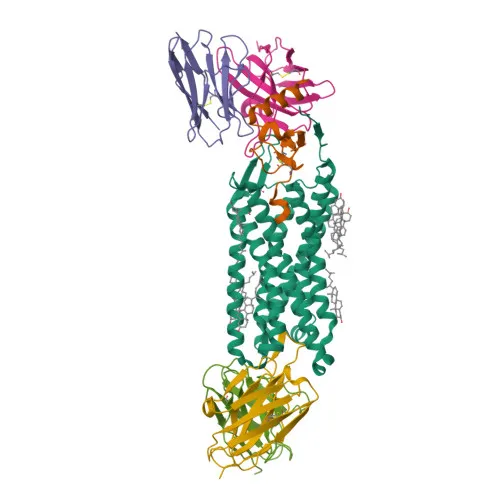
The protein is a seven-transmembrane domain GPCR with roles in cell adhesion, development, and host-virus interactions (HIV coreceptor).
-
The molecular weight of human ACKR3 is approximately 41.4 kDa.
Experimental Guidance and Technical Tips
-
The immunogen is a synthetic peptide corresponding to amino acids 150-250 of human ACKR3. For Western blot (WB), expect a band around 41 kDa.
-
This antibody is suitable for WB, IF/ICC, and ELISA. For IF/ICC, consider optimizing fixation and permeabilization conditions for your samples.
-
Cross-reactivity has been observed with mouse and rat ACKR3, making it useful for multi-species experiments.
-
As a rabbit polyclonal antibody, lot-to-lot consistency may vary; pilot testing in your specific application is recommended.
CamelBio: Your One-Stop Sourcing Bridge
CamelBio is a global one-stop sourcing platform for IVD raw materials, providing validated antibodies, bulk ancillary reagents, and custom procurement services for diagnostic and research applications. Whether you need anti-ACKR3 antibodies for chemokine signaling studies or other rare target reagents, our supply chain expertise covers every stage from concept to clinic. Partner with CamelBio for reliable, high-quality materials and technical guidance.
REQUEST A QUOTE
Our professional team will reply to you within one business day. Please feel free to contact us!