Polyclonal Antibodies
Anti-ACAD9 Rabbit Polyclonal Antibody for WB and ELISA - Q9H845
Item Number : CM0026155
Price varies based on specs and customizations
- Application
- WB, ELISA
- Cross Reactivity
- Human, Mouse
- Protein Weight
- 69kDa

Shipping:
Contact us to get shipping details Enjoy On-time Dispatch Guarantee.
Why Choose Us
Easy ordering process, quality products, and dedicated support for your business success.
Core Product Specifications and Parameters
| Parameter | Value |
|---|---|
| Product Name | ACAD9 Rabbit pAb |
| Remarks/Alias | NPD002; MC1DN20; ACAD9 |
| Species | Human |
| Gene ID | 28976 (Human) |
| Immunogen | Recombinant fusion protein containing a sequence corresponding to amino acids 1-270 of human ACAD9 (NP_054768.2) |
| Source | Rabbit |
| Category | Polyclonal Antibodies |
| Application | WB, ELISA |
| Cross Reactivity | Human, Mouse |
| SWISS | Q9H845 |
| Protein Weight | 69kDa |
| Shipping | Ice bag |
Biological Background: ACAD9 Function and Localization
-
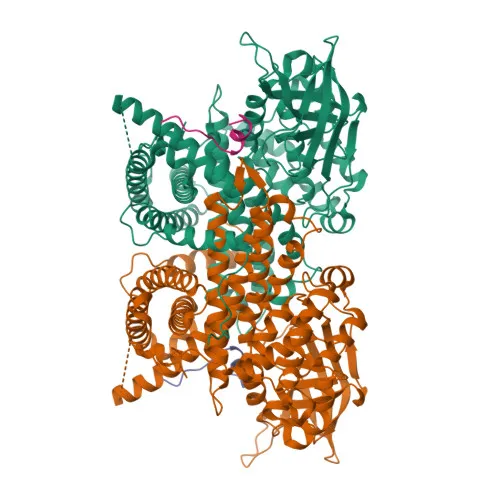
ACAD9 is a bifunctional mitochondrial protein that participates in both fatty acid oxidation (FAO) and mitochondrial complex I (CI) biogenesis. Its role in CI assembly is mediated through the mitochondrial complex I assembly (MCIA) complex, together with NDUFAF1 and ECSIT, and is independent of its FAO activity.
Related references: PMID:20816094 PMID:24158852 PMID:32320651 -
Binding of ECSIT triggers a large conformational change that switches ACAD9 from an FAO enzyme to a CI assembly factor.
Related references: PMID:38086790 -
As an acyl-CoA dehydrogenase, ACAD9 catalyzes the initial step of mitochondrial FAO, dehydrogenating long-chain fatty acyl-CoA thioesters with a preference for unsaturated substrates (e.g., linoleate, linolenate) and using electron transfer flavoprotein (ETF) as electron acceptor.
Related references: PMID:12359260 PMID:16020546 PMID:17564966 -
ACAD9 localizes to the mitochondrial inner membrane.
-
The protein is ubiquitously expressed, with highest levels in heart, skeletal muscle, and central nervous system; in the brain, it is particularly abundant in Purkinje neurons and the granular layer of the cerebellum.
Related references: PMID:12359260 PMID:17564966 PMID:21237683 -
ACAD9 is a member of the acyl-CoA dehydrogenase family and shares structural homology with ACADVL and ACADL.
-
Post‑translational modifications include acetylation and phosphorylation, which may regulate its dual functions.
-
Pathogenic variants in ACAD9 are associated with mitochondrial complex I deficiency, nuclear type 20 (MC1DN20).
Experimental Guidance and Technical Tips
- The immunogen corresponds to amino acids 1–270 (N‑terminal region) of human ACAD9, suggesting the antibody recognizes the N‑terminal domain. Verify in the relevant sample system.
- For Western blot, a band at approximately 69 kDa is expected in human and mouse cell lysates. Include appropriate positive and negative controls.
- The antibody is validated for ELISA; consider standard optimization of coating antigen and detection conditions for your specific assay format.
- When investigating complex I assembly or FAO activity, pair with functional assays to confirm target modulation.
CamelBio: Your One‑Stop Sourcing Bridge
CamelBio offers diagnostic manufacturers, research laboratories, and clinical institutions one‑stop access to high‑quality IVD raw materials, technical services, and consulting. This ACAD9 rabbit polyclonal antibody is an example of the validated reagents we supply for mitochondrial biology and rare disease research. Beyond individual antibodies, we provide matched antibody pairs, recombinant proteins, and bulk ancillary reagents to streamline your assay development from concept to clinic.
REQUEST A QUOTE
Our professional team will reply to you within one business day. Please feel free to contact us!