Polyclonal Antibodies
Anti-AATF Polyclonal Antibody for WB, ELISA - Q9NY61
Item Number : CM0025540
Price varies based on specs and customizations
- Application
- WB, ELISA
- Cross Reactivity
- Human, Mouse
- Protein Weight
- 63kDa

Shipping:
Contact us to get shipping details Enjoy On-time Dispatch Guarantee.
Why Choose Us
Easy ordering process, quality products, and dedicated support for your business success.
Core Product Specifications and Parameters
| Parameter | Value |
|---|---|
| Product Name | AATF Rabbit pAb |
| Remarks/Alias | DED; BFR2; CHE1; CHE-1; AATF |
| Species | Human |
| Gene ID (Human) | 26574 |
| Gene ID | 26574 |
| Immunogen | Recombinant fusion protein containing a sequence corresponding to amino acids 7-100 of human AATF (NP_036270.1) |
| Source | Rabbit |
| Category | Polyclonal Antibodies |
| Application | WB, ELISA |
| Cross Reactivity | Human, Mouse |
| SWISS | Q9NY61 |
| Protein Weight | 63kDa |
| Shipping | Ice bag |
Biological Background: AATF Function and Localization
- Encodes protein AATF, also known as apoptosis-antagonizing transcription factor or Che-1 (Rb-binding protein Che-1).
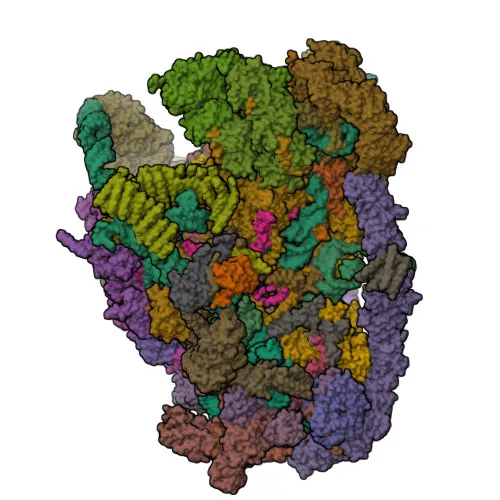
- Core component of the small subunit (SSU) processome, the precursor of the small eukaryotic ribosomal subunit, playing a critical role in ribosome biogenesis.
Related references:
PMID:34516797 - May function as a general inhibitor of histone deacetylase HDAC1, thereby modulating transcription regulation. Binding to RB1 displaces HDAC1 from RB1/E2F complexes, leading to activation of E2F target genes and cell cycle progression.
- Conversely, displacement of HDAC1 from SP1 bound to the CDKN1A promoter leads to increased expression of the CDK inhibitor p21, blocking cell cycle progression.
- Antagonizes PAWR-mediated induction of aberrant amyloid peptide production in Alzheimer disease, though the mechanism remains unclear.
- Subcellular localization: Primarily resides in the nucleolus within the nucleus.
- Ubiquitously expressed, with high levels in brain, heart, kidney, placenta, and thymus.
- Post-translational modifications include acetylation and phosphorylation (Keywords: Acetylation, Phosphoprotein).
Experimental Guidance and Technical Tips
- The immunogen corresponds to an N-terminal fragment (amino acids 7-100) of human AATF; consider that the antibody may recognize both full-length and N-terminal truncated forms.
- For Western blotting, an expected band near 63 kDa may be observed. Validation in lysates from human or mouse tissues/cells with high AATF expression (e.g., brain, kidney, thymus) is recommended.
- For ELISA, performance depends on coating antigen and detection format; consider optimizing antigen concentration and blocking conditions.
CamelBio: Your One-Stop Sourcing Bridge
CamelBio serves as your integrated sourcing partner for IVD raw materials, offering validated antibody pairs, optimized polyclonal and monoclonal antibodies, and ancillary reagents for ribosome biology and neurodegenerative disease research. Alongside this AATF polyclonal antibody, we provide bulk quantities and support for custom antibody development to accelerate your diagnostic assay workflow.
REQUEST A QUOTE
Our professional team will reply to you within one business day. Please feel free to contact us!